
Price Types by Industry: Pharma, FMCG, Agri-Inputs and Building Materials
The price-type vocabularies that differ by industry — pharma PTR/PTS/PTD, FMCG tier pricing, agri-input seasonal pricing, building-materials project pricing.
In short
The core price types — published, negotiated and situational — are the same everywhere, but each industry adds its own vocabulary. Pharma runs a PTR/PTS/PTD ladder under MRP; FMCG prices by channel tier and scheme; agri-inputs price by season and liquidation; building materials price by dealer, contractor and project. The words differ; the price-waterfall logic underneath does not.
The price types in the glossary cluster — published, negotiated, situational — apply to every channel. But each industry has grown its own vocabulary on top, and knowing the local words matters: a pharma "PTR" and an FMCG "scheme price" and a building-materials "project price" are all deductions from a headline price, but they are claimed, controlled and reconciled very differently. This article maps the industry-specific price types onto the common logic underneath.
The industry price types at a glance
| Industry | Key price types | What's distinctive |
|---|---|---|
| Pharma | MRP · PTR · PTS · PTD · WSP | A regulated tier ladder; price control on scheduled drugs |
| FMCG | List · distributor · wholesale · retail price · scheme price | Scheme-driven; much of the price moves off-invoice |
| Agri-inputs | Dealer · distributor price · seasonal price · liquidation price | Governed by the crop season; expiry and returns built in |
| Building materials | Dealer · contractor / project price · applicator rate · grade / tint price | Priced by end use and specification, not just tier |
| Automotive parts | MRP · dealer price · mechanic / garage price · fleet price | Aftermarket tiers plus warranty and fitment claims |
| Consumer electronics | Dealer price · MOP · LFR price · MRP | Fast price erosion; heavy price-protection traffic |
Pharma — the PTR / PTS / PTD ladder
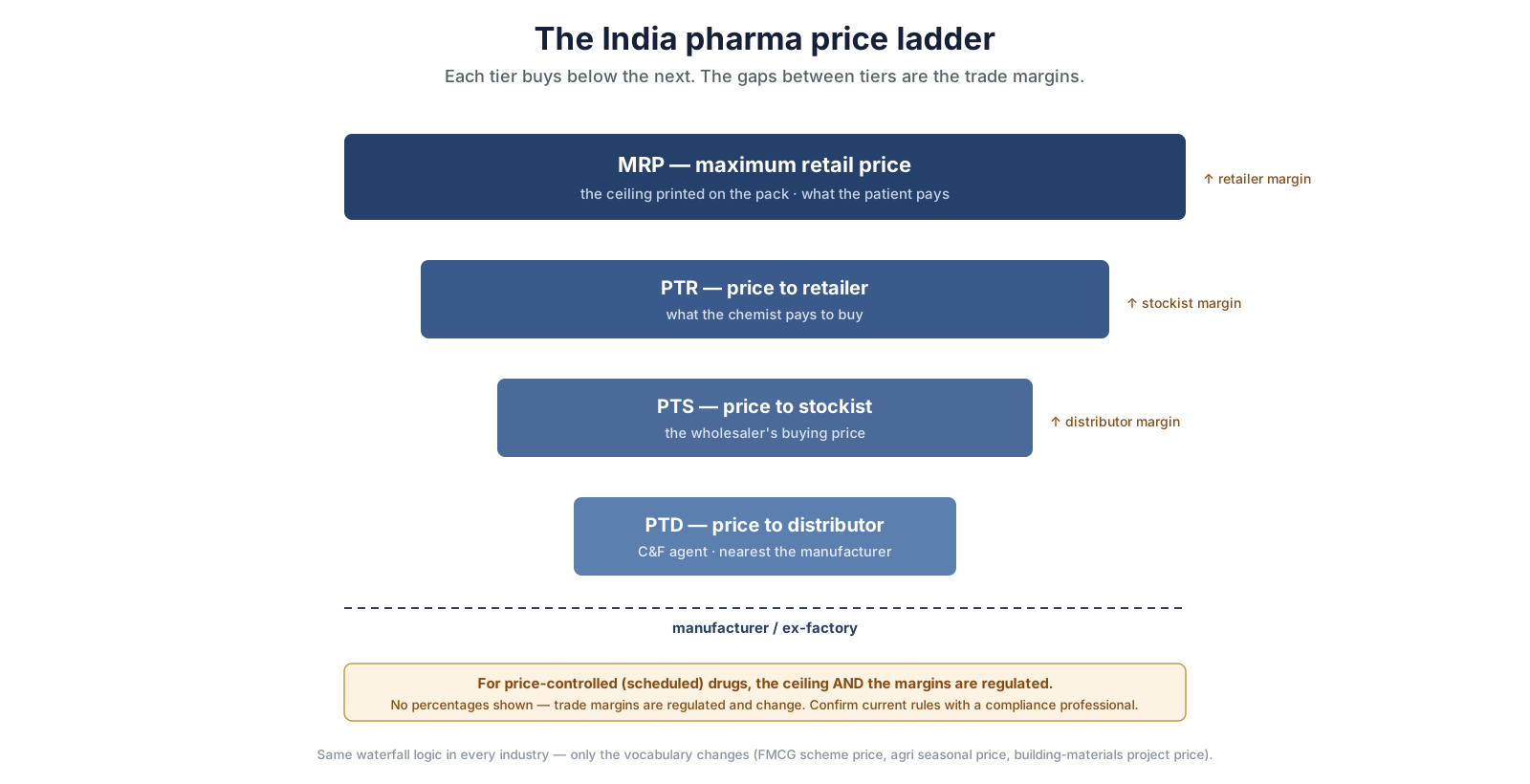
Pharma is the clearest case of a formal price ladder, and the vocabulary is worth getting exactly right:
- MRP — the maximum retail price printed on the pack, the ceiling the patient pays (see list price, MRP and reseller price).
- PTR — price to retailer: what the chemist pays to buy the product.
- PTS — price to stockist (or wholesaler): what the stockist pays.
- PTD — price to distributor or C&F agent: the tier nearest the manufacturer.
Each tier buys below the next tier's price; the gaps between PTD, PTS, PTR and MRP are the trade margins. What makes pharma distinctive is that for price-controlled (scheduled) products, both the ceiling price and the margin structure are set by regulation — the National Pharmaceutical Pricing Authority under the Drugs (Prices Control) Order framework. The specifics are detailed and change, so treat this as the concept only and confirm the current position for your products with a compliance professional. <!-- TODO VERIFY AT PUBLISH: DPCO / NPPA price control + trade-margin regulation for scheduled drugs — keep conceptual; state NO ceiling formula, margin percentage, price-increase cap, or schedule detail. -->
The operational consequence: a pharma price is only meaningful when its tier is named. A claim raised at "PTR" against an agreement written at "PTS" is a rate-difference dispute waiting to happen — which is why chargebacks in pharma distribution turn on capturing the right tier on every line.
FMCG — tier prices, but the scheme is the point
FMCG runs a tier structure too — a distributor price, a wholesale price, a retailer price under an MRP — but the defining feature is that a large share of the realised price moves off-invoice, through secondary schemes tied to sell-through, not through the printed tier prices. The tier price is the baseline; the secondary scheme is where margin is made and lost.
That changes what "the price" even means. In pharma the ladder carries most of the economics; in FMCG the ladder is the starting line and the scheme structure carries the rest — which is why FMCG channel finance is dominated by scheme settlement and claims rather than by the tier prices themselves. The price waterfall is the same; the weight sits lower down it.
Agri-inputs — priced by the season
For seeds, agrochemicals and fertilisers, the governing variable is the crop season. Dealer and distributor tier prices exist, but the prices and schemes that matter are set for a season window, and two season-specific price types dominate:
- Seasonal price — the price and scheme for a specific crop season, which resets when the season turns.
- Liquidation price — a price to clear stock before a season ends, so unsold inventory does not carry (or expire) into the next window.
Expiry and return terms are built into the pricing because the product is dated, which ties agri pricing tightly to expiry, damage and season returns and to seasonal scheme liquidation. A price agreed for one season, billed into the next, is the classic agri rate-difference — the situational-pricing ratchet with a calendar attached.
Building materials — priced by end use
Cement, steel, paints, tiles and electricals price less by tier and more by who is buying and for what:
- Dealer price — the trade price to the channel.
- Contractor or project price — a negotiated price for a named site or project, often lower than the dealer price and claimed back afterwards.
- Applicator rate — a price or incentive for the painter, mason or electrician who specifies and applies the product.
- Grade or tint price — steel priced by grade; paint priced as a base plus the chosen shade (the tinting machine builds the price).
The distinctive one is the project price: a supplier agrees a price with a named end customer (a builder, a project site), the dealer sells at that price, and claims the difference back — which behaves exactly like a special pricing / ship-and-debit arrangement. That makes building-materials channel claims a mix of standard scheme settlement and project-price rate-difference recovery, where the grade or shade on the invoice decides whether a claim can be verified at all.
Automotive and electronics, briefly
Automotive spare parts run an aftermarket ladder — MRP, dealer price, a mechanic or garage price, and fleet pricing for volume buyers — layered with warranty and fitment claims, covered in automotive spare-parts aftermarket claims.
Consumer electronics add a market-operating-price (MOP) discipline and large-format-retail (LFR) pricing on top of dealer prices, and are defined by fast price erosion — which is why price protection traffic is heavier here than almost anywhere else.
The common thread
Every price type above is still one of three things — a published price, a negotiated price, or a situational one — and every sale still runs the same waterfall from list to net-net. The industry vocabulary changes the labels and shifts the weight: pharma leans on a regulated tier ladder, FMCG on off-invoice schemes, agri on the season, building materials on the project. What does not change is the discipline that makes any of them settle cleanly — one authoritative record of the price and the scheme, with the tier, grade or season captured on the invoice so a claim can be verified. ClaimDS holds those commercial agreements and scheme terms as dated records regardless of which industry vocabulary they are written in. <!-- TODO FOUNDER CONFIRM: capability sentence — confirm scope wording matches shipped functionality before publish. -->
Learn the local vocabulary, then look through it: under every PTR, scheme price, seasonal price and project price is the same question the price waterfall asks — after everything, what actually reaches the bank?
This article is general information, not legal, tax or compliance advice. Pharmaceutical price control (scheduled-drug ceilings, trade-margin regulation), MRP declaration and agri-input labelling are governed by specific rules that change — confirm the current requirements for your products with a qualified compliance professional.
Frequently asked questions
What are PTR, PTS and PTD in pharma?
They are the tier buying prices in the Indian pharma channel. PTR is the price to retailer (what the chemist pays), PTS is the price to stockist or wholesaler, and PTD is the price to distributor or C&F agent. Each tier buys below the next tier's price, and the gaps between them are the trade margins — which for price-controlled (scheduled) products are regulated.
Is PTR the same as MRP?
No. MRP is the maximum retail price printed on the pack — the ceiling the consumer pays. PTR (price to retailer) is what the retailer pays to buy the product, below the MRP. The gap between PTR and MRP is the retailer's margin. For scheduled drugs both the price and the margin structure are subject to regulation, so confirm the current position with a compliance professional.
How does FMCG pricing differ from pharma?
FMCG uses tier prices too — distributor price, wholesale price, retailer price under an MRP — but the defining feature is scheme-driven pricing: a large part of the realised price moves through off-invoice secondary schemes tied to sell-through, rather than through the printed tier prices. The tier price is the baseline; the scheme is where the money is made and lost.
What is distinctive about agri-input pricing?
Agri-input pricing (seeds, agrochemicals, fertilisers) is governed by the season. Prices and schemes are set for a crop window, liquidation pricing clears stock before a season ends, and expiry and return terms are built in. The dealer and distributor tier prices exist, but the season and the liquidation scheme drive what is actually realised.
How are building materials priced?
Building materials — cement, steel, paints, tiles, electricals — price by end use as much as by tier: a dealer price for the trade, a contractor or project price for a named site, and often an applicator rate. Paints add tint-based pricing (a base price plus the shade), and steel adds grade-based pricing. The project price for a named site behaves like a special pricing agreement, claimed back later.
Do these industry price types change the underlying pricing logic?
No. Every industry price type is still either a published price, a negotiated price or a situational one, and every sale still runs the same waterfall from list to net-net. The industry vocabulary changes the labels and the mix — pharma leans on regulated tiers, FMCG on schemes, agri on seasons — but the base-price-to-net-margin build-up underneath is identical.
See ClaimDS on your own claims data
A 30-minute walkthrough tailored to how your channel actually settles claims.
Related posts
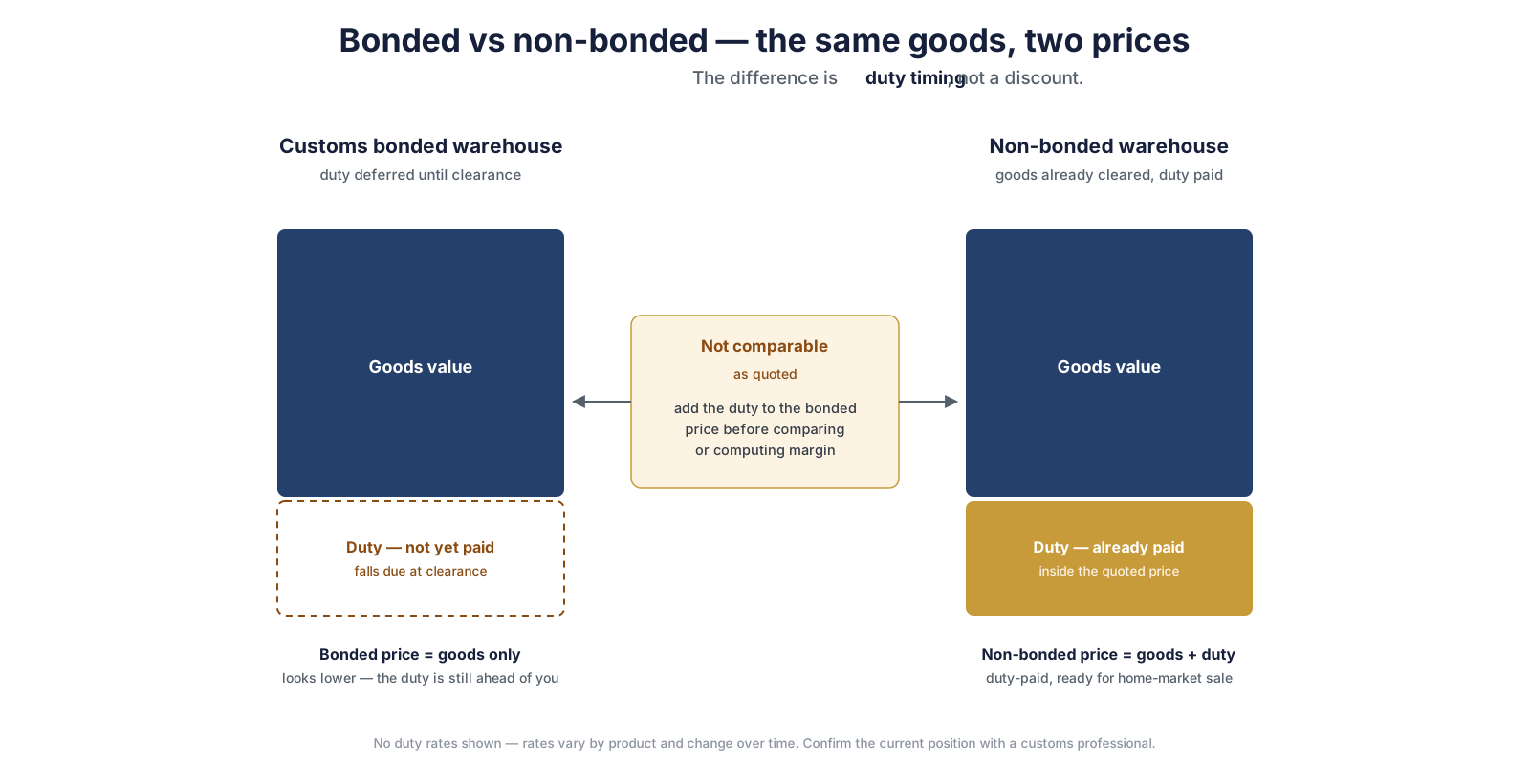
Bonded vs Non-Bonded Warehouse Pricing: Why the Same Goods Carry Two Prices
Why the same imported goods carry different prices in a bonded and a non-bonded warehouse, and what that means for quoting, costing and margin.
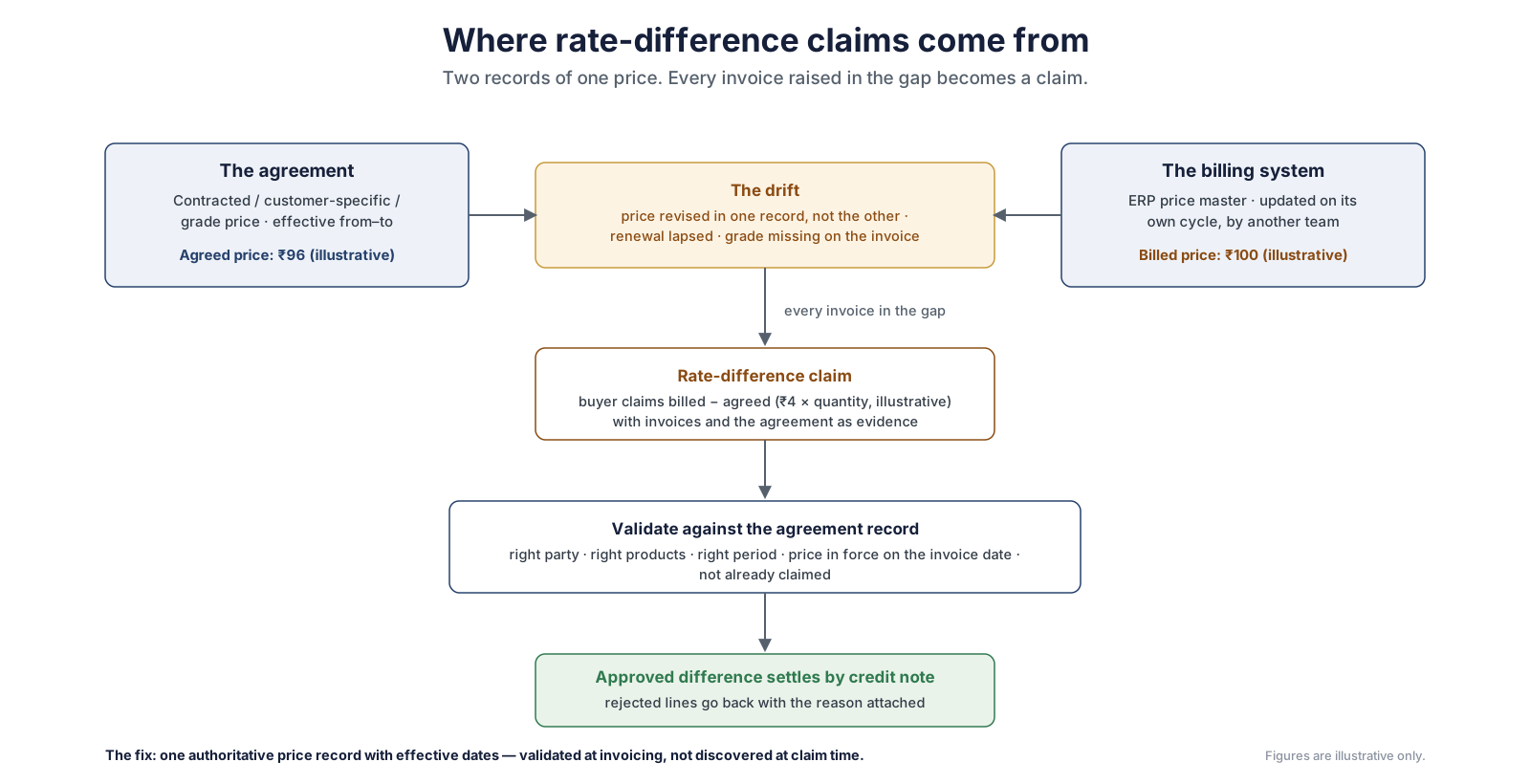
Contracted, Customer-Specific and Grade Pricing: How Negotiated Prices Work
Negotiated prices — contracted, customer-specific and grade-based — and the claims and reconciliation work each one creates.
List Price, MRP, Brochure Price and Reseller Price: What Each One Means
The published prices in a channel — list, MRP, brochure and reseller price — and what each one actually commits you to in India.