Contracted, Customer-Specific and Grade Pricing: How Negotiated Prices Work
Negotiated prices — contracted, customer-specific and grade-based — and the claims and reconciliation work each one creates.
In short
Negotiated prices replace the published price for a particular buyer, contract or product grade. A contracted price is agreed for a defined period or volume. A customer-specific price applies to one named buyer. A grade price varies by product specification or quality tier. Each creates the same operational question: does the invoice actually reflect the agreed price?
Published prices apply to everyone; negotiated prices apply to someone. A contract, a named account, a product grade — each replaces the published price for a defined slice of your business, and each plants the same question in every invoice it touches: is the price on the document the price that was agreed? (Prices that come from a situation rather than an agreement — the last invoice, a competitor's offer — are a different animal, covered in situational pricing.)
The three negotiated prices at a glance
| Price type | Basis | Typical use | The reconciliation risk it creates |
|---|---|---|---|
| Contracted price | A defined period, volume commitment or tender | Annual supply contracts, institutional tenders, project pricing | Billing continues at the old price after the contract changes — or the volume commitment is missed and nobody reprices |
| Customer-specific price | One named buyer | Key accounts, institutional and industrial customers | Agreed and billed price drift apart across order cycles and system updates |
| Grade price | Product specification, quality tier, batch grade or pack format | Commodities, chemicals, steel, agri-inputs | The grade is not captured on the invoice, so no claim against it can be verified |
Contracted price
A contracted price is agreed for a defined period or volume — a financial year's supply, a tender award, a project. For its duration it is the price: the published list becomes irrelevant for transactions inside the contract's scope.
The documentation does the heavy lifting. A usable contracted price states the parties, the products, the price, the effective dates, and what happens at the boundaries — what applies when the contract lapses before renewal, and what happens when the volume commitment behind the price is missed or exceeded. Those two boundary cases produce most of the money disputes. A buyer who committed to a volume for a price and delivered half of it has, by the contract's own logic, earned a different price — but repricing history is painful, so in practice the shortfall is settled as an adjustment, and an adjustment needs the same evidence discipline as any claim.
The quieter failure is the calendar. Contracts end mid-cycle, renewals are agreed late and backdated, and billing carries on at whatever the price master last knew. Every invoice raised in that gap is a future rate-difference conversation.
Customer-specific price
A customer-specific price is one buyer's price — a key account, a hospital chain, an OEM. It is the most administratively fragile of the three, because it multiplies: fifty named accounts means fifty prices to hold in sync between the agreement record and the billing system.
The drift mechanism is mundane. The account manager agrees a revision; the ERP price master is updated next cycle, or for the wrong pack sizes, or not at all. Orders keep flowing. Neither side notices for a quarter, because the buyer's accounts-payable team matches invoices to purchase orders, not to the pricing annexure. Then someone reconciles, and months of small gaps arrive at once — as a rate-difference claim if the buyer was overbilled, or as an awkward recovery conversation if they were underbilled.
Who the counterparty is changes the texture: institutional buyers reconcile hardest and claim latest; distributors discover gaps faster because their own margin depends on the buying price; OEMs typically embed the price in a purchase order, which at least forces the mismatch to surface at order entry rather than at audit.
Grade price
Grade pricing varies the price by specification: steel by grade, chemicals by purity, agri-inputs by formulation, food ingredients by quality band, and pack formats within a brand. It is negotiated pricing in the sense that the structure — which grades exist and what the differentials are — is what gets agreed.
The load-bearing rule is simple: the grade must be on the invoice. A grade price that only exists in the agreement, while invoices name the product generically, cannot be verified by anyone — not the buyer checking they were billed correctly, not your own team validating a later claim, not an auditor. Every grade-pricing dispute eventually reduces to whether the paperwork can prove which grade was actually supplied, which is decided at invoicing time, months before anyone knew there would be a dispute.
The rate-difference problem
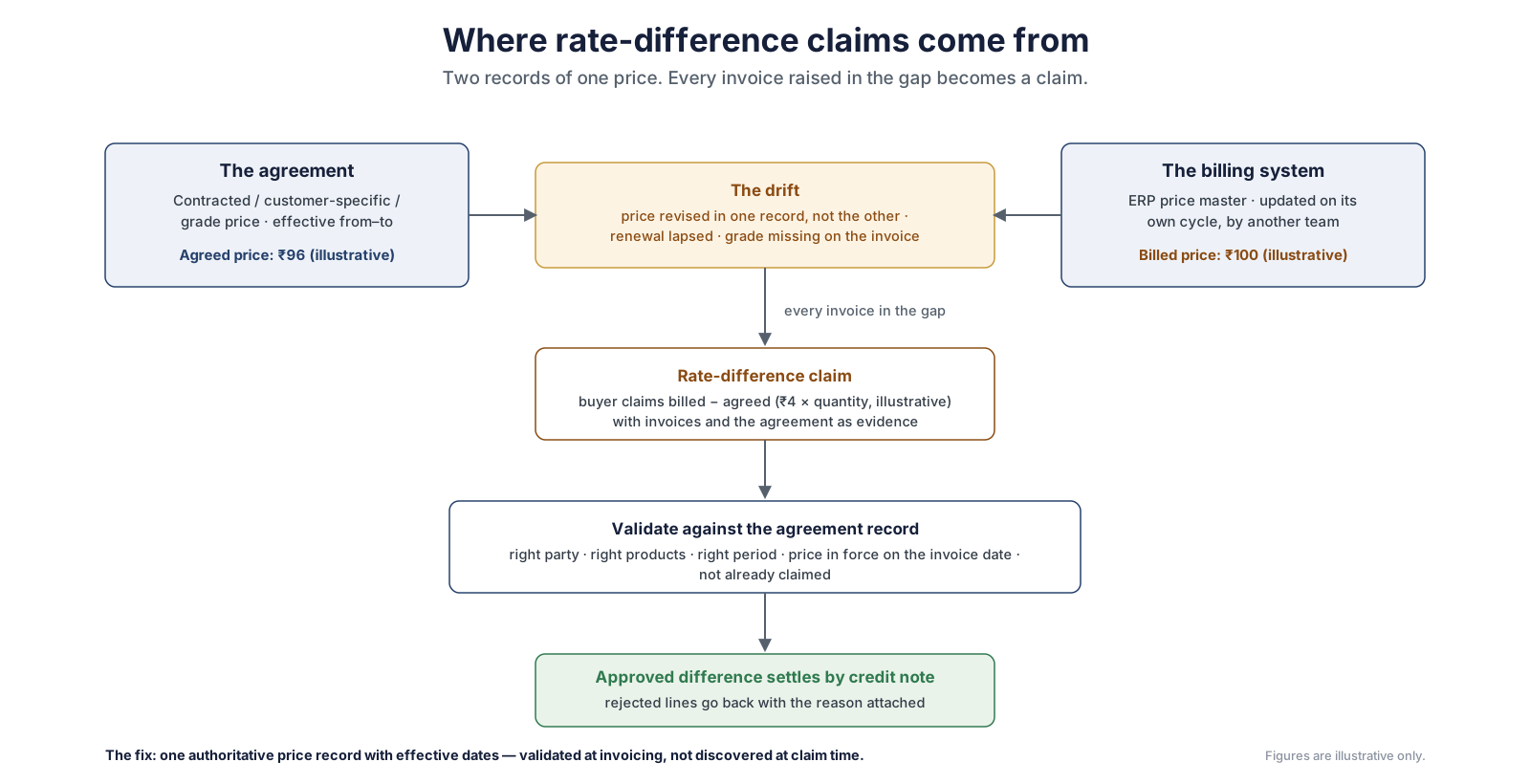
All three negotiated prices share one failure mode, and it is the reason this article sits in a claims publication rather than a pricing one: the invoice is raised at one price and the agreement says another.
The mechanics are always the same. The billing system prices from its master; the agreement lives somewhere else — a contract PDF, an annexure, an email chain. The two are updated by different people on different cycles. When they diverge, every invoice in the gap manufactures a claim: the buyer claims billed-minus-agreed times quantity, attaches the invoices and the agreement, and waits.
What settles these claims is evidence, not negotiation — the agreement in force on the invoice date, the invoices affected, the quantities, and confirmation the difference has not already been settled through another route such as a billback, an off-invoice scheme or an earlier adjustment. Where the buyer simply deducts the difference from a payment instead of claiming it, the same evidence question arrives from the other direction — see deduction management. That last check matters: rate difference overlaps with price protection settlements and scheme payouts, and paying the same gap twice through two mechanisms is a real leak, one that industries with frequent price revisions — paints being the canonical case — know well.
And this is why the agreement must be the authoritative record. If the claim is validated against the same price master that produced the wrong invoice, the validation is circular. The claim has to be checked against what was agreed, held with effective dates, independently of what was billed — the discipline the whole claims process rests on. Where a settled rate difference has a GST dimension, that is a credit-note question — see financial versus tax credit notes — and this article takes no position on it.
Where negotiated prices meet special pricing agreements
There is a fourth arrangement that looks like customer-specific pricing but behaves differently: the negotiated price belongs to someone else's customer. A distributor sells to a named end customer — a hospital, a project site, an OEM — at a price the supplier has agreed with that end customer, and then claims the difference between their buying price and that lower selling price back from the supplier. Ship-and-debit, in most vocabularies.
The distinction matters operationally. A contracted or customer-specific price changes what appears on your invoice, and the failure mode is drift. A special pricing arrangement leaves your invoice at the normal price by design — the claim is not a symptom of something going wrong, it is the settlement mechanism itself. That moves the whole discipline downstream — end-customer proof, quantity caps per agreement, and validation that the claimed sales actually happened at the claimed price — which in a multi-tier channel means evidence from the secondary sale, not your own invoice.
Keeping agreed and billed prices aligned
The pattern behind every failure above is two records of one price. The fix is structural, not motivational:
- One authoritative record of every negotiated price — contracted, customer-specific, grade differentials — with parties, products, effective dates and expiry.
- Validation at invoicing, not at claim time. A price checked when the invoice is raised is a correction; the same price discovered at reconciliation is a claim, a credit note and a quarter of ageing.
- Expiry as a first-class event. A lapsed contract should surface at order entry, not persist silently in a price master — which is an ERP integration question as much as a process one.
- Claims validated against the agreement record — with maker-checker control on the data coming in, since a rate-difference claim is only as good as the invoice data behind it.
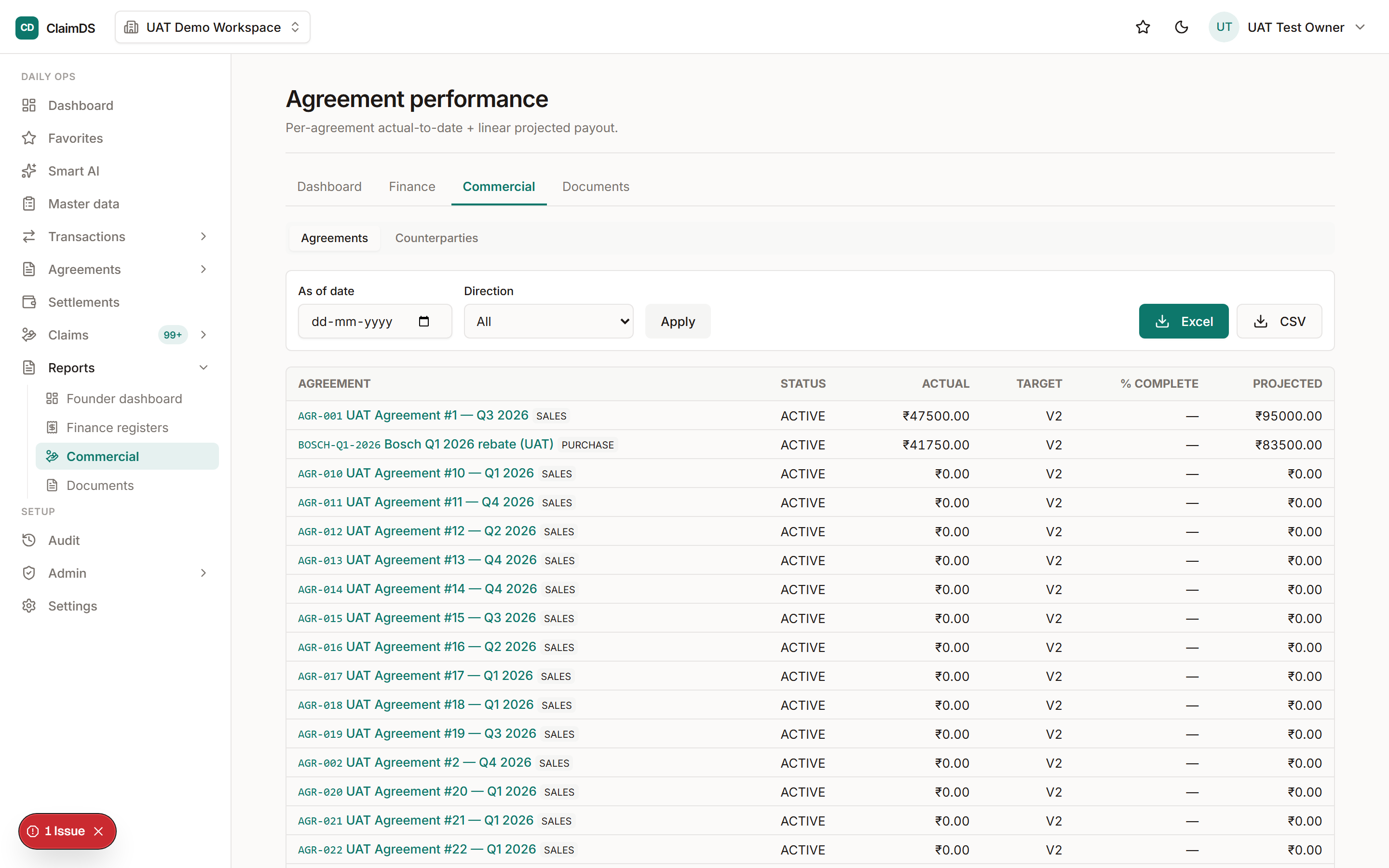
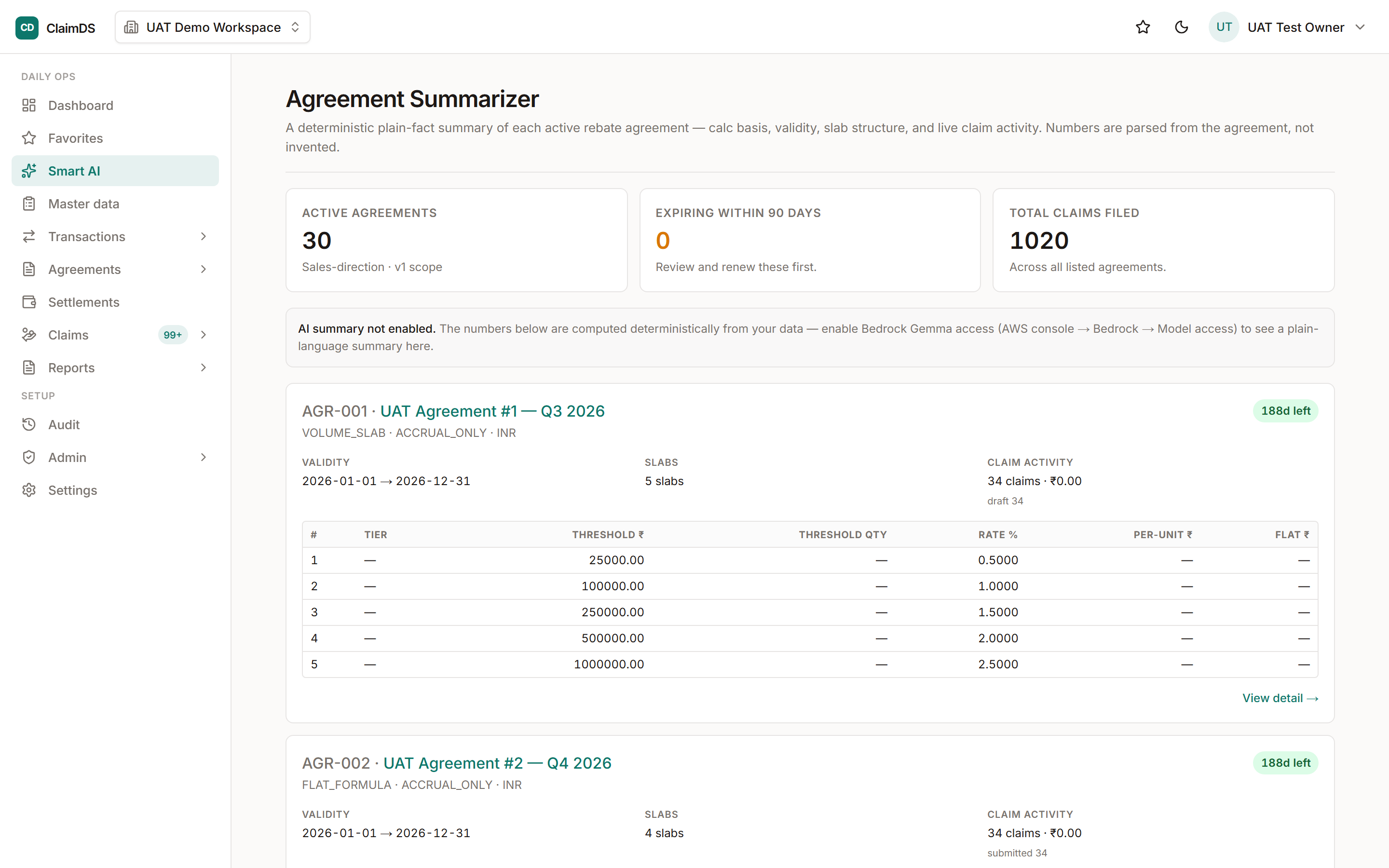
ClaimDS holds commercial agreements as that authoritative record — terms, parties and effective dates — and validates the claims that reference them against it, so a rate difference is settled from the agreement rather than argued from two spreadsheets. <!-- TODO FOUNDER CONFIRM: capability sentence — confirm scope wording matches shipped functionality before publish. -->
Negotiated prices are where the margin is made — and where it quietly leaks when the paperwork lags the deal. The published price needs publishing discipline; the negotiated price needs record discipline. The price waterfall only tells the truth if both hold.
This article is general information about commercial practice, not tax, legal or accounting advice. Where a rate-difference settlement has GST consequences, the treatment depends on the facts — confirm the position for your business with a qualified professional.
Frequently asked questions
What is a contracted price?
A contracted price is one agreed with a buyer for a defined period, volume commitment or tender, replacing the published price for transactions under that contract. It is documented with effective dates and scope, and it holds until the contract ends or is renegotiated. The recurring failure is billing that continues at an old contracted price after the contract has moved on.
What is customer-specific pricing?
Customer-specific pricing is a price agreed for one named buyer rather than a class of buyers — common in institutional and industrial selling. It replaces the tier or list price for that account. The operational risk is drift: the agreed price and the billed price part company across order cycles and system updates, and the gap surfaces later as a rate-difference claim.
What is grade pricing?
Grade pricing varies the price by product specification, quality tier, batch grade or pack format — common in commodities, chemicals, steel and agri-inputs. The same nominal product carries different prices for different grades. For a grade price to be enforceable, the grade must be captured on the invoice; otherwise neither side can verify a claim against it.
What is a rate-difference claim?
A rate-difference claim recovers the gap between the price that was billed and the price that was agreed. It arises when the invoice is raised at one price — usually the price master's — while a contract, customer-specific agreement or scheme says another. The claim is settled against evidence: the agreement, the invoices affected and the quantity, usually by credit note.
How do you prevent billing at the wrong agreed price?
Keep one authoritative record of every negotiated price with effective dates and scope, and validate the invoice price against it at billing time rather than reconciling after the fact. Most wrong-price billing is not a dispute about the agreement — it is two systems holding two versions of it, discovered one invoice at a time.
What is the difference between a contracted price and a special pricing agreement?
A contracted price sets what a buyer pays you directly. A special pricing agreement goes one step further down the channel: a distributor sells to a named end customer at an agreed lower price and claims the difference back from the supplier. The first changes an invoice price; the second creates a claim by design, usually called ship-and-debit.
See ClaimDS on your own claims data
A 30-minute walkthrough tailored to how your channel actually settles claims.
Related posts
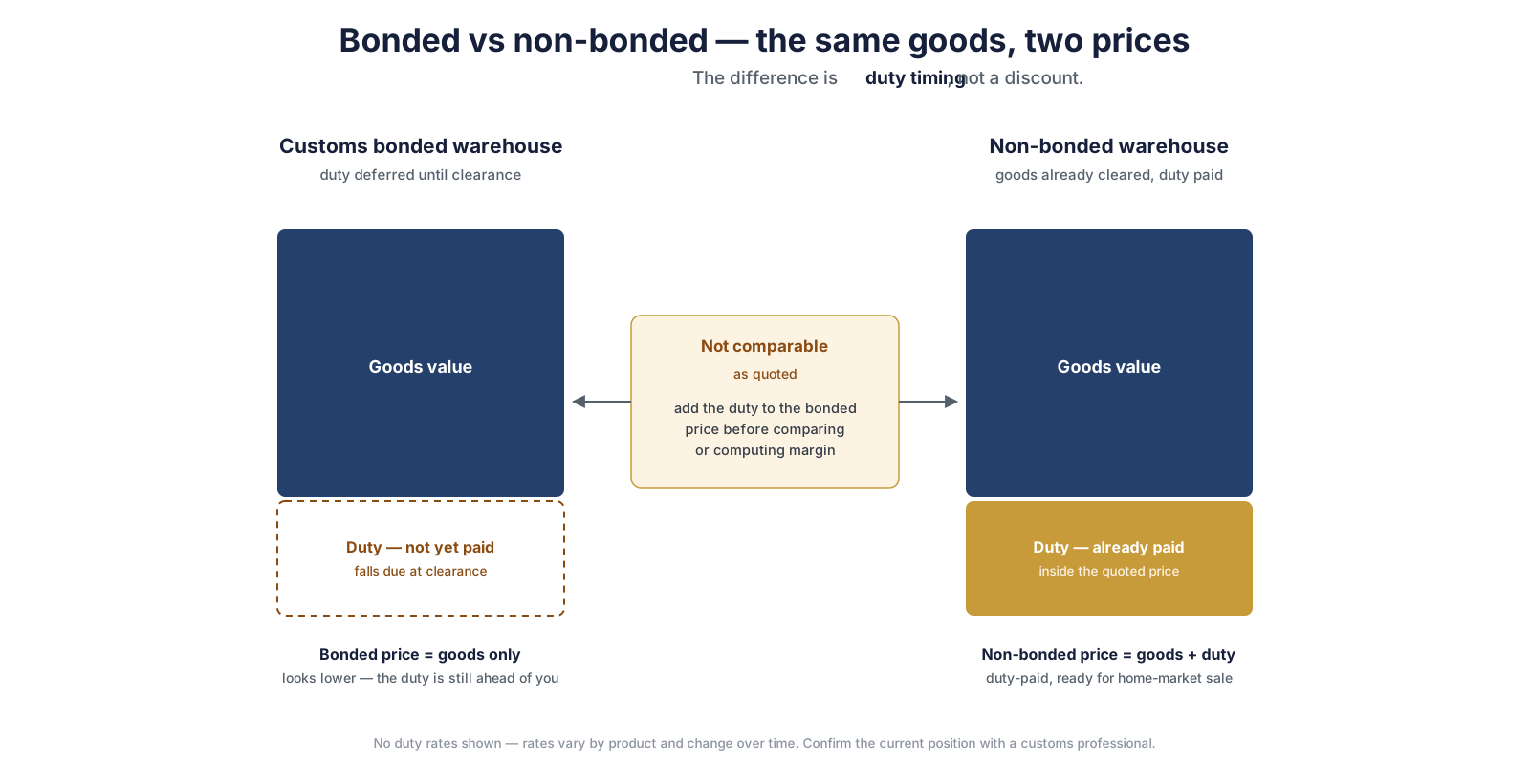
Bonded vs Non-Bonded Warehouse Pricing: Why the Same Goods Carry Two Prices
Why the same imported goods carry different prices in a bonded and a non-bonded warehouse, and what that means for quoting, costing and margin.
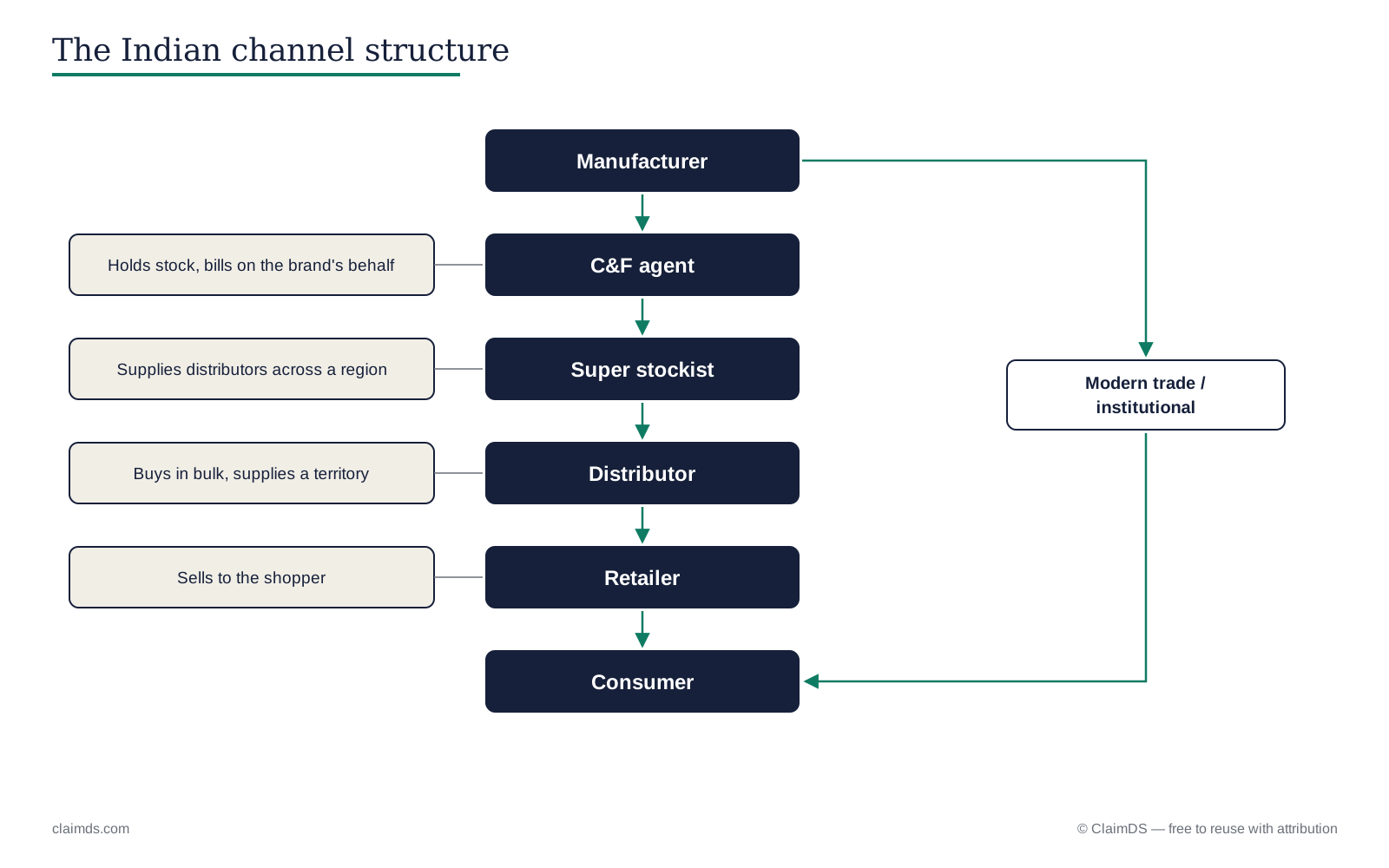
List Price, MRP, Brochure Price and Reseller Price: What Each One Means
The published prices in a channel — list, MRP, brochure and reseller price — and what each one actually commits you to in India.
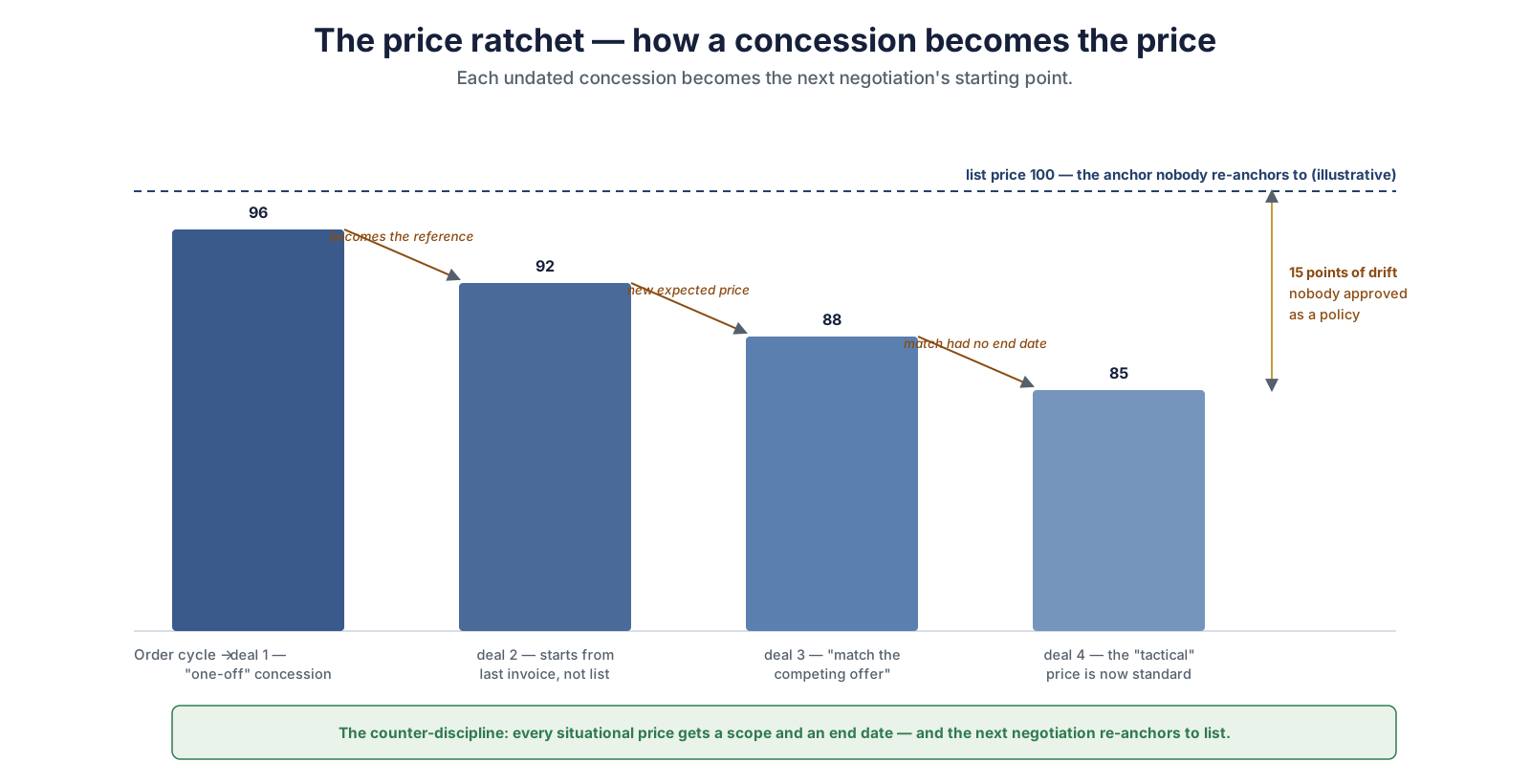
Situational Pricing: Last Invoice, Customer Expectation, Competition and Tactics
The prices that come from a situation rather than a price list — last invoice, customer expected, meeting-competition and tactical pricing.