
List Price, MRP, Brochure Price and Reseller Price: What Each One Means
The published prices in a channel — list, MRP, brochure and reseller price — and what each one actually commits you to in India.
In short
These are the prices a business publishes rather than negotiates. List price is the reference price from which discounts are calculated. MRP in India is the maximum retail price printed on a pack. A brochure price is the published price in a catalogue or price list. A reseller price is the published price offered to a specific tier of the channel.
Every price in a channel is one of two kinds: published or negotiated. This article is about the published ones — the prices you print, list and stand behind before any negotiation starts. They look interchangeable on a slide, but they commit you to different things, and in India one of them is not a commercial choice at all but a legal ceiling.
The four published prices at a glance
| Price type | What it is | Who sees it | What it commits you to |
|---|---|---|---|
| List price | The reference price discounts are calculated from | The trade; sometimes public | A stable anchor — change it and every discount changes meaning |
| MRP | The maximum retail price printed on a pack, inclusive of all taxes | Everyone — it is on the product | A legal ceiling on the consumer price, not a reference |
| Brochure / catalogue price | The published price in a price list or catalogue | Customers and channel partners who hold the document | A public quote you will be held to until you reissue it |
| Reseller / tier price | The published price for a class of channel partner | That tier — distributors, dealers or retailers | The margin structure of your channel |
What is a list price?
The list price is the top of the price waterfall — the reference from which everything else is a deduction. A distributor at list minus 18, a dealer at list minus 12, a festival scheme worth 3 per cent of list (illustrative figures, not benchmarks): none of those numbers mean anything without the list price they hang off. The arithmetic is simple; the discipline is not.
Two properties make a list price useful. It is stable — it changes on a schedule, not per deal, so partners can plan against it. And it is common — every discount, trade scheme and settlement across the channel references the same number, so disputes are about entitlement rather than about what the base was.
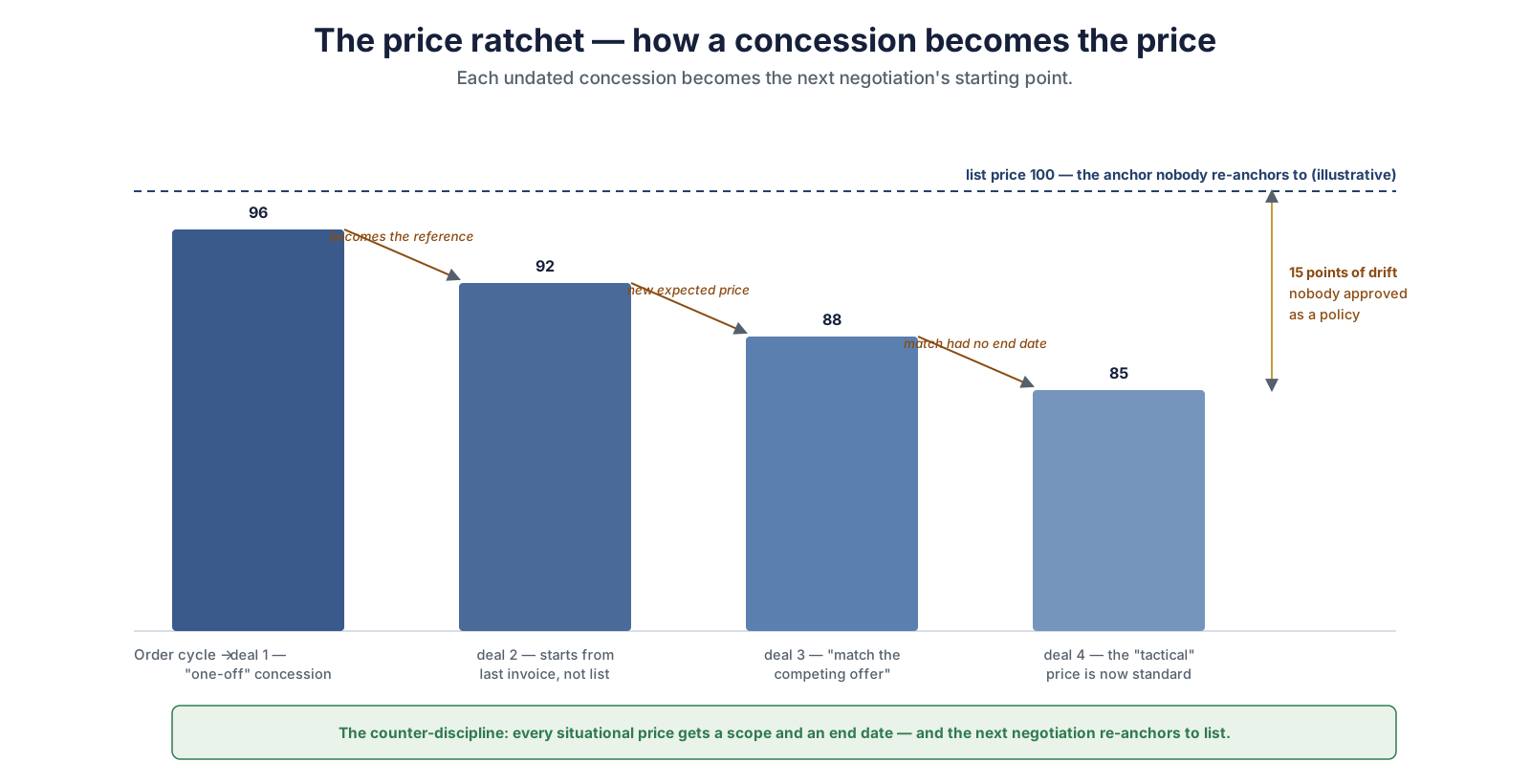
That is also why list-price integrity matters more to a manufacturer selling through a channel than to one selling direct. Once a lower price appears on an invoice, it travels — the buyer's next negotiation starts there, and often their neighbour's does too. Protecting the list and funding deviations off-invoice is how most Indian channels square that circle, and it is why the off-invoice step of the waterfall carries so much of the money.
How MRP is different — and why this is an India-specific point
MRP — maximum retail price — is the price printed on a pre-packaged product in India, inclusive of all taxes, and a retailer may not sell above it. It is governed by India's legal metrology and packaged-commodities framework, and the declaration requirements are specific and change over time — verify the current position for your products with a compliance professional. <!-- TODO VERIFY AT PUBLISH: legal metrology / packaged commodities requirements for MRP declaration — confirm current position; do not state specific rule numbers or penalties. -->
The point that matters for a commercial team is conceptual, and it is the one imported pricing material reliably gets wrong: MRP is a ceiling; a Western list price is a reference. A US or European "list price" carries no legal force — it is a negotiating anchor, and selling above it is merely unusual. MRP is the opposite: it binds the last transaction in the chain, the sale to the consumer, regardless of what any intermediate tier paid.
That single difference changes how the whole waterfall reads:
- The waterfall in India is squeezed from both ends — the brand publishes the ceiling at retail and the tier prices below it, so every intermediary's margin has to fit inside a band the brand largely defines.
- Retail margin is expressed as a markdown from MRP, not a markup on cost — a retailer earning, illustratively, 10 per cent earns it inside the printed ceiling.
- Price increases are operationally lumpy — a revised MRP has to reach packs, which is why stock printed at the old MRP during a price change generates the rate-difference and price protection claims covered elsewhere on this site.
So when a pricing template built for a Western channel asks for "list price" at the top, an Indian FMCG or pharma business actually has two candidates — the trade list price and the consumer MRP — and the template's logic only works if you know which one each calculation should reference.
Brochure and catalogue prices
In industrial products, electricals, building materials and much of B2B, the published price lives in a brochure, catalogue or rate card rather than on a pack. It plays the list-price role — the reference for tier discounts and negotiations — with one extra property: it is a document in the customer's hands.
That creates a mundane but persistent operational problem. Brochures are reissued on a cycle; prices and schemes change faster. Every gap between the two is a conversation where the customer is holding your own published number against you. The failure mode is not dishonesty on either side — it is that the brochure, the ERP price master and the current scheme circular are three documents maintained by three teams, and a quotation can be built from any of them. Businesses that handle this well treat the published price list as a versioned record with effective dates, so any invoice or claim can be checked against the price that was in force on that date — the same discipline that negotiated prices need, applied to the published ones.
Reseller and tier prices
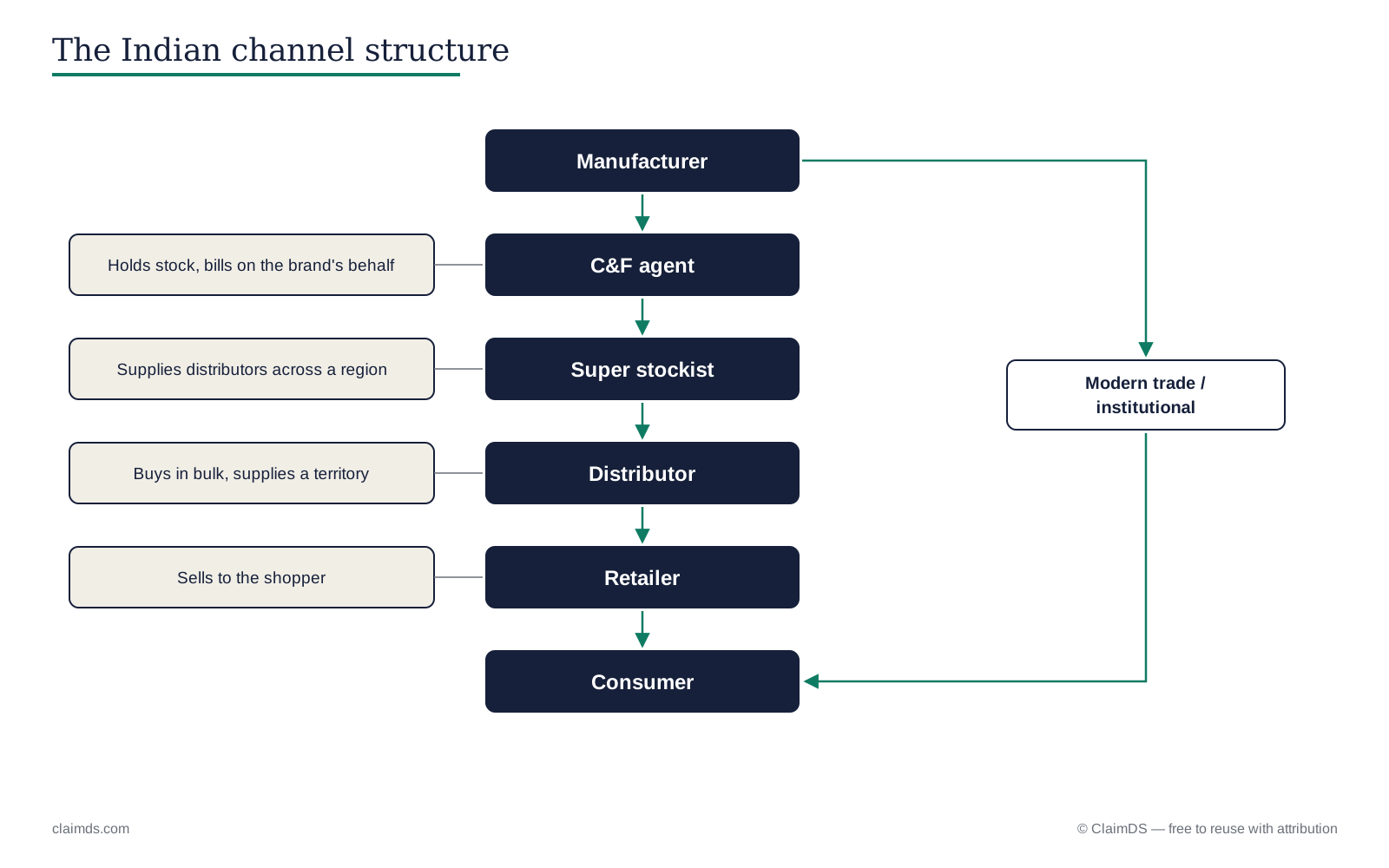
A reseller price is published to a class of buyer rather than to a person: a distributor price, a dealer price, a retailer or institutional price. In the Indian multi-tier channel these prices are the margin structure — each tier buys at its price and earns the gap to the next tier's, down to the MRP ceiling at retail. If the tiers themselves are unfamiliar, primary, secondary and tertiary sales explains who sells to whom.
Two things are worth being precise about:
A tier price is still a published price. It applies to everyone in the tier. The moment one distributor gets a different number, you have left published pricing and entered customer-specific pricing — which is fine, but it needs an agreement, an effective date and a record, because it will otherwise resurface as a rate-difference dispute.
The gaps between tiers are where schemes land. A secondary scheme is, in effect, a temporary improvement of one tier's economics, funded off-invoice against evidence of sell-through. Whether that spend is aimed at the trade or at the shopper is its own distinction — see consumer promotions versus trade promotions — but either way, the published tier price is the baseline the scheme is measured against.
By industry, the published-price mix differs more than the vocabulary suggests: FMCG and pharma operate all four types at once (trade list, MRP on pack, tier prices, and rate cards for institutions); consumer electronics leans on MRP plus dealer price with heavy price-protection traffic when the published numbers move; building materials and electricals live by the brochure; and commodity businesses often publish nothing at all, which pushes everything into the negotiated bucket.
Where these sit in the price waterfall
All four are the same step: the top. The price waterfall starts at whichever published price governs the transaction — trade list for a distributor sale, brochure price for a catalogue quote, tier price for a dealer billing — and everything below it is a deduction: on-invoice discounts first, then the off-invoice rebates, schemes and billbacks that arrive later as claims, then freight and duties, down to margin.
The gap between the published price and net realisation is where schemes, claims and deductions live — and the published price is what makes that gap measurable. A channel that cannot say what the reference price was on a given date cannot validate a claim against it, which is how QPS and slab schemes end up disputed months after everyone thought they were agreed. ClaimDS holds the agreement terms — the published baseline and the scheme on top of it — as the record claims are validated against. <!-- TODO FOUNDER CONFIRM: capability sentence — confirm scope wording matches shipped functionality before publish. -->
If you take one thing from this article: publish deliberately, because everything you publish becomes a baseline someone will measure against — the trade, your own finance team, or a claim.
This article is general information, not legal or compliance advice. MRP and packaging declarations are governed by specific legal requirements that change — confirm the current position for your products with a qualified compliance professional.
Frequently asked questions
What is a list price?
A list price is the published reference price for a product before any discount, scheme or negotiation. It is the anchor from which trade discounts are expressed — a dealer at list minus 12 is defined by the list price. It is rarely the price anyone actually pays; its job is to be the stable reference everything else is measured from.
Is MRP the same as list price?
No. A list price is a reference — a starting point that discounts are calculated from, with no ceiling implied. MRP in India is a legal maximum: the highest price at which a pre-packaged product may be sold to a consumer, printed on the pack and inclusive of all taxes. A list price faces the trade; MRP faces the consumer.
Can a retailer sell above MRP in India?
MRP is the maximum retail price, so selling a pre-packaged product above it is not permitted — that is what the M stands for. The framework governing MRP declarations is specific and changes over time, so confirm the current requirements for your products with a compliance professional rather than relying on a general article.
What is a brochure price?
A brochure or catalogue price is the price published in a printed or digital price list — common in industrial products, building materials, electricals and B2B selling. It commits the seller to a public reference that customers and the channel will quote back, which is why keeping brochures current when prices or schemes change is a real operational task.
What is a reseller price?
A reseller price is a published price for a defined tier of the channel — a distributor price, dealer price or retailer price — rather than for one negotiated account. It reflects the margin structure of the tier: each level buys at its tier price and earns the gap to the next. It is published to a class of buyer, not to the public.
How are discounts calculated from list price?
As a deduction from the list reference — either a percentage for a tier (list minus 15 per cent, as an illustration) or a stated amount per unit. Chained discounts apply in sequence to the running balance rather than adding together. Because every discount is defined relative to list, an out-of-date list price silently changes what every partner actually pays.
See ClaimDS on your own claims data
A 30-minute walkthrough tailored to how your channel actually settles claims.
Related posts
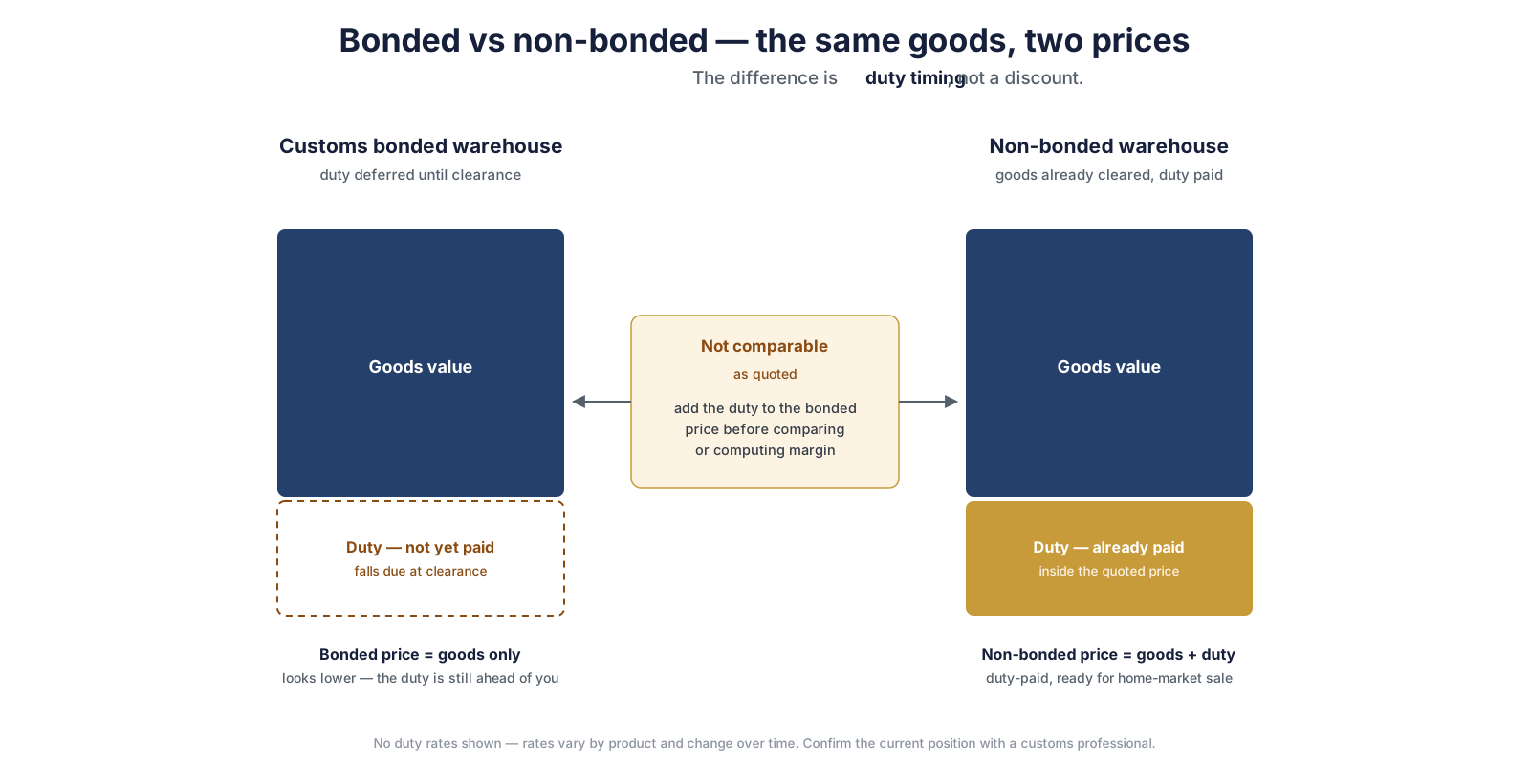
Bonded vs Non-Bonded Warehouse Pricing: Why the Same Goods Carry Two Prices
Why the same imported goods carry different prices in a bonded and a non-bonded warehouse, and what that means for quoting, costing and margin.
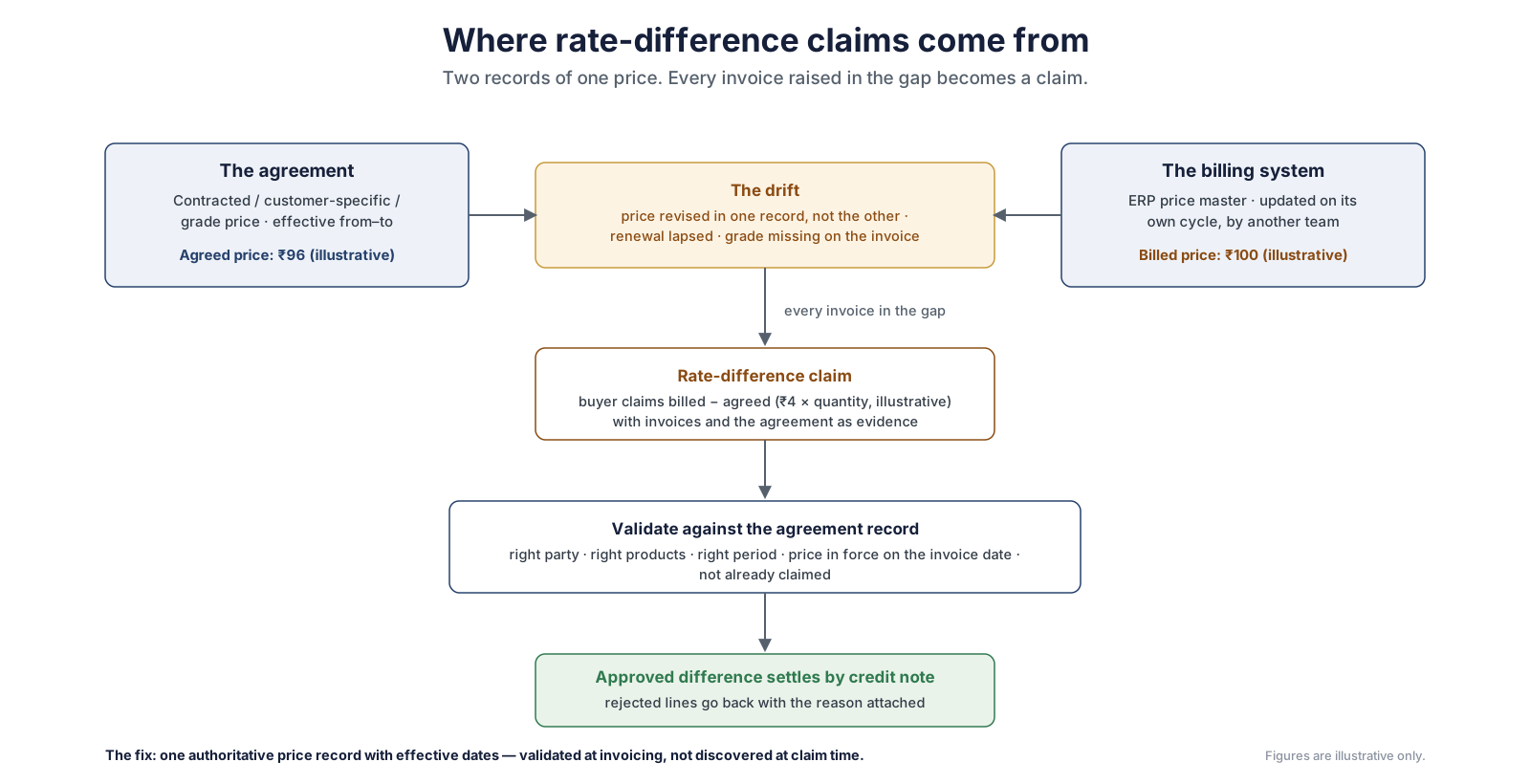
Contracted, Customer-Specific and Grade Pricing: How Negotiated Prices Work
Negotiated prices — contracted, customer-specific and grade-based — and the claims and reconciliation work each one creates.
Situational Pricing: Last Invoice, Customer Expectation, Competition and Tactics
The prices that come from a situation rather than a price list — last invoice, customer expected, meeting-competition and tactical pricing.