
Bonded vs Non-Bonded Warehouse Pricing: Why the Same Goods Carry Two Prices
Why the same imported goods carry different prices in a bonded and a non-bonded warehouse, and what that means for quoting, costing and margin.
In short
Goods held in a customs bonded warehouse have not yet had import duties paid; goods in a normal warehouse have. A bonded price therefore excludes duty that a non-bonded price includes. The difference is not a discount — it is a duty-timing difference, and confusing the two distorts margin comparisons.
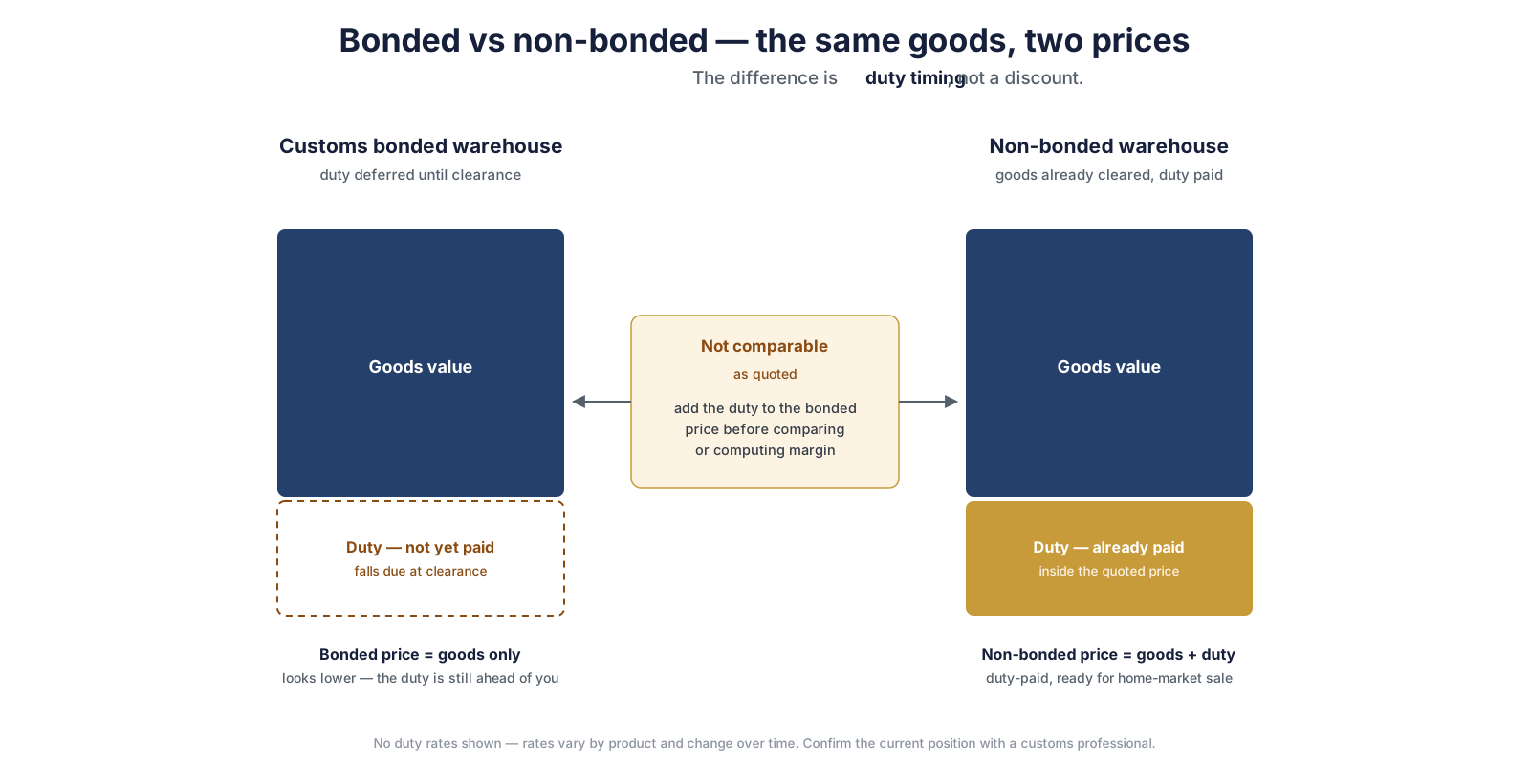
Two quotes arrive for the same imported product. One is from stock in a customs bonded warehouse, one from a duty-paid godown, and the first is noticeably lower. Nothing about the goods differs. The gap is not a discount, a rebate or a scheme — it is duty that has not been paid yet. This article is about that one distinction, because it quietly distorts quotations, landed costs and margin reviews in every import-heavy category.
Bonded vs non-bonded at a glance
| Bonded | Non-bonded | |
|---|---|---|
| Duty status | Deferred — not yet paid | Paid — goods already cleared |
| What the price typically includes | Goods (and storage terms), duty excluded | Goods with duty inside the price |
| Who the buyer usually is | Importers and traders who will clear the goods themselves, or re-export | Buyers who want stock ready for the home market |
| Cash-flow effect | Duty outflow deferred until clearance | Duty cash already sunk in the stock |
| What to watch in margin comparison | Add the deferred duty before comparing anything | Confirm the duty basis so you don't add it twice |
What is a bonded warehouse?
A customs bonded warehouse is a customs-supervised facility where imported goods can be held with import duty deferred until they are cleared. The goods have arrived in the country physically, but not fiscally: the duty event has not happened yet. When the goods are cleared for home consumption, duty falls due; in general, goods may also move out of bond for re-export, in which case home-market duty is not the exit route at all. The warehousing framework — who may operate one, how long goods may stay, and on what terms — is specific and changes over time, so treat this as the concept only and confirm the current procedure with a customs professional. <!-- TODO VERIFY AT PUBLISH: customs warehousing procedure — confirm the general description with a customs professional; do not add section numbers, time limits or scheme details. -->
For a pricing or finance team, the operational meaning is simple: stock in bond is stock whose cost build-up is unfinished. Every number attached to it is a number from before the duty step.
Why the price differs
Think of an imported product's cost as a sequence: supplier's price, freight and insurance, then duty and clearing, then local logistics. A non-bonded quote is given from after the duty step; a bonded quote is given from before it. Same goods, different point on the same line.
That framing explains the two practical properties of bonded pricing:
The gap is exactly the deferred duty (plus clearance costs), not value. Nobody has conceded margin. This is why the gap should never be read the way an on-invoice discount is read — no one has given anything, any more than a price quoted before freight is a freight subsidy.
The deferral is a real cash-flow advantage. Duty is paid at clearance, which for a trader can be after the onward sale is already contracted — the duty outflow and the sales inflow sit closer together. That timing benefit is worth something; it is just not a lower price, and pricing decisions that treat it as one convert a financing advantage into a phantom margin.
Where businesses get this wrong
The errors are mundane, recurring, and expensive in proportion to duty rates — which vary by product and change, which is precisely why none are quoted here.
Comparing a bonded quote against a duty-paid quote and concluding one supplier is cheaper. The comparison is meaningless until the deferred duty is added to the bonded side. This is the import-world version of the like-for-like test that meeting a competitor's offer demands — same specification, same terms, same duty basis — and it fails silently, because both numbers are genuine quotes for genuine stock.
Forgetting duty when calculating landed cost. A costing built from a bonded purchase price that never adds the duty understates landed cost by the full duty amount. Every downstream number inherits the error: the margin review flatters the product, the price set from that cost is too low, and the mistake surfaces months later as a margin miss nobody can locate.
Quoting bonded prices to a buyer who needs duty-paid goods. The buyer compares your bonded number against duty-paid rivals, you win the order, and the duty argument starts at delivery. The reverse also occurs: quoting duty-paid against bonded competitors and losing on an apples-to-oranges comparison.
Mixing the two stocks in one margin report. A business holding both bonded and duty-paid stock of the same SKU has two cost bases for one product. Reports that average them produce a margin that is true of neither — the same one-product-two-records trap that grade pricing falls into when the grade is missing from the invoice.
Where the trap bites hardest tracks the import mix. Consumer electronics carries the double exposure — imported stock and falling prices, so a duty-basis error compounds the price-protection arithmetic when the published price moves. Chemicals and machinery see it in landed-cost-based contract pricing; premium imported goods see it wherever an importer-trader quotes both ex-bond and duty-paid to different tiers of the same channel. The counterparty split is the same everywhere: buyers who clear goods themselves want ex-bond quotes and own the duty; buyers who want home-market-ready stock need duty-paid quotes and own none of it — and a quotation that doesn't say which buyer it is written for will eventually be read by the wrong one.
Landed cost and the price waterfall
In price-waterfall terms, duties sit with freight and levies in the step between net price and net-net — the deductions that are not given to any customer but still stand between the invoice and what you realise. A bonded price is simply a price captured before that step of the waterfall has run.
That placement is the discipline: the waterfall only reads true if every price entering it is tagged with which steps it has already absorbed. For importers, "duty-paid or not" is the tag that matters most, and it belongs on the record — the costing sheet, the quote, the stock ledger in the ERP — not in the quoting manager's memory.
What to state on a quotation
The whole failure class above collapses if quotations make the duty basis explicit. State, in words on the document:
- whether the price is duty-paid or duty-excluded (ex-bond);
- if duty-excluded, who clears and who bears the duty, and that it is charged at the rate in force at clearance;
- what the buyer is responsible for beyond the goods — clearing, handling, onward freight.
This is practical drafting hygiene, not legal advice — the aim is that both sides read the same number the same way. It is the same principle that runs through this whole cluster, from published prices to negotiated ones: a price is only as good as the record of what it includes and when it applies. ClaimDS applies that principle to the agreements and claims layer — terms recorded once, with their basis and dates, so later settlements are validated rather than argued. <!-- TODO FOUNDER CONFIRM: capability sentence — confirm scope wording matches shipped functionality before publish. -->
The bonded price is not a bargain and the non-bonded price is not a markup. They are the same price, photographed at two moments — and the only mistake is forgetting which photograph you are holding.
This article is general information, not customs, tax or legal advice. Customs warehousing procedure, duty rates and clearance requirements are specific and change — confirm the current position for your goods and transactions with a qualified customs professional.
Frequently asked questions
What is a bonded warehouse price?
It is the price of imported goods still held in a customs bonded warehouse, where import duty has been deferred rather than paid. The price reflects the goods without the duty component, because the duty falls due when the goods are cleared. It is a price captured at an earlier point in the cost build-up, not a better price.
What is the difference between bonded and non-bonded prices?
One component: duty. A non-bonded price is for goods already cleared into the country, so the duty is inside the price. A bonded price is for goods on which duty is still deferred, so it sits outside. Comparing the two as quoted is comparing different stages of the same cost build-up — the bonded price must have duty added first.
Is a bonded price cheaper?
No — it is earlier. The duty has not been paid yet, so the price looks lower, but the liability is still ahead of whoever clears the goods. Once duty is added, identical goods from a bonded and a non-bonded source should land at a broadly similar cost. Treating the gap as a saving is the classic mistake this distinction exists to prevent.
Who pays the duty on goods sold from a bonded warehouse?
Generally, the party who clears the goods for home consumption — duty falls due at clearance, so whoever files that clearance bears it at that point. Contracts should state explicitly which side that is. The mechanics depend on current customs procedure, so confirm the position for your transaction with a customs professional.
How does duty affect landed cost?
Duty is one of the components between the supplier's price and the true landed cost, alongside freight, insurance, clearing and handling. A landed-cost calculation that starts from a bonded price and forgets the deferred duty understates cost by exactly the duty amount — and every margin and pricing decision built on that number inherits the error.
See ClaimDS on your own claims data
A 30-minute walkthrough tailored to how your channel actually settles claims.
Related posts
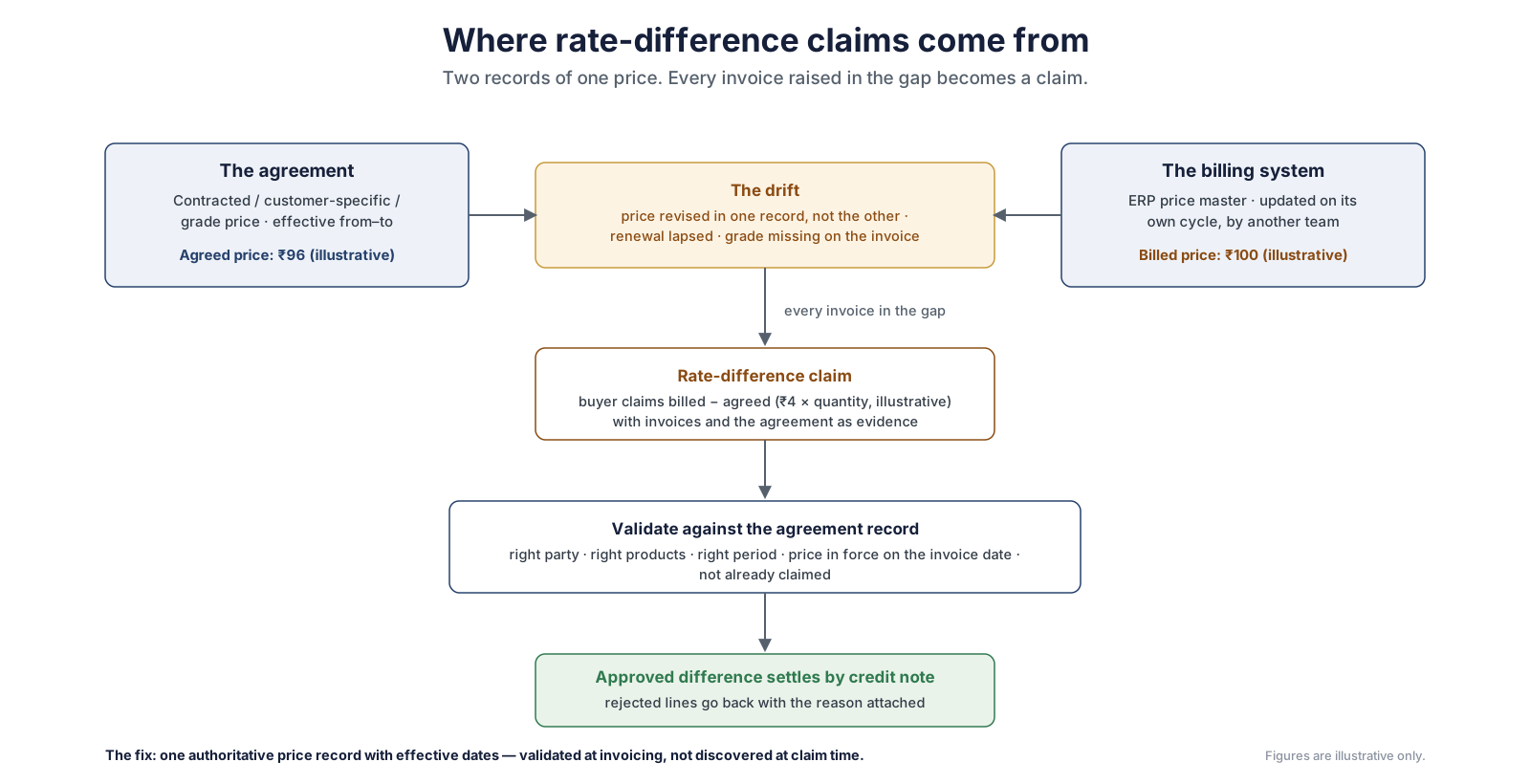
Contracted, Customer-Specific and Grade Pricing: How Negotiated Prices Work
Negotiated prices — contracted, customer-specific and grade-based — and the claims and reconciliation work each one creates.
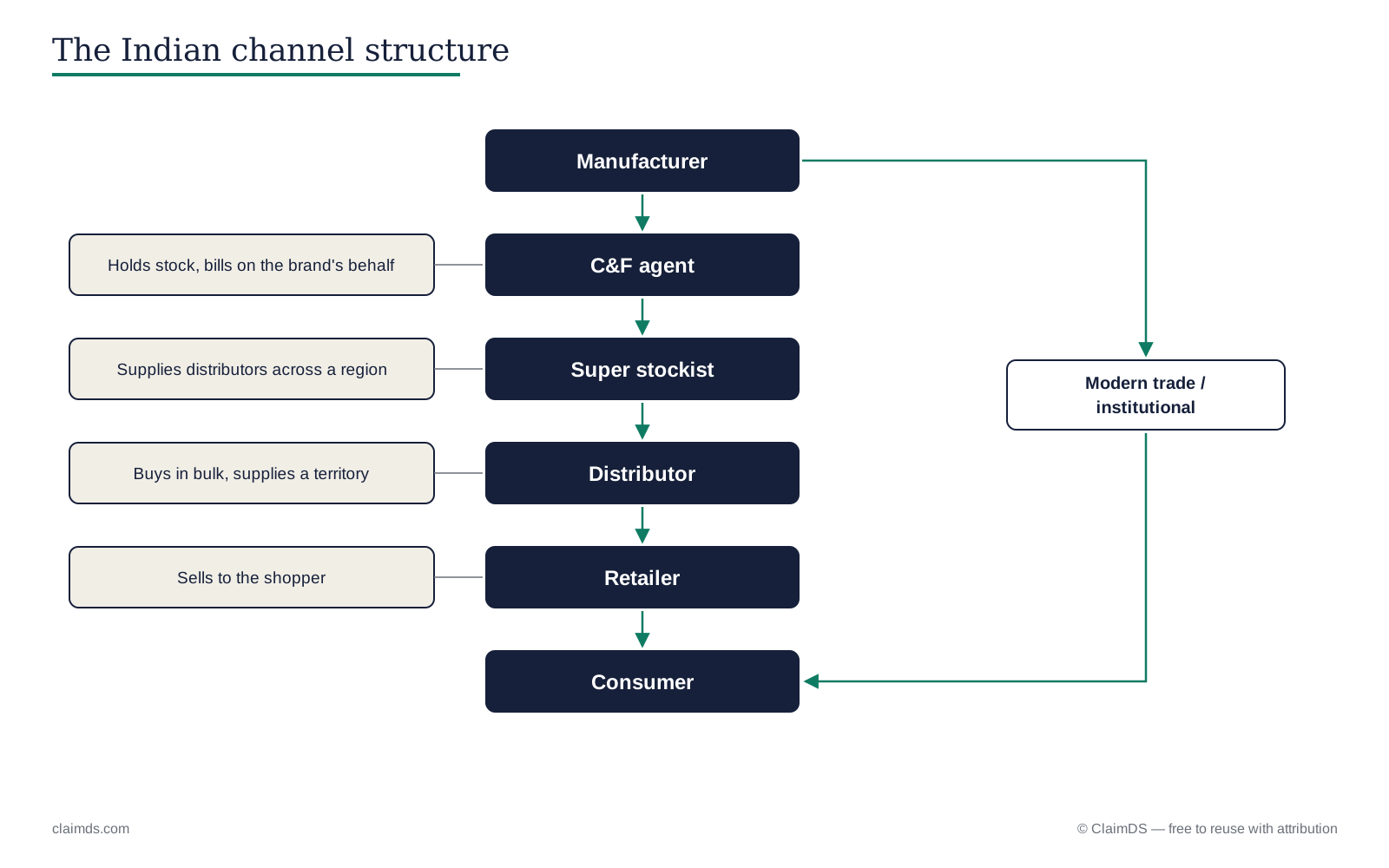
List Price, MRP, Brochure Price and Reseller Price: What Each One Means
The published prices in a channel — list, MRP, brochure and reseller price — and what each one actually commits you to in India.
Situational Pricing: Last Invoice, Customer Expectation, Competition and Tactics
The prices that come from a situation rather than a price list — last invoice, customer expected, meeting-competition and tactical pricing.