Is a Rebate a Discount? Rebate vs Discount vs Scheme
A rebate and a discount both reduce what a buyer pays, but they work differently and are treated differently in the books. The clear difference for Indian businesses.
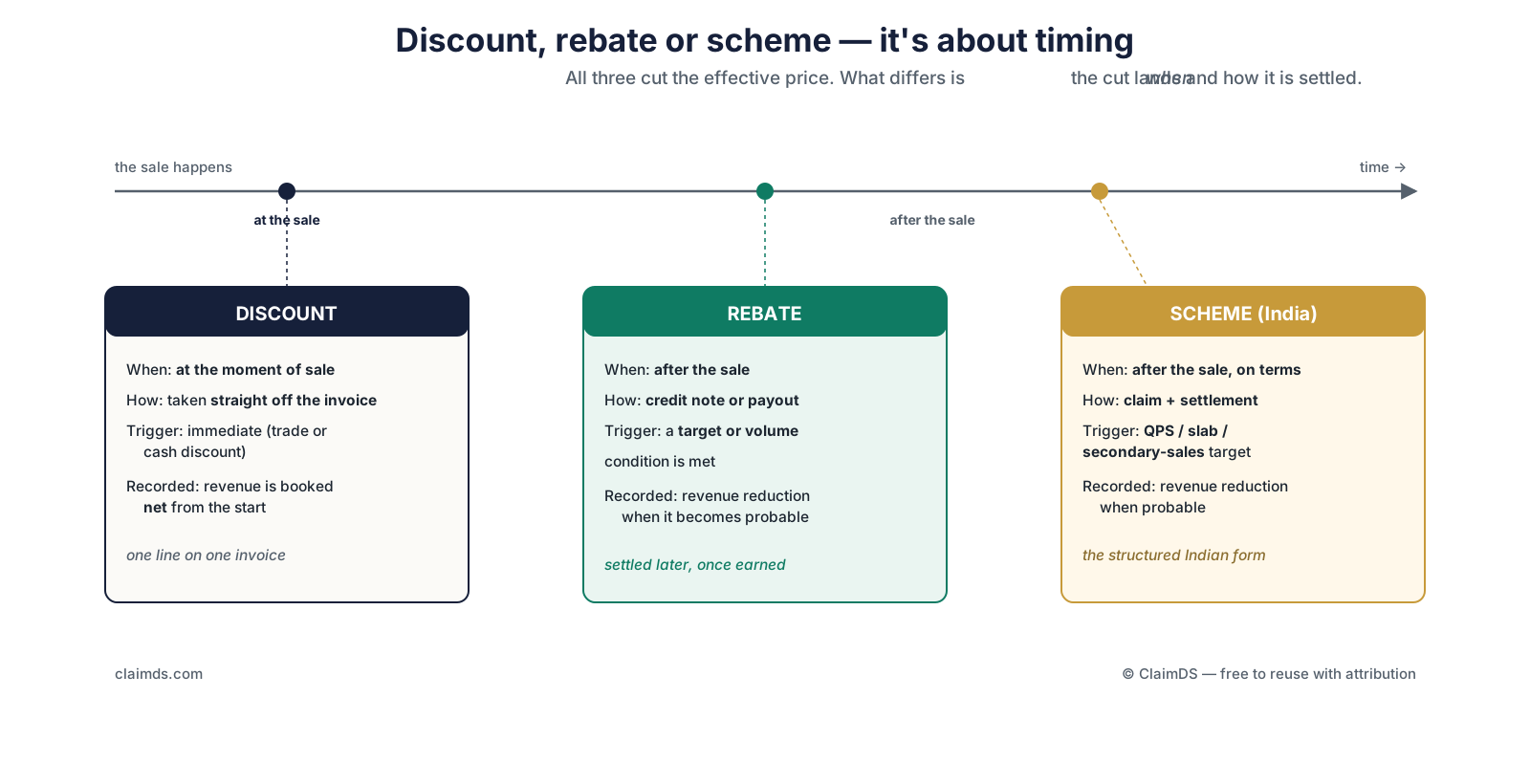
The short answer: a discount is a reduction given at the time of sale — taken straight off the invoice. A rebate is a reduction given after the sale, usually once the buyer hits a target or condition, and settled later by credit note or payout. Both reduce the effective price, but the timing, the paperwork and the accounting differ.
One clarification first, because the word is overloaded: this article is about trade and channel rebates — money moving between businesses in a supply chain. It is not about the income-tax rebate under Section 87A, which is a personal-tax concept and a different topic entirely.
Discount vs rebate vs scheme at a glance
| Discount | Rebate | Scheme (India) | |
|---|---|---|---|
| When it's given | At the sale | After the sale | After the sale, on defined terms |
| How it's applied | Off the invoice | Credit note or payout | Claim + settlement |
| Typical trigger | Immediate | A target or volume | QPS / slab / secondary target |
| How it's recorded | Net invoice | Revenue reduction when certain | Revenue reduction when certain |
What is a discount?
A discount is a price reduction applied at the point of sale. It is known at the moment the deal is struck and comes straight off the invoice value, so the buyer pays the reduced amount there and then. The two everyday forms are the trade discount — a reduction off the list price for the type of buyer or the volume of the order — and the cash discount, a reduction for paying quickly.
Because a discount is known at sale, it never really becomes a separate line to track: the invoice is simply raised net of it, and revenue is recorded net from the start. There is no later claim, no settlement, and no waiting to see whether a condition is met. That simplicity is exactly what separates a discount from a rebate. For how the same reduction can be a discount or something else depending on the relationship, see supplier, dealer and trade-scheme incentives.
What is a rebate?
A rebate is a price reduction given after the sale, conditional on the buyer doing something — usually crossing a purchase or sales target over a period, or meeting a performance condition. The buyer transacts first at the full price; the rebate is earned later and settled by a credit note or payout once the condition is met. That after-the-fact, conditional nature is the whole difference: a rebate is a promise that pays out on evidence, not a reduction taken up front.
B2B rebates exist because they do a job a discount can't: they reward behaviour over time — buying more, growing year on year, stocking a fuller range — rather than a single transaction. That makes them powerful and also harder to manage, because the amount owed depends on data that arrives after the fact and has to be measured. What actually counts as a "rebate" is a surprisingly overloaded question in Indian trade — what is a rebate untangles it — and the arithmetic of turning scheme rules into a settled amount is in how to calculate FMCG distributor claims. The engine that runs the whole cycle is rebate management software.
What is a scheme (the India-specific version)?
A scheme is the structured, India-specific form of a rebate. Instead of a loose "hit this and we'll look after you," it defines qualifying purchases or sales and a payout formula in advance: a quantity purchase scheme (QPS) tied to volume, a slab scheme that pays a rising rate as the channel crosses thresholds, or a secondary-sales scheme that pays on what the channel sells on rather than just what it buys in.
The mechanics are what make a scheme distinct: defined thresholds, a defined rate, a qualifying period, and a claim the channel raises which the manufacturer verifies and settles by credit note. Getting the payout right depends entirely on measuring the correct base — which in a multi-tier network means telling primary, secondary and tertiary sales apart, because a secondary-sales scheme pays on a different number than a primary-purchase one. The scheme is only ever as good as the claim arithmetic underneath it.
Why the difference matters for your books
The timing difference drives an accounting difference. A discount known at sale is simply netted off — revenue is recorded net of it from the start, with nothing to recognise later. A rebate is recognised as a reduction in revenue when it becomes probable and can be measured — because at the point of sale the seller does not yet know whether the buyer will meet the condition, so the reduction is estimated and booked as the outcome becomes clear rather than reversed after the fact.
Keeping this straight is what makes net revenue meaningful, and it is where after-the-fact rebates most often go wrong in the books. The mechanics of recording a rebate — and the difference between the older and newer Indian frameworks — belong in the dedicated rebate-accounting article once it publishes; the GST side of a post-sale reduction, and whether it flows through a tax or a financial credit note, is in CBIC Circular 251 on post-sale discounts.
<!-- TODO: link the rebate-accounting (GAAP/Ind AS) article (rebates-indian-gaap-accounting) once it is out of draft. -->Discount, commission — or something else?
There is a third distinction hiding behind the first, and it decides the tax, not just the accounting. A reduction given to someone who buys your goods and resells on their own account is a discount on their purchase — a price adjustment. A payment to someone who acts as your agent to get you business is a commission — a fee for a service, taxed differently. The same rupee can be either, depending on the relationship, and the line is exactly where TDS questions begin.
This article states no tax position — the point here is only that "discount vs rebate" is not the only line that matters. The discount-versus-commission test, and the TDS that follows it, is set out in discount or commission? The Section 194H line.
General information, not advice. This article explains commercial and accounting concepts in general terms and is not accounting, tax or legal advice. The treatment of any specific discount, rebate or scheme depends on your facts and framework. Confirm a specific arrangement with your chartered accountant before relying on it.
Read next
- What is a rebate — the overloaded term, untangled.
- How to calculate FMCG distributor claims — turning scheme rules into a settled amount.
- Primary, secondary and tertiary sales — the sales bases a scheme pays on.
- Supplier, dealer and trade-scheme incentives — how the same reduction changes name by direction.
- Rebate management software — the engine behind rebates and schemes.
A rebate is only as good as the claim underneath it. ClaimDS tracks your channel schemes, claims and settlements in one auditable record — so the reduction you record is one you can trace back to the evidence.
Book a demo to see how ClaimDS settles rebates and schemes the way your books need them.
Frequently asked questions
Is a rebate the same as a discount?
No. A discount is a reduction given at the time of sale, taken straight off the invoice. A rebate is a reduction given after the sale, usually once the buyer meets a target or condition, and settled later by credit note or payout. Both reduce the effective price the buyer pays, but the timing, the paperwork and the accounting all differ.
What is the difference between a rebate and a discount?
The core difference is timing. A discount is applied at the point of sale and nets straight off the invoice, so revenue is booked net from the start. A rebate is earned after the sale on a target or volume condition and is settled later, so it is recorded as a reduction in revenue when the outcome becomes probable. A discount is immediate; a rebate is conditional and retrospective.
Is a rebate given before or after the sale?
A rebate is given after the sale. The buyer transacts first, and the rebate is earned and paid later — typically once purchases or sales cross an agreed target over a period. This is the opposite of a discount, which is applied at the moment of sale and comes straight off the invoice value. The after-the-fact timing is what makes a rebate a claim-and-settlement process.
What is a scheme in Indian FMCG?
A scheme is the structured, India-specific form of a rebate a manufacturer runs down its channel — for example a quantity purchase scheme (QPS), a slab scheme, or a secondary-sales scheme. It defines qualifying purchases or sales and a payout formula in advance, which the channel claims and the manufacturer settles, usually through a credit note after the qualifying period.
Does a rebate reduce revenue?
Generally yes, in the seller's books. A rebate reduces the price the seller ultimately realises, so it is treated as a reduction of revenue, not a separate expense — recognised when it becomes probable and can be measured. Whether it also adjusts GST depends on whether it moves through a tax or a financial credit note, a separate question from the revenue treatment.
Is a trade discount taxed differently from a rebate?
The tax treatment turns on the facts, not the label: what matters is whether the reduction is a price adjustment on goods and how it is passed — for example through a GST tax credit note or a financial credit note. This article states no specific position; the detail sits in the dedicated GST and tax articles, which should be confirmed with a chartered accountant for your own arrangement.
See ClaimDS on your own claims data
A 30-minute walkthrough tailored to how your channel actually settles claims.
Related posts

Supplier and Purchase Rebates in Agri-Inputs
How Indian agri-input makers treat money from raw-material and packaging suppliers — turnover and cash discounts under Ind AS 2 and GST credit notes.
Supplier and Purchase Rebates in Automotive
How Indian automotive treats money received from component and material suppliers — turnover and cash discounts under Ind AS 2 and GST credit notes.
Supplier and Purchase Rebates in Electronics
How Indian electronics makers treat money received from component and packaging suppliers — turnover, cash discounts under Ind AS 2 and GST credit notes.