
What a Distributor Actually Earns After Rebates
Your invoice margin is not your real margin. How supplier rebates, schemes and claims change what a distributor earns — and why the timing hides it.
In short
A distributor's real margin is the selling price less the net cost of goods — and net cost is the invoice price reduced by every supplier rebate, scheme and allowance actually earned on those goods. Invoice margin overstates cost and understates earnings, because the rebates arrive later and often land in a different period.
Almost every article about trade rebates — on this site and everywhere else — is written for the brand paying them. This one is written for the business earning them: the distributor or wholesaler whose margin depends on supplier rebates, schemes and claims actually arriving. One clarification before the numbers: "rebate" throughout means a supplier or trade rebate — money earned back from a supplier on goods you bought and sold — not the income-tax rebate, which is a different subject entirely. And "claims" means distributor and channel claims.
The worked example: invoice margin versus real margin
Every figure below is illustrative — one case of goods, invented numbers, chosen to make the arithmetic visible.
| Line | Amount (₹) | Note |
|---|---|---|
| Selling price to retailer | 10,000 | What the goods actually fetched |
| Invoice cost from supplier | 9,200 | What the invoice said, net of on-invoice discount |
| Invoice margin | 800 | The number most monthly reports show |
| On-invoice discount (already in the price above) | — | Captured at billing; no adjustment needed |
| Add: volume scheme earned on these goods | 150 | Quarterly slab, settled by credit note later |
| Add: secondary scheme claimed | 80 | Earned on sell-through, claimed with sales data |
| Add: entitlement never claimed (lapsed) | 60 | Earned, missed the deadline — not collected |
| Net cost if everything earned were collected | 8,910 | 9,200 − 150 − 80 − 60 |
| Real margin (everything collected) | 1,090 | What these goods could have earned |
| Real margin (actually collected) | 1,030 | 60 lost to the lapsed claim |
| Real margin % (actual) | 10.3% | Against 8% on the invoice view |
Read the last three rows together: the invoice said 800; the goods really carried 1,090; the business collected 1,030. The gap between the first and last numbers is the point of this article — and the ₹60 in the middle is the part nobody ever sends you a reminder about.
Invoice margin is not real margin
The invoice tells you what you were billed. It cannot tell you what the goods eventually cost, because a distributor's cost is reduced by things calculated after the invoice: quarterly volume schemes, growth incentives, secondary schemes, allowances. Whether a given reduction is a discount or a rebate changes when it reaches you — on the invoice, or later by credit note — and everything in the "later" category is invisible to invoice margin.
The arithmetic is unforgiving for thin-margin businesses: the thinner the invoice margin, the larger every uncollected entitlement is as a share of what you actually earn. A small lapsed claim against a fat margin is a rounding error; the same lapsed claim against a thin one is a material slice of the year. That is a relationship, not a statistic — and it is why this discipline matters more the more competitive your market is.
Why the rebate does not show up this month
The timing problem in one line each: you sell the goods in April; the quarterly scheme is earned at the end of June; the claim is filed in July; the credit note arrives in August. One set of goods, four different months.
Two things follow. First, monthly margin reports look wrong — April looks worse than it was, August looks better, and neither month's number describes any real transaction. Second, by the time the credit note arrives, nobody links it back to the goods it relates to, so even the annual picture depends on someone doing attribution that no document forces. How these credit notes should sit in the books is an accounting question this article deliberately does not answer — it is covered in rebate accounting and GST credit notes, and your CA should confirm the treatment for your framework. <!-- TODO CA REVIEW: confirm this section asserts no accounting position. -->
The margin you never collect
This is the section that matters most, because no supplier will ever raise it with you. Some of your margin is earned and simply not collected:
- Claims that miss the deadline. Scheme windows close; a claim filed late is a claim declined — the entitlement was real and the money never came.
- Schemes you did not know applied. Circulars arrive by email, WhatsApp and sales-rep conversation; a scheme you never registered is a scheme you never claim.
- Secondary schemes never claimed because the sell-through data was never submitted — the entitlement depends on sharing secondary sales data, and no data means no claim, however real the sales were.
- Short settlements never followed up. A claim settled at less than entitlement, queried by nobody, is the same as a discount you never negotiated. Valid-versus-invalid deduction logic runs in both directions.
Lapsed margin is categorically different from margin not made: the work was done, the condition was met, and the money existed. It just needed collecting. How the claim itself is calculated and how secondary schemes settle are covered elsewhere; the buy-side lesson is simply that every stage of that machinery is also a place your own entitlement can quietly die.
Working out your own number
A practical method, one supplier at a time:
- Pick one supplier and one closed quarter. Recent enough that the paperwork exists, closed enough that everything should have settled.
- List every scheme that supplier ran in the period. This is usually the hard step — circulars are scattered across inboxes and rep conversations. If you cannot reconstruct the list, that is itself the finding.
- List what you claimed against each scheme, with dates.
- List what was settled, credit note by credit note.
- Compare the three columns — entitled, claimed, settled. The first gap is your lapsed claims; the second is your short settlements.
- Restate the quarter's margin on that supplier's goods using net cost instead of invoice cost — the same arithmetic as the table above, with your numbers.
One supplier and one quarter is enough to tell you whether the problem is worth systematising. Price simulation from base price to net margin walks the same arithmetic at line level.
Buy side and sell side are the same problem
A distributor sits in the middle: claiming rebates and schemes from suppliers upward, and settling claims from retailers and sub-dealers downward. The disciplines are mirror images — versioned terms, evidence, deadlines, attribution — and a business that runs them well in one direction usually has everything it needs to run the other. The structural view of the whole bridge, from list price down to net-net, is the price waterfall; the buy-side arithmetic in this article is one lane of it, and purchase incentives covers the incentive types you may be earning.
Keeping track without a big system
Honestly: a simple entitlement-versus-claimed-versus-settled register, per supplier per quarter, catches most of what this article describes. The trouble with keeping it in a spreadsheet is the same trouble as every scheme spreadsheet — versions drift, formulas break silently, and the person who understood it leaves — which is the subject of migrating rebate claims off spreadsheets. ClaimDS keeps entitlement, claim and settlement on one record per scheme, so the lapse gap is visible while it can still be claimed. <!-- TODO: confirm capability wording with founder -->
If you want to see your own entitled-claimed-settled picture on one supplier's schemes, book a demo and bring a quarter of circulars.
Related: the channel finance category, supplier rebate accrual tracking, and the rebate management guide for the sell-side view of the same machinery.
Note: This article is general commercial information for distributors and wholesalers, not accounting or tax advice. Every figure is illustrative. Accounting treatment of rebates and credit notes routes to the linked articles and should be confirmed with your own CA.
Frequently asked questions
What is margin after rebates?
Margin after rebates is what a distributor actually earns once every supplier rebate, scheme and allowance earned on the goods is counted against their cost. The invoice states what you were billed; the rebates reduce what the goods really cost. Real margin is selling price minus that net cost — usually noticeably different from the margin the invoice implies.
How do supplier rebates affect a distributor's margin?
They reduce the true cost of goods, which raises the true margin — but only for rebates actually collected. A quarterly trade scheme, a growth incentive or a secondary scheme earned on goods you sold in April may settle months later, and until you attribute it back to those goods, your margin on them is understated in your own numbers.
Why is my invoice margin different from my actual margin?
Because the invoice only captures what the supplier billed, including any on-invoice discount — it cannot capture entitlements that are calculated after the fact. Volume schemes, growth incentives and secondary schemes are earned over a period and settle by later credit note, so the invoice systematically overstates your cost and understates your margin.
Do purchase rebates count as income or reduce cost?
That is an accounting-treatment question, and this article deliberately takes no position on it — the answer depends on the framework you report under and the nature of the arrangement. How rebates and scheme credit notes interact with the books is covered in our rebate accounting article, and your own CA should confirm the treatment for your business.
What happens to a rebate a distributor never claims?
It lapses — and that is margin already earned that was simply not collected, which is categorically different from margin not made. Claims miss deadlines, schemes go unnoticed, and secondary schemes go unclaimed because sales data was never submitted. No supplier chases you to claim; the entitlement quietly expires and your real margin drops without any decision being made.
How can a wholesaler track rebates earned from suppliers?
Keep one register per supplier per period with three columns: entitled, claimed, settled. List every scheme the supplier ran, what you claimed against each, and what actually arrived. The gaps between the columns are your lapsed claims and short settlements. The hard part is usually the first column — knowing every scheme that applied to you.
Why do rebates arrive in a different month from the sale?
Because the entitlement is calculated after the period closes. You sell in April; a quarterly scheme is earned at end-June; the claim is filed in July; the credit note arrives in August. One set of goods, four months. Until the credit note is attributed back to those goods, monthly margin reports misstate both months.
See ClaimDS on your own claims data
A 30-minute walkthrough tailored to how your channel actually settles claims.
Related posts
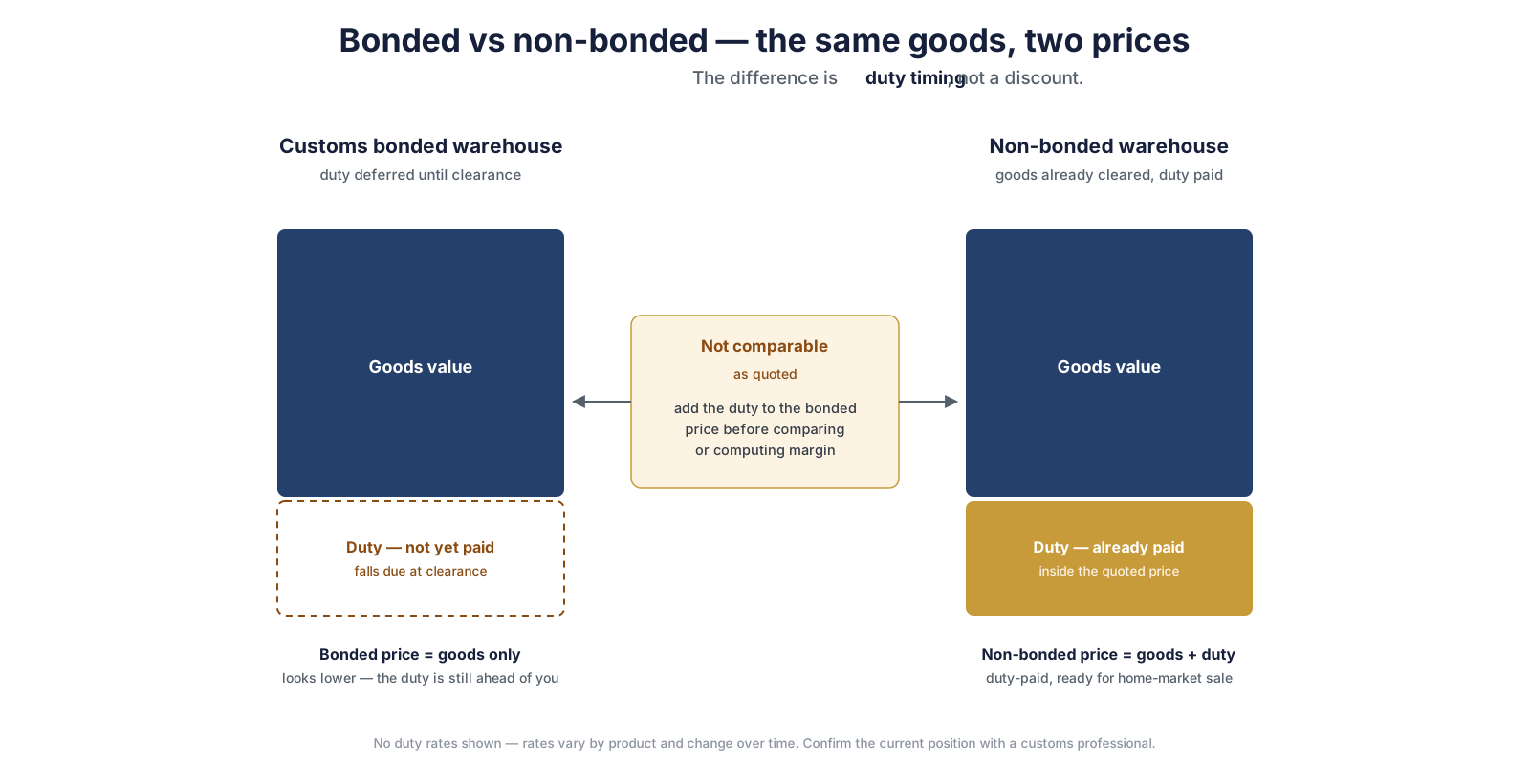
Bonded vs Non-Bonded Warehouse Pricing: Why the Same Goods Carry Two Prices
Why the same imported goods carry different prices in a bonded and a non-bonded warehouse, and what that means for quoting, costing and margin.
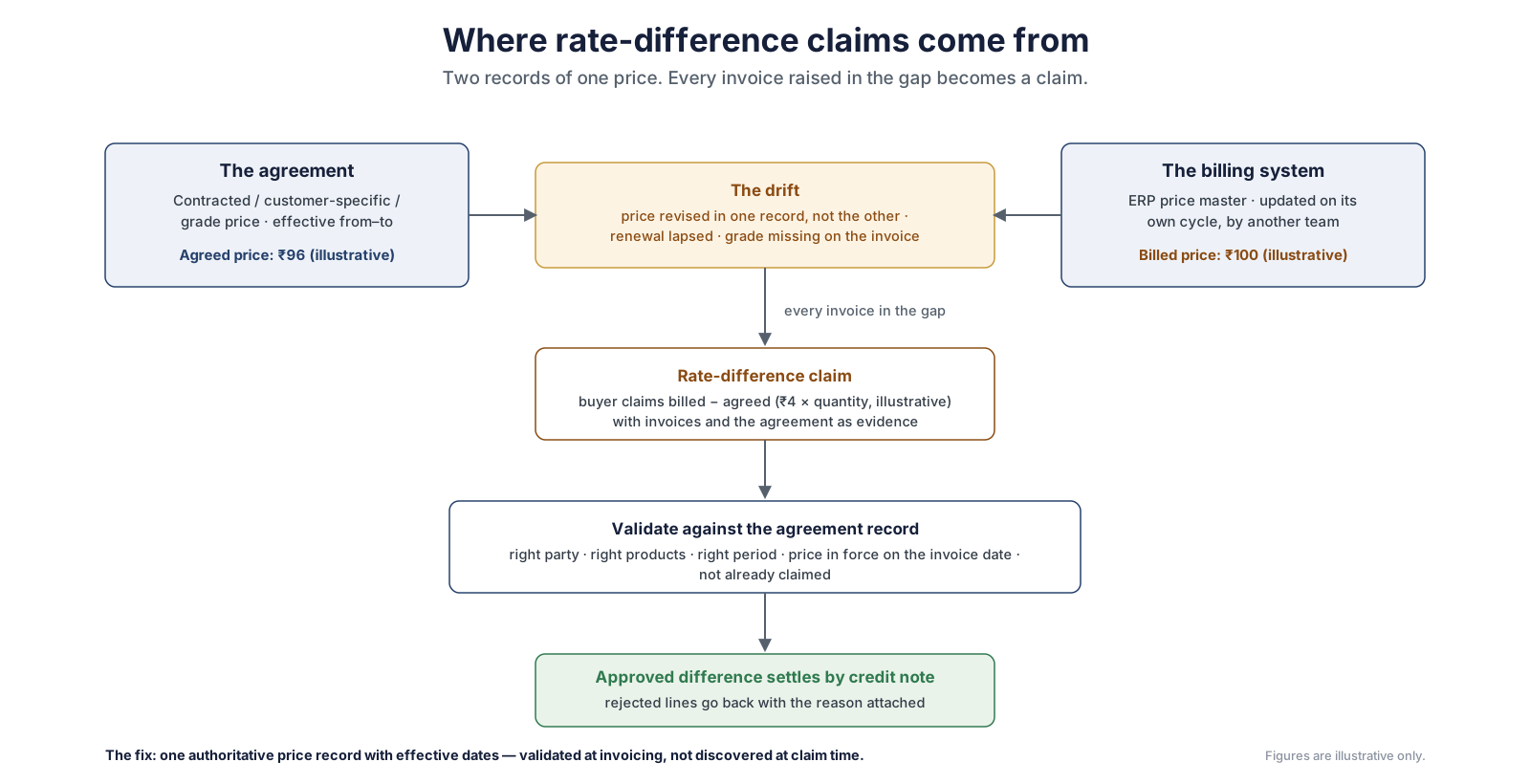
Contracted, Customer-Specific and Grade Pricing: How Negotiated Prices Work
Negotiated prices — contracted, customer-specific and grade-based — and the claims and reconciliation work each one creates.
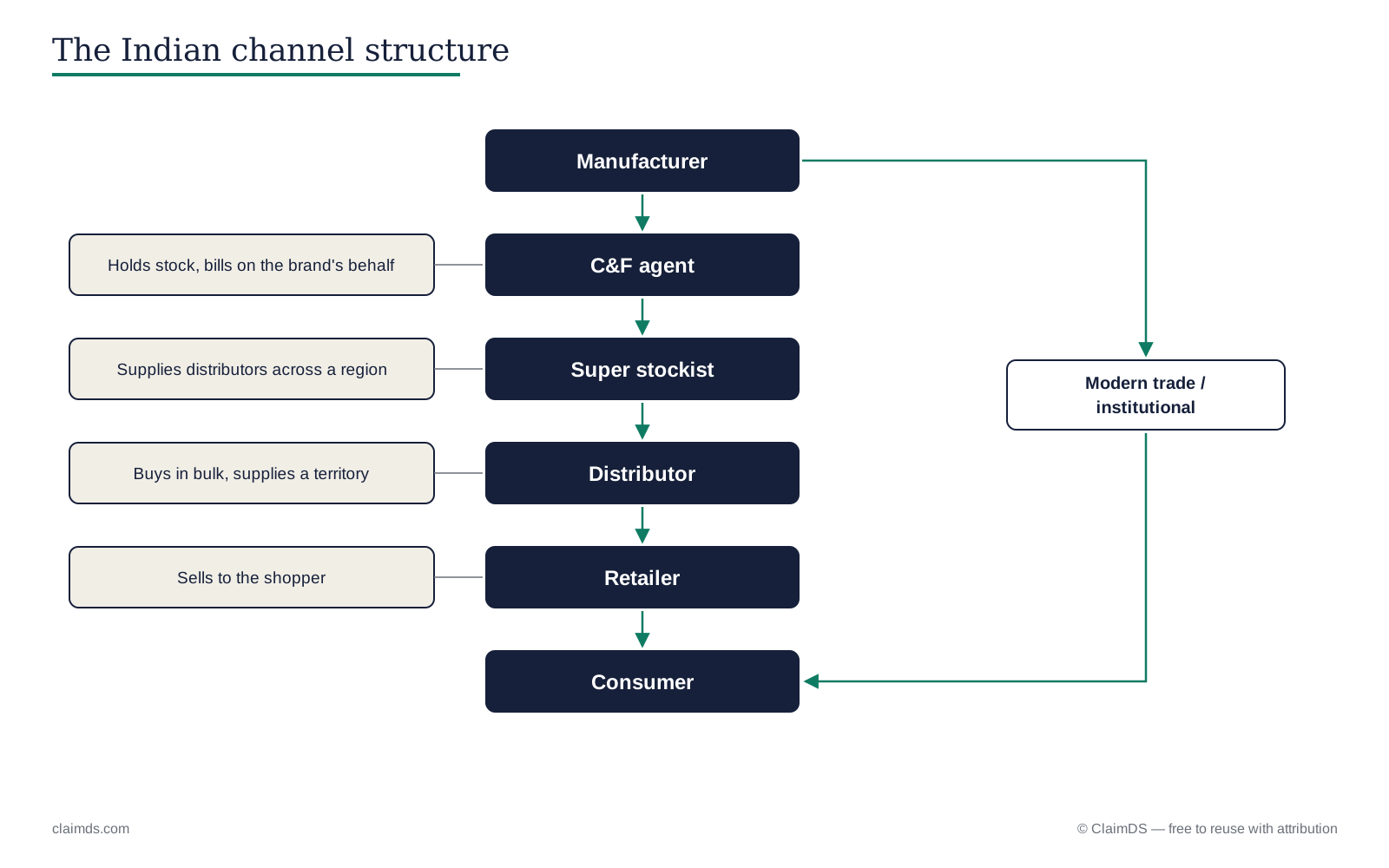
List Price, MRP, Brochure Price and Reseller Price: What Each One Means
The published prices in a channel — list, MRP, brochure and reseller price — and what each one actually commits you to in India.