
Price Simulation: From Base Price to Net Margin, Line by Line
How to simulate a price line — base price, subtotals, net value, the base for tax, total invoice value and net margin — before you commit to it.
In short
Price simulation is working out what a sale actually yields before you commit to the price — building a line from base price down through discounts to net value, adding the base for tax and GST to reach total invoice value, then subtracting off-invoice deductions and cost to see net margin. It answers one question: after everything, what reaches the bank?
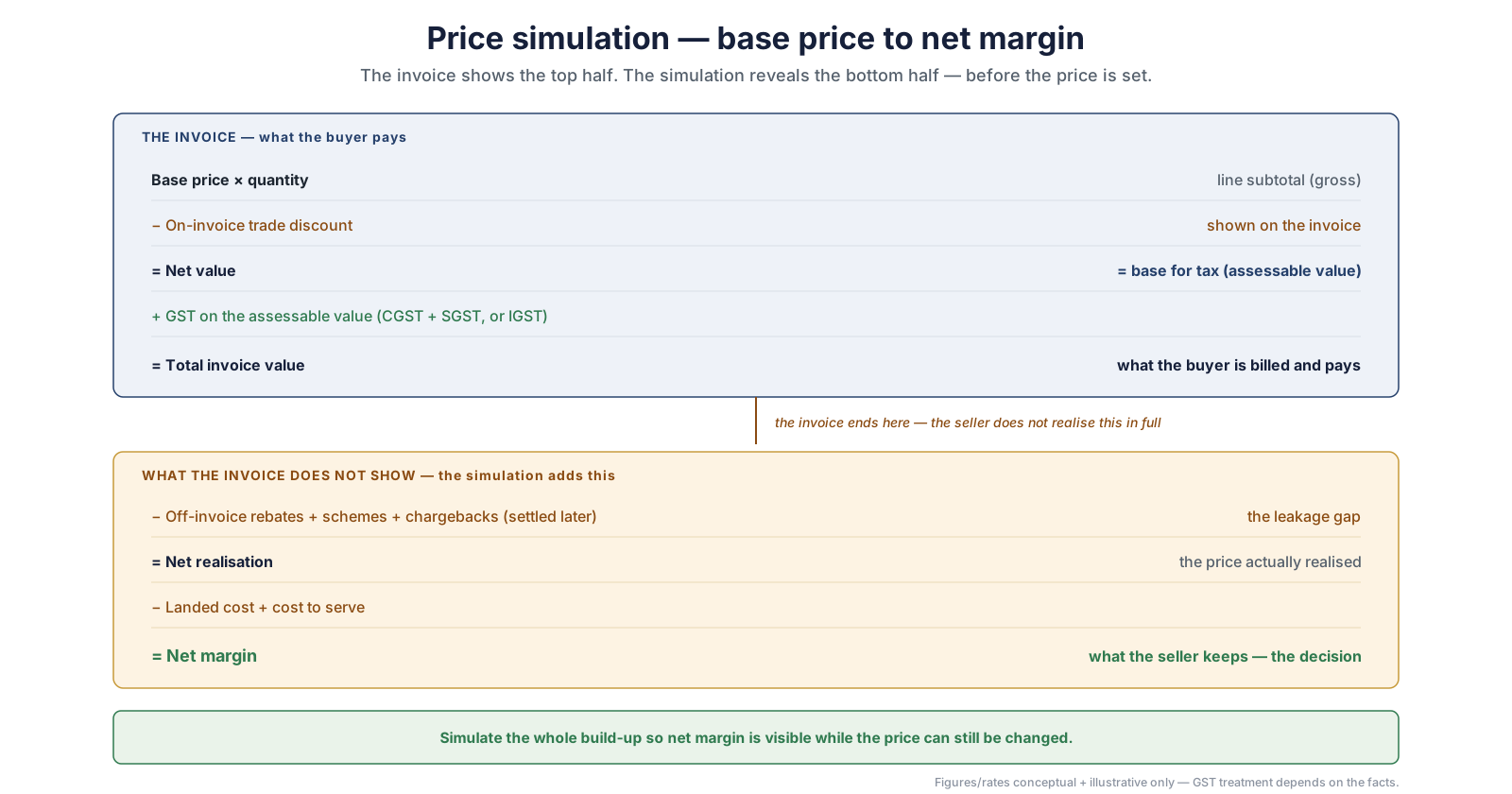
A quoted price and the margin it leaves are two different numbers, and the gap between them is where channel businesses quietly lose money. Price simulation closes that gap: it builds the whole line — from the base price down to what actually reaches the bank — before the price is committed, so the margin is a decision input, not a year-end discovery. This article walks the build-up, subtotal by subtotal.
The build-up at a glance
| Step | Line | What it is |
|---|---|---|
| 1 | Base price × quantity | The reference — list or contracted price, in force on the transaction date |
| 2 | − on-invoice discount | The trade discount shown on the invoice itself |
| 3 | = Net value | Line value after on-invoice discount, before tax |
| 4 | = Base for tax (assessable value) | The value GST is computed on — generally the net value |
| 5 | + GST (CGST + SGST, or IGST) | Tax on the assessable value |
| 6 | = Total invoice value | What the buyer is billed and pays |
| 7 | − off-invoice deductions | Rebates, schemes, chargebacks settled after the invoice |
| 8 | − landed cost + cost to serve | The cost of the goods and of serving the account |
| 9 | = Net margin | What actually remains |
Steps 1–6 are the invoice; steps 7–9 are what the invoice does not show. A simulation that stops at total invoice value has answered the buyer's question ("what do I pay?") but not the seller's ("what do I keep?").
Step 1 — the base price
Every figure below hangs off the base price, so the simulation is only as good as this number. It is the list price or a negotiated contracted price — but critically, the one in force on the transaction date. If the base price the simulation uses differs from the one that will actually be billed, every subtotal downstream inherits the error, and the difference resurfaces later as a rate-difference claim.
Base price × quantity gives the line subtotal before any discount — the gross starting point.
Steps 2–3 — on-invoice discount and net value
An on-invoice discount is deducted on the invoice itself: a trade discount, a volume discount known at the time of sale, an agreed early-payment discount. Subtract it from the line subtotal and you have the net value — the line's value after on-invoice discount, before tax.
Net value is a load-bearing number. It is what most schemes and rebates are later measured against, and in India it is usually the starting point for the taxable value of the line. Getting it right at simulation time is what lets every later calculation reconcile.
Step 4 — the base for tax (assessable value)
The base for tax — the assessable or taxable value — is the amount GST is computed on. As a working rule it is the net value (the post-on-invoice-discount figure), and specific inclusions can vary with the facts of the transaction. Because whether a particular charge or discount belongs in the taxable value is a statutory question, treat this step conceptually and confirm the precise treatment for your transactions with a qualified professional. <!-- TODO VERIFY AT PUBLISH + CA REVIEW: assessable/taxable value composition under GST — keep conceptual, route depth to the GST articles, state no specific inclusion/exclusion rule. -->
The distinction that matters for simulation: an on-invoice discount reduces the base for tax because it is on the invoice; an off-invoice rebate settled later generally does not reduce it at the time of sale — its GST treatment runs through the credit-note route instead. That single split is why the same rupee of discount lands differently depending on where it sits, and it is unpacked in on-invoice vs off-invoice discounts and the GST on trade discounts article.
Steps 5–6 — GST and total invoice value
Add GST to the assessable value — CGST + SGST for an intra-state sale, or IGST for an inter-state one — and you reach the total invoice value: the sum of the lines' taxable values plus the tax on them, less any discount shown on the invoice. This is what the buyer is billed and pays.
For the simulation, two subtotals matter here: the invoice subtotal before tax (the sum of net values) and the total invoice value (with tax). The buyer negotiates on the first and pays the second — and the seller realises neither in full, because of what comes next.
Steps 7–9 — off-invoice deductions, cost, and net margin
This is the half of the build-up the invoice never shows, and the half that decides whether the price was any good.
Off-invoice deductions are the rebates, secondary schemes, billbacks and chargebacks settled after the invoice, plus any deductions the buyer takes from a payment. Subtract them from the net value and you have the net realisation — the price actually realised on the sale. The gap between net value and net realisation is exactly the revenue leakage a channel business fights.
Landed cost and cost to serve come off next: the cost of the goods, and the cost of serving that account (financing the receivable, handling, returns). What remains is net margin — and for a business running on thin channel margins, whether this number is positive is not something to discover after the fact.
This lower half is precisely where a price that looked healthy at the invoice line turns out to be underwater once the account's scheme load and chargebacks are counted. Simulating it is what turns those later deductions into a number the salesperson sees at the point of decision.
A worked example
Illustrative figures only — not benchmarks — to show how the subtotals connect on one line:
| Line | Amount (₹, illustrative) |
|---|---|
| Base price × quantity (100 units × ₹100) | 10,000 |
| − On-invoice trade discount (8%) | −800 |
| Net value (base for tax) | 9,200 |
| + GST (illustrative 18%, CGST 9 + SGST 9) | +1,656 |
| Total invoice value | 10,856 |
| − Off-invoice rebate + scheme (settled later, ~5% of net value) | −460 |
| Net realisation | 8,740 |
| − Landed cost (~₹82/unit) + cost to serve | −8,300 |
| Net margin | 440 |
The buyer sees ₹10,856 and negotiates around ₹9,200. The seller keeps ₹440 — if the scheme, the cost and the cost-to-serve were all counted. Miss the off-invoice line and the same deal reports a margin of ₹900; miss the cost-to-serve and it reports more still. The tax figure is illustrative and the GST treatment of the off-invoice rebate is not a position taken here — route that to the credit-note articles.
Where the numbers come from
A simulation is only as honest as its inputs. The base price must be the agreement in force; the off-invoice deductions must be the scheme terms actually agreed for that account; the cost must be a real cost, not a guess. ClaimDS holds the commercial agreements and scheme terms as dated records, and its net-net view assembles the below-the-line deductions from posted numbers — so the lower half of the build-up is measured rather than assumed. <!-- TODO FOUNDER CONFIRM: capability sentence — confirm scope wording matches shipped functionality before publish. -->
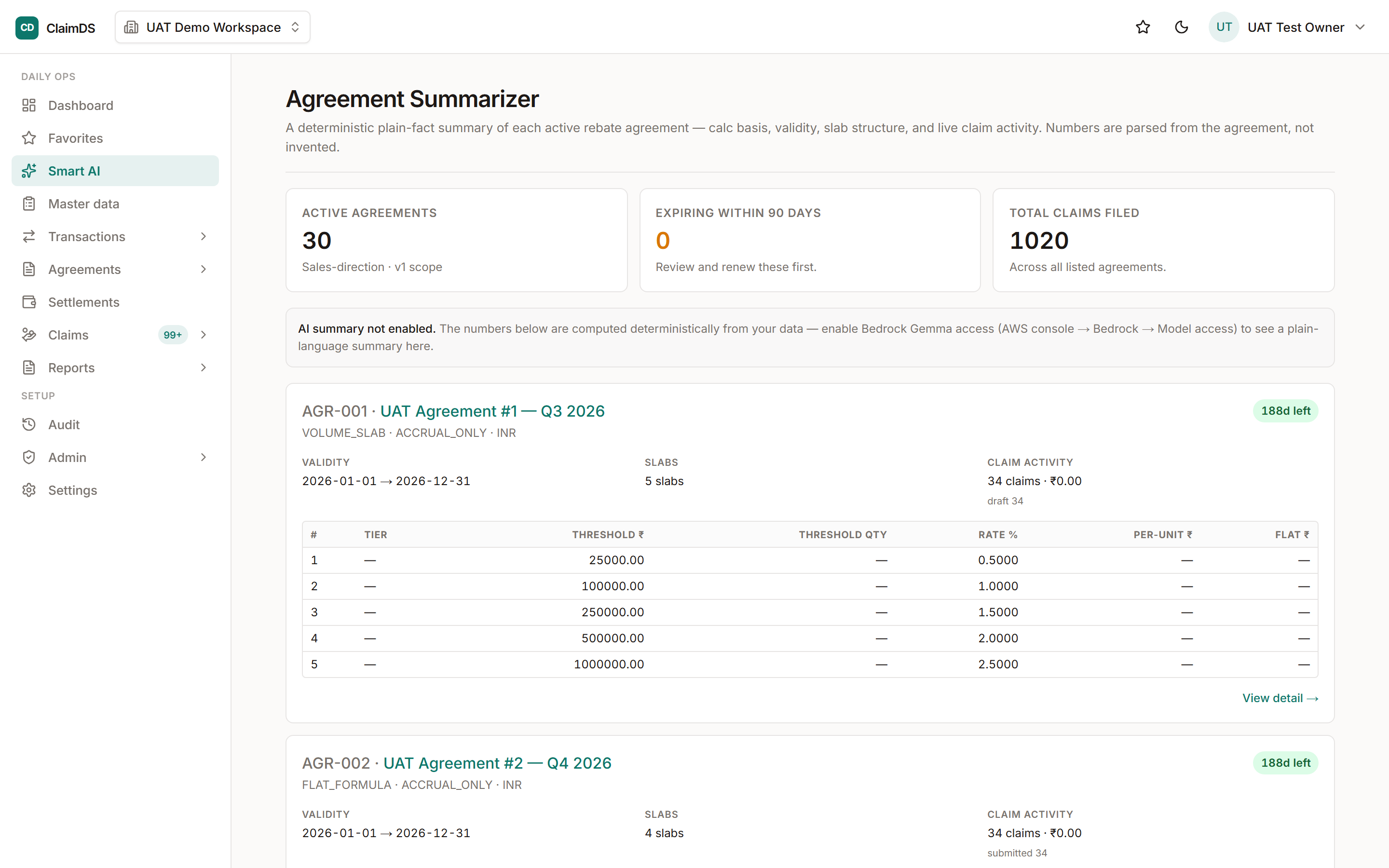
The point of simulating a price is not precision for its own sake — it is to make the last line of the table visible while the price can still be changed. Everything above net margin is arithmetic. Net margin is the decision.
This article is general information, not tax or accounting advice. GST treatment of discounts, the composition of assessable value, and margin computation depend on the facts of each transaction and on current law — confirm the position for your business with a qualified professional. Arithmetic shown is illustrative.
Frequently asked questions
What is price simulation?
Price simulation is modelling a price line end to end before it is offered — starting from the base or list price, applying the discounts and schemes that will attach to it, and working down to the net margin it leaves. It lets a commercial team see the consequence of a price (the margin after every deduction) at the moment of decision, rather than discovering it a quarter later in a reconciliation.
What is the base price in a price simulation?
The base price is the reference the simulation starts from — usually the list price or a contracted price for that buyer. Every discount below it is expressed relative to this number, so it must be the price actually in force on the transaction date. An out-of-date base price silently changes every figure computed from it.
What is net value on an invoice line?
Net value is the line's value after on-invoice (trade) discounts but before tax — base price × quantity, minus any discount shown on the invoice itself. It is the figure most schemes and rebates are later calculated against, and in India it is usually the starting point for the taxable value of the line.
What is the base for tax, or assessable value?
The base for tax — often called the assessable value or taxable value — is the amount GST is computed on for the line. It is generally the net value (post-on-invoice-discount), and specific inclusions can vary with the facts. The precise rule is a statutory question, so confirm the treatment for your transactions with a qualified professional rather than assuming net value is always the base.
How is total invoice value calculated?
Total invoice value is the sum of the taxable values of all lines plus the GST computed on them (CGST and SGST for an intra-state sale, or IGST for inter-state), less any discount shown on the invoice. It is what the buyer is billed and pays — but it is not what the seller ultimately realises, because off-invoice rebates and schemes are settled after it.
What is net margin in a price simulation?
Net margin is what remains after everything: the price realised (net value less off-invoice rebates, schemes, chargebacks and other deductions) minus the cost of the goods and the cost of serving the account. It is the number a thin-margin channel business actually lives on, and the number a price simulation exists to reveal before the price is agreed.
Why simulate a price instead of just quoting one?
Because the quoted price and the realised margin are different numbers, often very different. A price that looks healthy at the invoice line can be loss-making once the off-invoice schemes, chargebacks and financing cost attached to that account are counted. Simulating the full build-up turns those later deductions into a decision input rather than a year-end surprise.
See ClaimDS on your own claims data
A 30-minute walkthrough tailored to how your channel actually settles claims.
Related posts
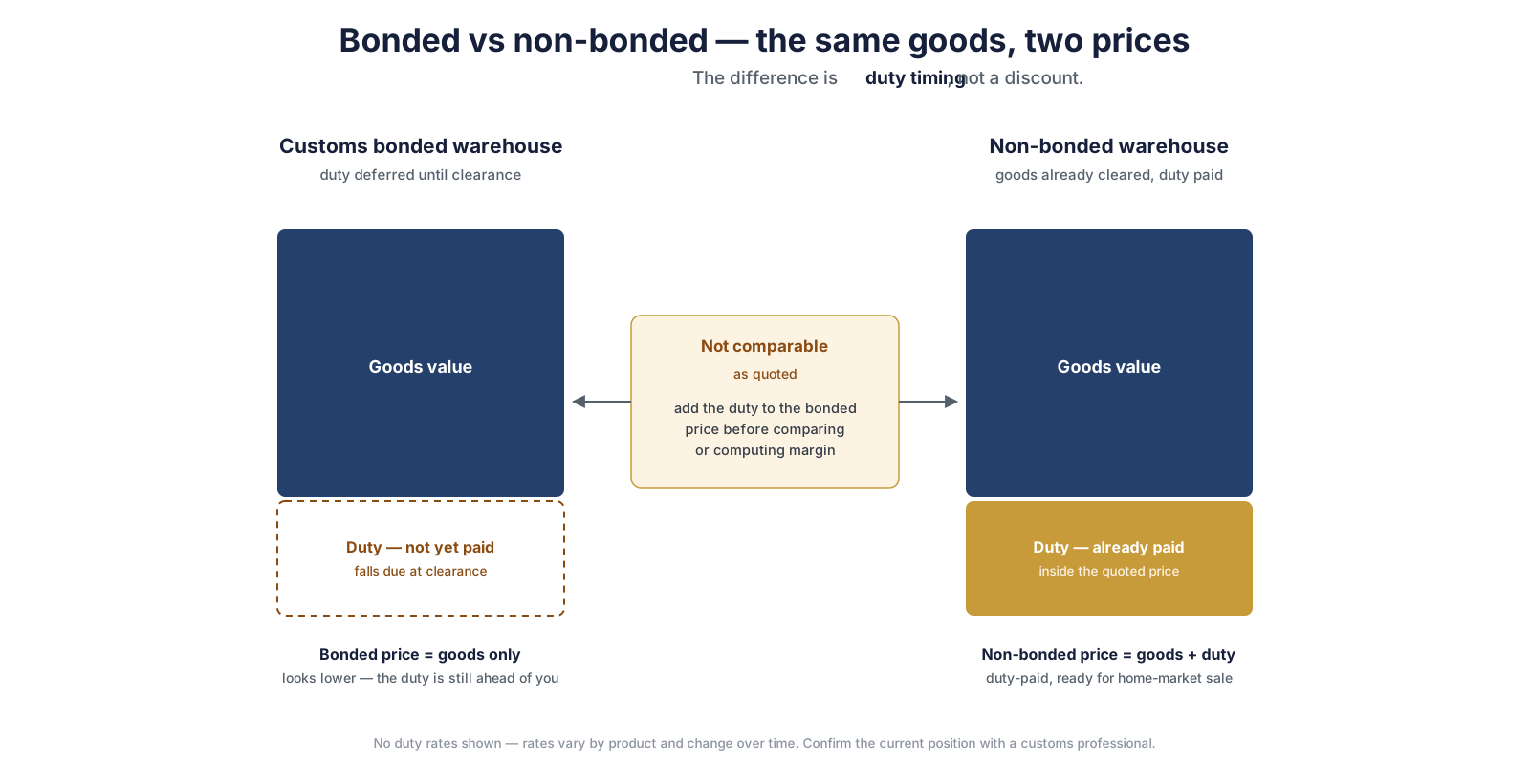
Bonded vs Non-Bonded Warehouse Pricing: Why the Same Goods Carry Two Prices
Why the same imported goods carry different prices in a bonded and a non-bonded warehouse, and what that means for quoting, costing and margin.
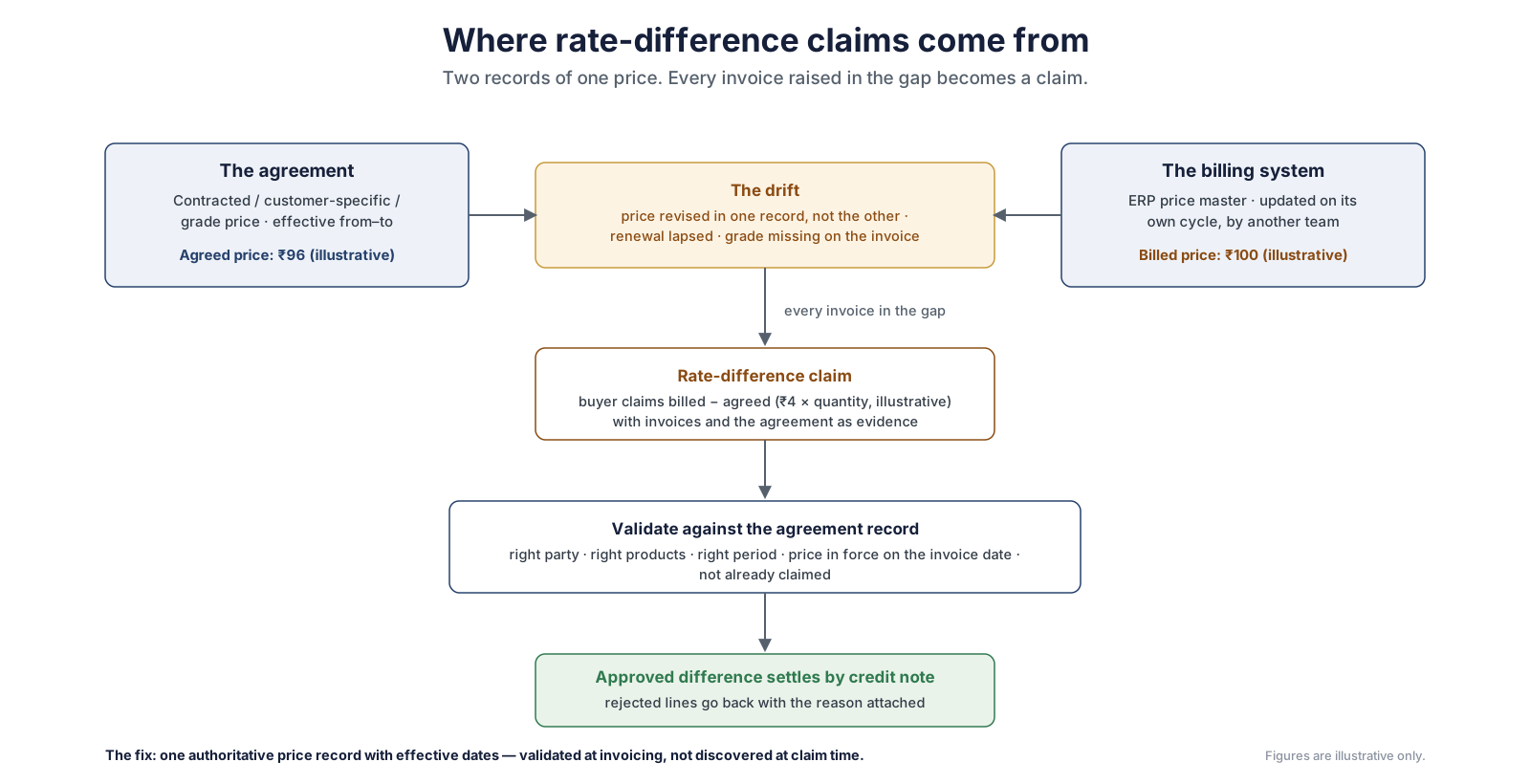
Contracted, Customer-Specific and Grade Pricing: How Negotiated Prices Work
Negotiated prices — contracted, customer-specific and grade-based — and the claims and reconciliation work each one creates.
List Price, MRP, Brochure Price and Reseller Price: What Each One Means
The published prices in a channel — list, MRP, brochure and reseller price — and what each one actually commits you to in India.