Secondary Scheme Settlement & Trade Promotion Agreement Management (India RTM)
Secondary scheme settlement in Indian RTM — primary vs secondary schemes, how secondary claims are captured and validated, and settlement via GST credit note.
Secondary scheme settlement is the validation and payout of incentive schemes that run from a distributor down to retailers or end customers, based on secondary (sell-through) sales data. It is settled to the distributor — usually by GST credit note — against verified secondary claims, and is the hardest part of Indian trade promotion because the data sits a tier away from the manufacturer.
Primary vs secondary schemes
| Scheme | Rewards | Data source |
|---|---|---|
| Primary | Distributor purchases from manufacturer | Manufacturer's own invoices |
| Secondary | Sell-through from distributor to retailer | Distributor-reported secondary sales |
Primary schemes are straightforward because the manufacturer owns the data. Secondary schemes — the ones that actually drive retail movement — are harder, because settlement depends on data generated a tier down. This is the same challenge that makes distributor claims and trade promotion management difficult to run on spreadsheets.
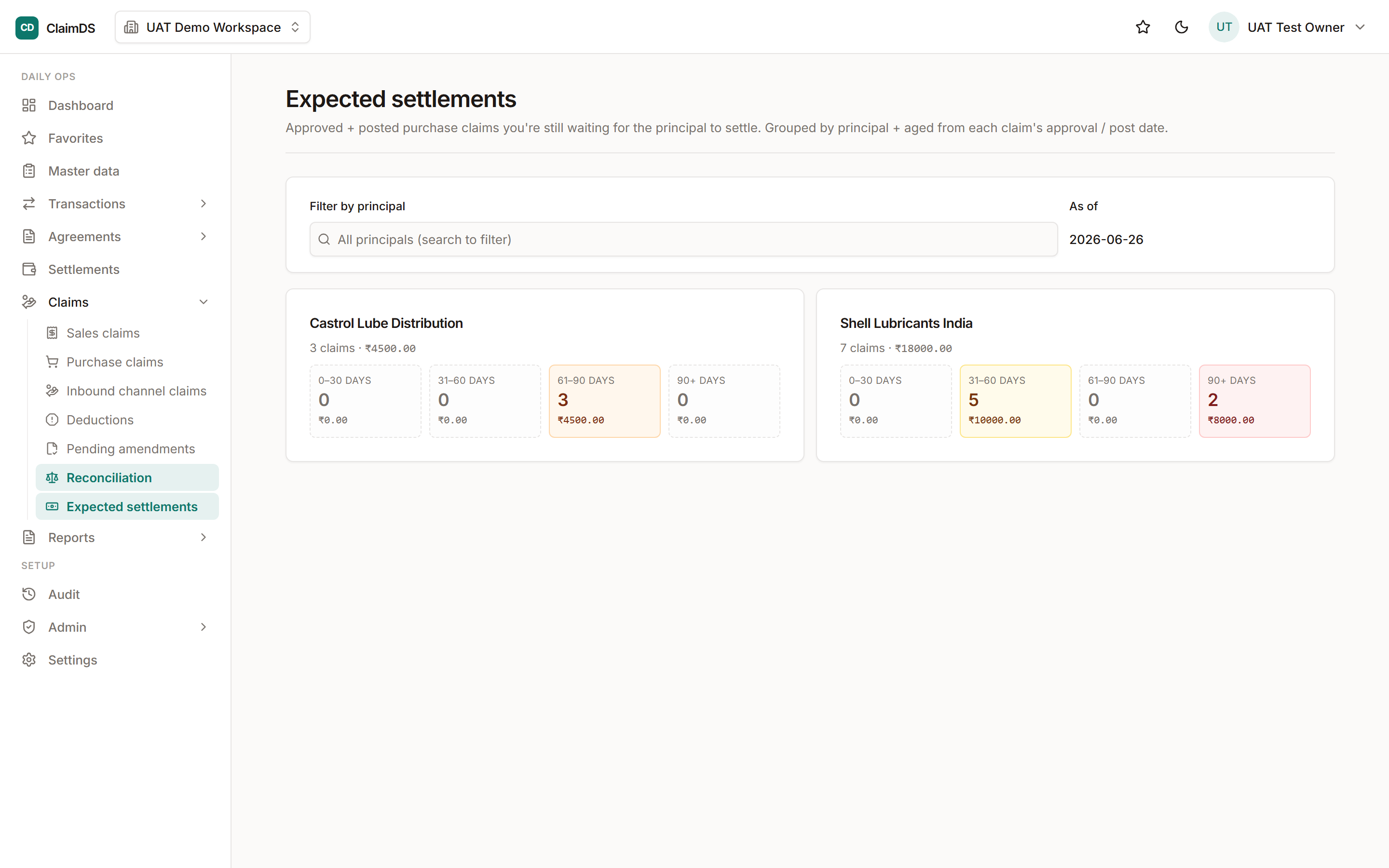
Capturing secondary claims
Reliable secondary settlement starts with structured capture of sell-through data — by SKU, by retailer, within the scheme window. Where this is captured cleanly (often via a DMS or distributor uploads), the claim can be computed; where it is loose, claims become estimates and disputes follow. The capture-to-claim discipline mirrors how to submit a claim request.
Validation across tiers
Secondary claims must be validated against the agreement and against the realism of the underlying data: do the claimed secondary sales reconcile with primary purchases and stock movement? Validation rules catch duplication, out-of-window claims and quantities that exceed what the distributor could have sold.
A worked cross-tier example
A secondary scheme pays ₹5 per case on retail sell-through. A distributor reports 4,000 cases sold to retailers in the window. The claim is 4,000 × ₹5 = ₹20,000, settled to the distributor (who funded the retailer incentive) by credit note. Validation confirms the 4,000 cases are within the distributor's primary purchases and the scheme window, and are not double-claimed against another scheme.
Settlement via credit note
Settlement runs through a GST credit note, with the tax-vs-financial choice carrying ITC consequences — see financial vs. tax credit notes. The agreement discipline also underpins volume rebates and distributor rebate software.
GST note: This article is general information, not tax or legal advice. GST positions — including CBIC Circular No. 251/08/2025-GST and the Finance Act 2026 amendments to Section 34 of the CGST Act, assented 30 March 2026 but not yet notified into force as of publication — must be re-verified at publish time with a qualified professional.
Frequently asked questions
What is secondary scheme settlement?
Secondary scheme settlement is the validation and payout of incentive schemes that run from a distributor down to retailers or end customers, based on secondary (sell-through) sales data. It is settled to the distributor, usually by GST credit note, against verified secondary claims.
How are primary and secondary schemes different?
A primary scheme rewards the distributor on purchases from the manufacturer; a secondary scheme rewards sell-through from the distributor to retailers. Secondary schemes are harder to settle because the data originates a tier away from the manufacturer.
Why is secondary data hard to validate?
Secondary sales happen at the distributor-to-retailer tier, so the manufacturer must rely on distributor-reported data. Without structured capture and validation rules, secondary claims are prone to error, duplication and disputes.
See ClaimDS on your own claims data
A 30-minute walkthrough tailored to how your channel actually settles claims.
Related posts

Trade Promotion Software for CPG: Control Trade Spend in India
Trade promotion software for CPG & FMCG in India: why trade spend leaks, what to manage, and how to use ClaimDS to plan, settle and measure schemes.

What Is Claims Management Software? A Practical Guide
Claims management software, explained: what it is, the claim lifecycle, the Indian claim types it settles, GST credit notes, and how to choose one.

Why ClaimDS Is the Best Rebate Management Software in India
Why Indian distributors and dealers need finance-grade rebate and claims settlement: multi-tier fidelity, GST credit-note compliance, faster payouts.