
Deduction Management: Who Owns What, and Why It Matters
Who owns deduction resolution — finance, sales or claims-ops? How to split the work so deductions get resolved instead of ageing on a spreadsheet.
In short
Deduction management fails when nobody clearly owns it. Finance sees the short-payment, sales knows the customer, and claims-ops holds the agreements — so a deduction that needs all three stalls. The fix is explicit ownership: who identifies, who validates, who disputes, who approves a write-off, and who reports.
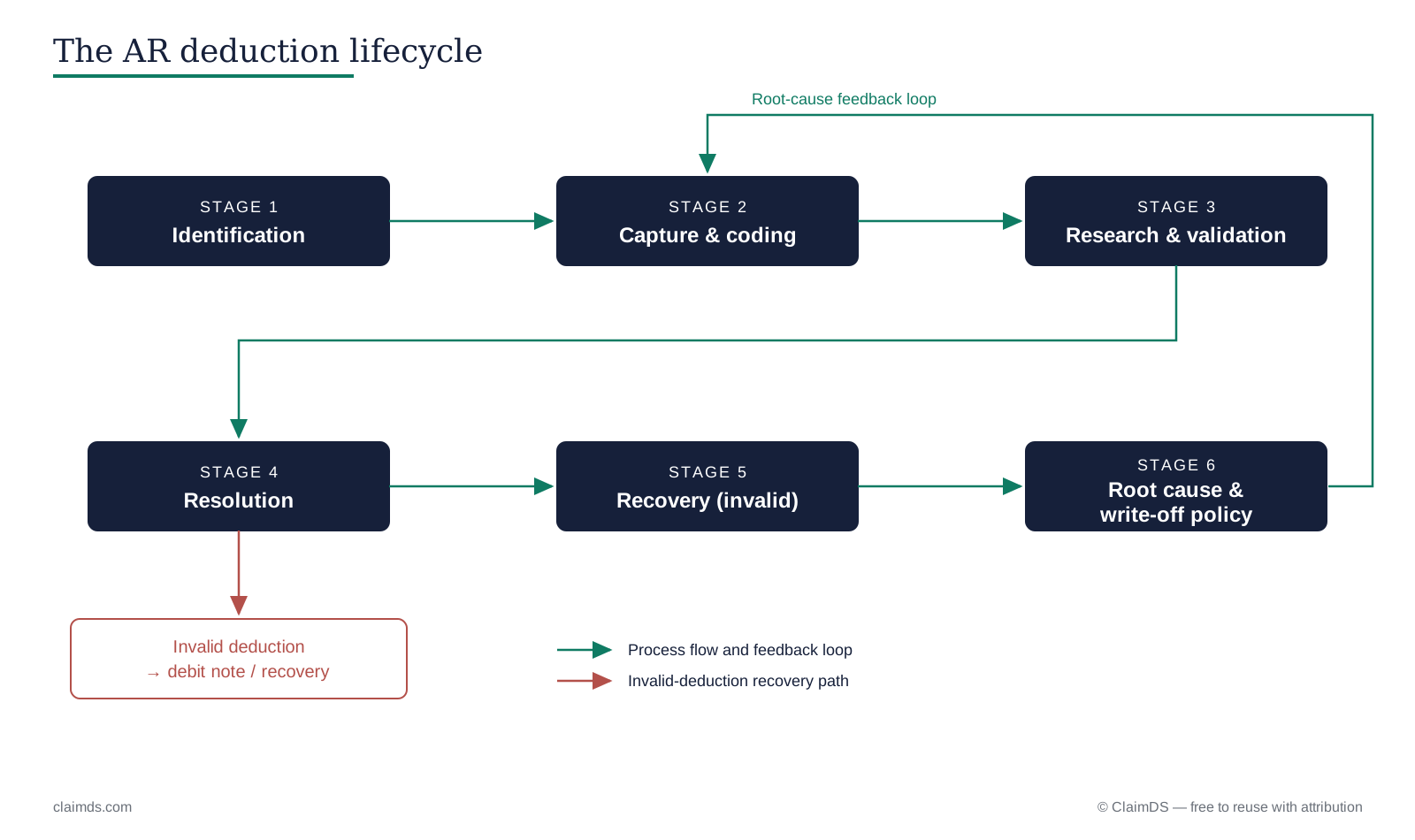
Deduction management rarely fails because the work is hard. It fails because a short-payment touches three functions that each assume another owns it — and so nobody does, and it ages. This article lays out who should own each stage, why the split matters, and a simple model a mid-sized Indian business can actually run.
Who owns each step — a RACI at a glance
| Step | Responsible | Consulted | Accountable |
|---|---|---|---|
| Identify and code the deduction | AR / Finance | Claims-Ops | AR / Finance |
| Validate against the agreement | Claims-Ops | Sales | Claims-Ops |
| Gather evidence | Claims-Ops | AR / Finance | Claims-Ops |
| Dispute with the customer | Sales | Claims-Ops | Sales |
| Approve a valid deduction as trade spend | Commercial Finance | Claims-Ops | Commercial Finance |
| Approve a write-off | Management | Commercial Finance | Management |
| Report and analyse | Claims-Ops | Commercial Finance | Management |
Role names are deliberately generic functions — adapt them to whatever your team is actually called.
Why deduction ownership is usually unclear
A deduction is awkward precisely because it sits across three functions with different incentives. Finance wants the cash reconciled and the ledger clean. Sales wants the customer relationship protected — often a distributor or retailer down the multi-tier channel — and won't push hard on a live account. Claims-ops wants the agreement honoured — the scheme, the return, the allowance.
Each of those is a legitimate goal, and each function will, left alone, optimise for its own. So the short-payment that needs all three to act — finance to code it, claims-ops to validate it, sales to raise it — becomes the thing everyone assumes someone else is handling. Without explicit ownership it becomes nobody's job, and a deduction that is nobody's job ages until it's written off. That silent ageing is the single largest source of deduction leakage, and it's why the CFO view of claims and deductions treats ownership as a cash-recovery issue, not an org-chart nicety.
The core roles
Five functions carry a deduction from short-payment to resolution. The handoffs between them are where it either flows or stalls:
- AR / Finance — identifies the short-payment against the invoice, codes it with a reason, and reconciles the cash. This is the entry point; a deduction that isn't coded promptly is already ageing. (See how this sits in the AR deductions process.)
- Claims-Ops — validates the deduction against the scheme or agreement, holds the evidence, and decides valid-or-invalid. This is the function that actually knows whether the deduction maps to something real.
- Sales — knows the customer and helps resolve a disputed deduction without damaging the relationship, carrying the dispute back to the customer. Consulted throughout; the right person to raise a query, but not the one to judge validity alone.
- Commercial Finance — approves valid deductions as trade spend against the scheme budget, so a genuine deduction is absorbed where it belongs rather than surprising the P&L.
- Management — approves write-offs above a threshold, owning the decision to stop pursuing money.
The handoffs matter as much as the roles: finance → claims-ops (coded, ready to validate), claims-ops → sales (validated invalid, ready to dispute), claims-ops → commercial finance (validated valid, book as trade spend). Each handoff is where a missing owner shows up as a stalled deduction.
Segregation of duties
Two separations do most of the control work.
First, the person who validates a deduction should not be the person who approves the write-off. A write-off is a decision to stop chasing money owed; if the same person can both judge a deduction invalid and then quietly write it off, there is no check on that call. Splitting them — claims-ops validates, management approves the write-off above a threshold — is a basic control, reinforced by a maker-checker trail on the decision.
Second, sales should be consulted but not solely accountable. Sales has the relationship context that resolves disputes, but it also carries relationship pressure to concede — so making sales the sole owner of validity trades financial discipline for an easy quarter. Consulted, yes; accountable for the money, no.
This is good practice, not an audit-standard prescription — for anything that must satisfy a specific control framework, confirm the requirements with your auditor.
A simple ownership model that works
A mid-sized Indian business without a large team doesn't need a big RACI to make this work — it needs the decisions separated even when the people are few:
- One owner for the workflow — usually claims-ops or a finance lead — accountable for deductions moving end to end.
- Clear thresholds — below ₹X (you set it), the workflow owner can resolve; above it, commercial finance or management signs off. Write-offs always go up a level.
- An SLA per stage — code within N days, validate within N, dispute within N — so nothing sits.
- A weekly review of aged deductions — sorted by age and value, to surface stuck items and unclear owners.
Be honest that in a small company one person may wear several of these hats. That's fine — the point is that the decisions are separated even if the people aren't many. One person can validate and dispute; they should not also be the one who approves their own write-offs.
What good looks like
A healthy deduction process has a recognisable shape: deductions coded within days of the short-payment, validated against agreements rather than argued from memory, disputed within an SLA, and aged items reviewed weekly — all on a reason-code taxonomy everyone uses so the same deduction is never classified two different ways. ClaimDS is built to give that workflow one home — the agreements to validate against, the reason codes, and the ageing view — so deductions resolve on a process instead of ageing on a spreadsheet. <!-- TODO: confirm capability wording with founder -->
Deductions and the claims you raise are two sides of the same channel-finance ledger — a deduction is money withheld, a rebate is money owed to you — and both live in the same deduction-management discipline alongside your distributor-claims process. Get the ownership right — who identifies, who validates, who disputes, who signs off — and the wedge stops ageing into losses.
This article is general information about commercial and operational practice, not legal, tax, audit or accounting advice. For control requirements that must satisfy a specific standard, confirm the position with your auditor.
Frequently asked questions
Who is responsible for deduction management?
No single function — that's the point. AR/finance identifies and codes the short-payment, claims-ops validates it against the agreement and holds the evidence, sales helps resolve it with the customer, commercial finance approves valid deductions as trade spend, and management approves write-offs above a threshold. What matters is that each of those steps has one clearly named owner, not that one team does everything.
Should sales or finance own deductions?
Shared, with a clear split. Finance owns identifying and reconciling the short-payment and the cash impact; sales owns the customer relationship and helps resolve disputes without damaging it. Neither should own the whole thing alone: finance alone lacks the customer context, and sales alone feels relationship pressure to concede. Claims-ops sits between them, validating against the agreement.
What is a RACI for deduction management?
A RACI names, for each step, who is Responsible (does the work), Accountable (owns the outcome), Consulted and Informed. For deductions it maps identify, validate, gather evidence, dispute, approve-as-trade-spend, approve-write-off and report across finance, claims-ops, sales, commercial finance and management — so no step is nobody's job and no one both validates and signs off their own write-off.
How do you set up a deduction management process?
Pick one owner for the end-to-end workflow, agree a shared reason-code taxonomy, set an SLA for each stage (code, validate, dispute), and define approval thresholds — who signs off a valid deduction as trade spend and who approves a write-off. Then review aged deductions weekly. The structure matters more than team size: even a small team can separate the decisions.
Who should approve a deduction write-off?
Not the person who validated it. A write-off is a decision to stop pursuing money owed, so it needs someone accountable for the budget — commercial finance or management — above a defined threshold, separate from whoever assessed the deduction. This segregation stops a single person from both judging a deduction invalid and quietly writing it off, which is a real control gap.
How often should aged deductions be reviewed?
Weekly is a sensible default. Deductions lose recoverability as they age — evidence gets harder to assemble and customers push back on old queries — so a weekly review of open and ageing items, sorted by age and value, keeps the recoverable ones moving before they become write-offs. The review is also where a stuck stage or an unclear owner surfaces.
See ClaimDS on your own claims data
A 30-minute walkthrough tailored to how your channel actually settles claims.
Related posts
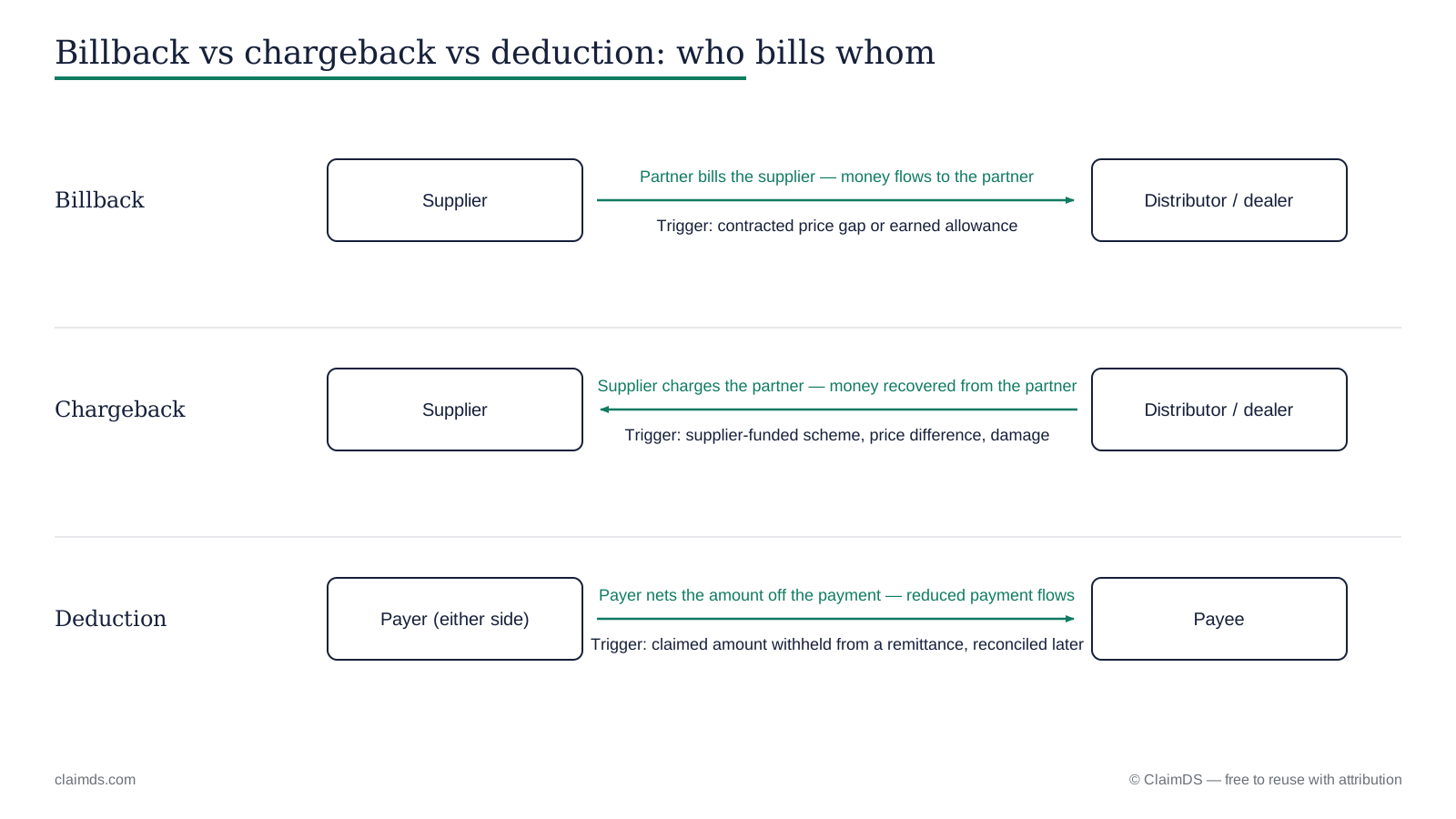
Valid vs Invalid Trade Deductions: How to Tell Them Apart and Recover What You're Owed
When a customer short-pays an invoice, is the deduction valid or should you dispute it? How to classify trade deductions and recover the invalid ones.
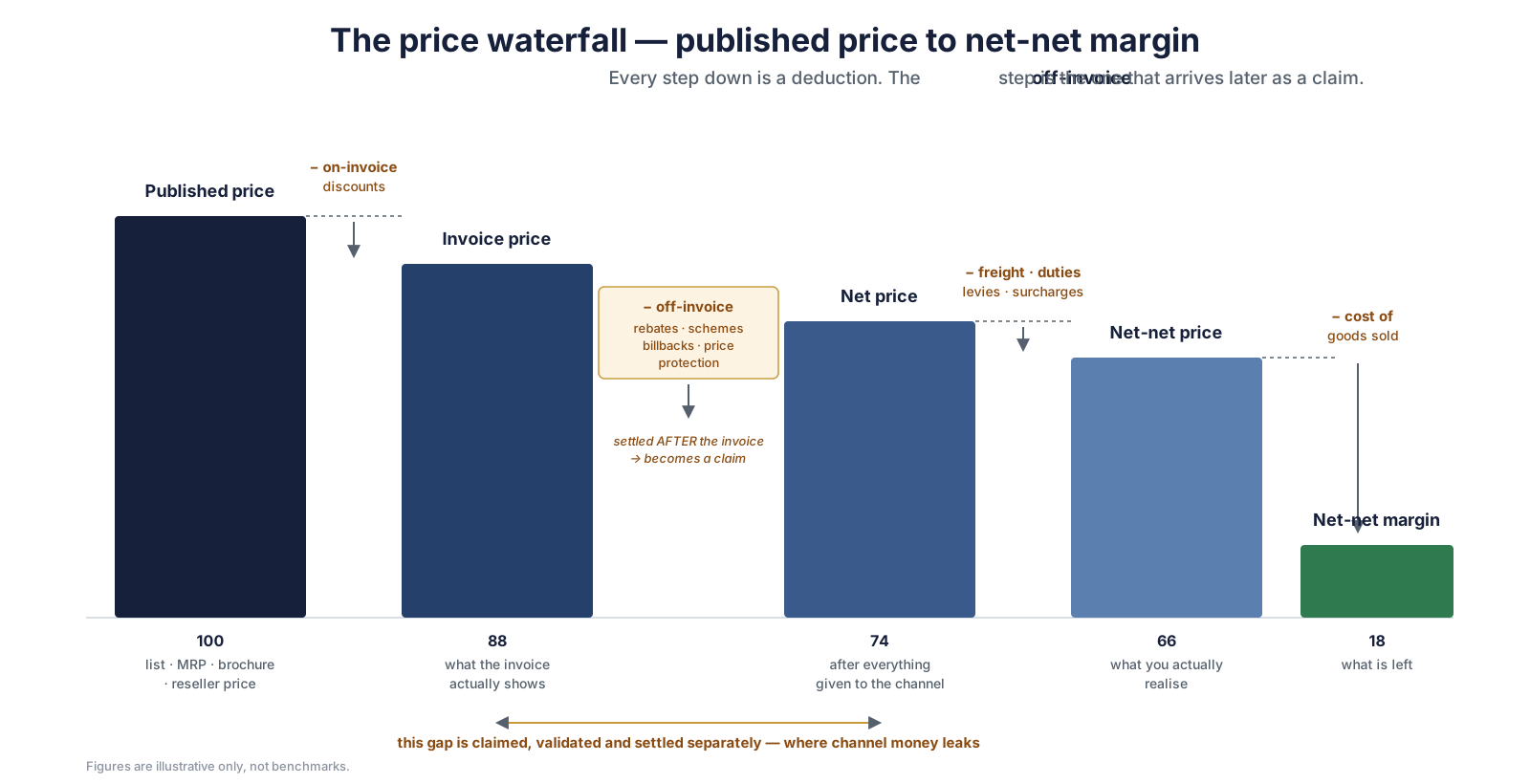
What Is a Price Waterfall? From Published Price to Net-Net Margin
Every deduction between the price you publish and the money you keep — and why the step in the middle arrives later as a channel claim.

Is a Rebate a Discount? Rebate vs Discount vs Scheme
A rebate and a discount both reduce what a buyer pays, but they work differently and are treated differently in the books. The clear difference for Indian businesses.