
Subvention Claims: How Interest and Dealer Support Actually Get Settled
When a brand funds a zero-interest offer or supports a dealer's cost, the money moves as a claim. How subvention works and what it takes to settle it.
In short
Subvention is financial support one party provides so another can offer better terms. In Indian auto and consumer durables it most often means a manufacturer bearing part of a customer's financing cost, so the customer sees a zero-interest or reduced-EMI offer. Because the money is owed rather than invoiced, it moves through the channel as a claim.
Zero-interest offers and no-cost EMI promotions are everywhere in Indian automotive, two-wheeler and consumer-durables retail. Behind every one of them is money moving through the channel — and it moves as a claim, with all the calculation, evidence and settlement problems that distributor and channel claims always have. This article explains subvention as a commercial and claims mechanism: what it is, who funds it, and what it takes to settle correctly.
One scope note up front: consumer financing carries a regulatory dimension — lending rules, disclosure, permitted structures. Those are matters for the parties' own legal and compliance advisers, and this article stays out of them entirely. The claim mechanics are the useful part, and they are what follows.
<!-- TODO: this article deliberately avoids consumer-financing regulation. Do not add regulatory content without professional review. -->The types of subvention, at a glance
| Type | Who funds it | Who benefits | How it usually reaches the beneficiary | What must be evidenced |
|---|---|---|---|---|
| Interest subvention (customer financing) | The brand | The end customer (via a cheaper EMI) | The brand settles the rate differential with the financier or dealer | Qualifying sale, financed amount, tenure, rate differential |
| Dealer subvention / support | The brand | The dealer | Credit note or support payment against qualifying transactions | Qualifying transactions and the agreed support terms |
| Scheme-linked subvention | The brand, per campaign | Customer or dealer, per design | Claimed against the campaign after it closes | Campaign terms, qualifying sales in the window |
| Exchange / upgrade support | The brand | The customer (via the dealer) | Dealer claims the support borne on each exchange deal | The exchange transaction and the support per deal |
What subvention means
Subvention is a subsidy: financial support that lets someone else offer better terms than their own economics would allow. A financier cannot lend at zero; a dealer cannot absorb a campaign discount indefinitely. When a brand wants the customer to see those terms anyway, it bears the difference — and the difference has to be calculated, claimed and settled.
The word needs one disambiguation for Indian readers: "subvention" also appears in government-scheme contexts — interest subvention on agricultural and priority-sector credit is a long-standing policy mechanism. That is a different subject entirely. This article covers the commercial channel meaning: a brand subsidising financing or dealer economics to move product.
How interest subvention works
The mechanism is simple to state and messy to settle. A customer buys a vehicle or an appliance on financing at an attractive headline rate — often zero. The financier has not changed its economics: it still requires its normal return on the money lent. The brand bears the differential between the two, calculated on the amount financed, the tenure the customer chose, and the gap between the headline and actual rates.
Such arrangements have a regulatory dimension that the brand, dealer and financier must handle with their own advisers; this article does not cover it. What matters here is what the arrangement creates commercially: an amount owed by the brand that nobody knew at the time of sale. It depends on which sales qualified, what each customer financed, and what tenure they picked. So it is computed after the fact — per sale, per campaign — and that computation is a claim.
Why it behaves like a claim, not an invoice
An invoice states a known amount for goods delivered. Subvention is the opposite: the amount is unknowable until after the sales happen, because it depends on which sales qualified under the campaign, what was financed, and at what tenure. Someone — the dealer, the financier, or the brand's own campaign accounting — has to assemble that data, calculate the differential, and submit it for validation.
That is structurally identical to a scheme payout: earned against transactions, calculated after the period, claimed with evidence, validated against terms, settled by credit note or payment. Which means it fails the same ways scheme claims fail, and benefits from the same disciplines — the ones covered in how distributor claims are calculated and the claim lifecycle from scheme to settlement.
What has to be evidenced
Four elements, and a subvention claim without any one of them will stall:
- The qualifying sale — model, date, and the campaign it fell under. Campaign terms that never said precisely which variants, trims or date boundaries qualified are the single biggest source of subvention disputes.
- The financing details — amount financed, tenure, and the applicable rates. This data originates with the financier, and a brand that never reconciles it settles blind.
- The calculation — the differential applied across qualifying financed amounts. Both sides need to be able to recompute it.
- The entitled party — who actually claims: the dealer who fronted the support, or the financier settling directly with the brand. The campaign terms should say.
The general rule from reducing brand–distributor claim disputes applies with full force: disputes are about facts, and the facts are set by how precisely the campaign was written. <!-- TODO: link the rebate/scheme agreement clause checklist article when built -->
Dealer subvention and support payments
Not all subvention is about customer financing. Brands also pay dealer subvention — support that covers a dealer's cost or protects their margin during a campaign, a model changeover, or a price movement. This overlaps heavily with price protection: both compensate the dealer for economics the brand asked them to accept, and price-drop support in consumer electronics is the same family of claim.
Whether a given support payment is a price adjustment or something else for tax purposes depends on the arrangement and the document that settles it — a financial or tax credit note, or a payment. This article takes no position on that; the treatment questions are covered in GST adjustments in channel settlements and belong with your CA. <!-- TODO CA REVIEW: confirm this paragraph asserts no tax position. -->
Where subvention claims go wrong
The failure modes are familiar from every other claim type, with a financing twist: campaign terms changed mid-period without versioning, so sales are validated against the wrong edition; the same sale claimed under two campaigns; financing data held by the financier and never reconciled by the brand, so the differential cannot be verified; and claims filed after the campaign closed in the brand's books, landing in a period nobody budgeted.
Every one of these is an evidence-and-terms problem before it is a money problem — the same shape as automotive dealer incentive claims and automotive warranty claims, where the claim also lives or dies on transaction-level data. ClaimDS validates campaign claims against versioned terms and transaction evidence, so a subvention claim settles against the edition that actually applied. <!-- TODO: confirm capability wording with founder -->
If subvention campaigns are settling late or by negotiation in your channel, book a demo and bring one campaign's terms — we will show you where the claims would stall and why.
Related: the distributor claims category, channel claims in Indian automotive distribution, and what a settlement factsheet is for the evidence pack that ends disputes.
Note: This article is general commercial information about how subvention works as a channel claims mechanism. It is not legal, tax or financial-services advice, and it does not cover consumer-financing regulation — the parties to any financing arrangement should take their own professional advice.
Frequently asked questions
What is subvention?
Subvention is financial support one party provides so another can offer terms its own economics would not allow — most commonly a manufacturer bearing part of a customer's financing cost so a zero-interest offer is possible. The word also appears in Indian government-subsidy contexts (such as interest subvention on agricultural credit); this commercial channel sense is a different thing.
What is interest subvention?
Interest subvention is when a brand bears the difference between the financing rate a customer is offered and the return the financier actually requires. The customer sees a zero or reduced rate; the financier still earns its normal return; the brand pays the differential. That differential becomes an amount owed — calculated after the sale and settled as a claim.
Who pays for a zero-interest offer?
Commercially, the brand does. The financier does not lend at zero — it requires its normal return, and the manufacturer or brand bears the difference between that and the headline rate the customer sees. The amount depends on what was financed, for how long, and the rate differential, which is why it is calculated per qualifying sale rather than known upfront.
What is dealer subvention?
Dealer subvention is support a brand pays a dealer to cover a cost or protect a margin — during a campaign, a model changeover, or a price movement. It overlaps with price protection: both compensate the dealer for economics the brand asked them to accept. Like interest subvention, it is calculated against qualifying transactions and settled as a claim.
How is a subvention claim calculated?
From three inputs: which sales qualified (model, date, campaign), what was financed on each (amount and tenure), and what rate differential the brand agreed to bear. The claim is the differential applied across the qualifying financed amounts for their tenures. The calculation happens after the fact, which is exactly why it behaves like a scheme claim rather than an invoice.
What evidence does a subvention claim need?
Four things: proof the sale qualified (model, date, campaign terms), the financing details (amount financed, tenure, applicable rates), the differential calculation itself, and clarity on which party is entitled to claim. Subvention claims fail the same way scheme claims fail — campaign terms that never said precisely which sales qualified, or financing data that never reached the party validating the claim.
See ClaimDS on your own claims data
A 30-minute walkthrough tailored to how your channel actually settles claims.
Related posts
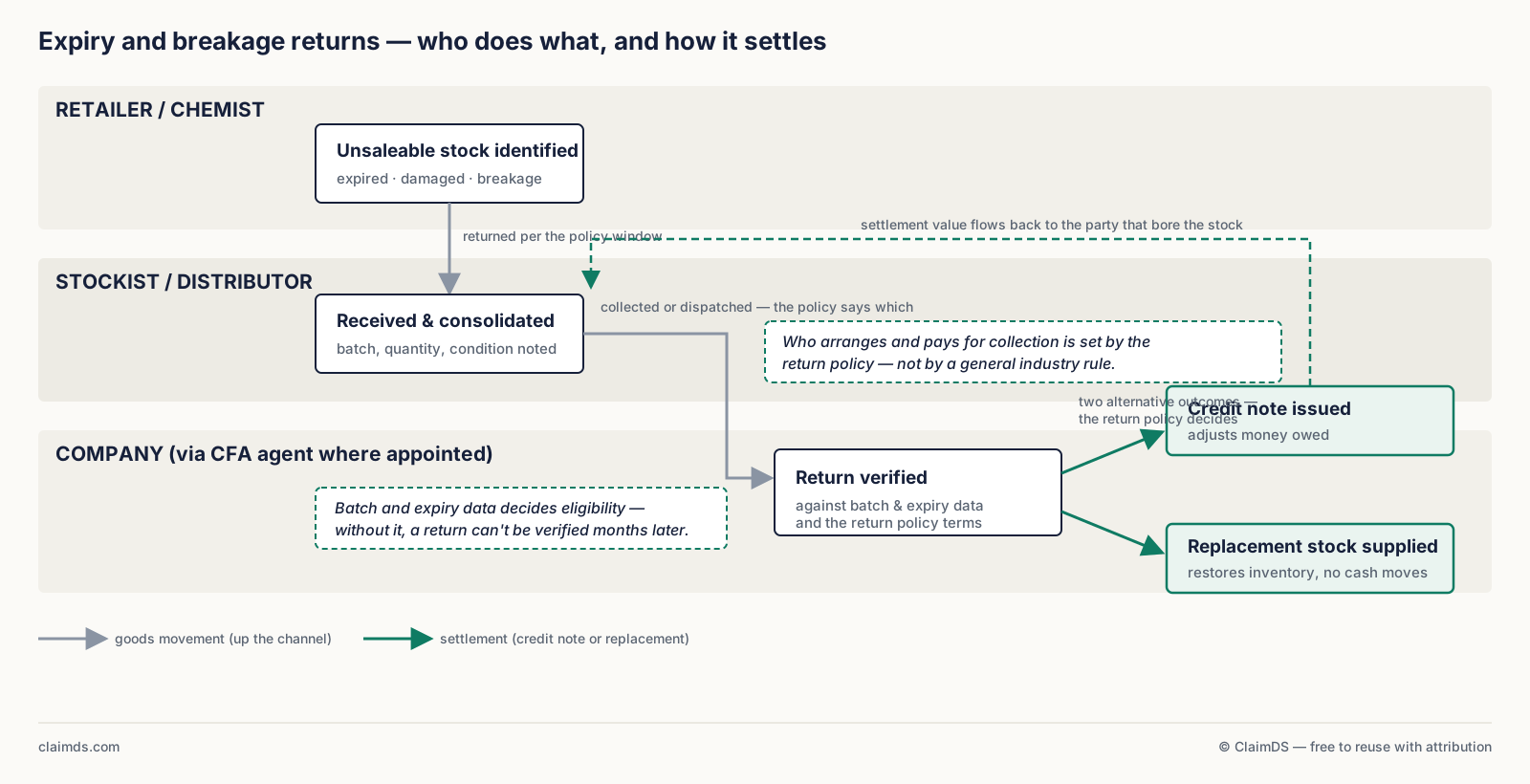
Expiry and Breakage Returns: Who Collects, Who Pays, and How It Settles
Who collects expired stock, who bears the cost, and whether it is settled by replacement or credit note — the operational side of expiry and breakage returns.

How to Build a Claim and Scheme Simulator in Excel
The workbook structure behind every channel claim model — four tabs, codes not names, terms off the formula, and the control totals that catch silent errors.
Build a Buyback and Expiry Return Simulator in Excel
Buyback and expiry claims price returned stock by how old it is. How to band by age in Excel, apply the right rate, and keep batch data straight.