Referral and Channel-Partner Commission Programs
How to design a referral or channel-partner commission program — the earning event, the rate, qualification and payout — for Indian businesses.
A referral or channel-partner commission program pays an external partner for introducing business that converts. The single design choice that matters is when commission is earned — on introduction, on qualification, or on conversion — and the safest programs pay on a completed, paid sale. Define that earning event precisely, set the rate, and settle it like any partner commission: TDS on the base, plus the partner's GST.
The referral flow
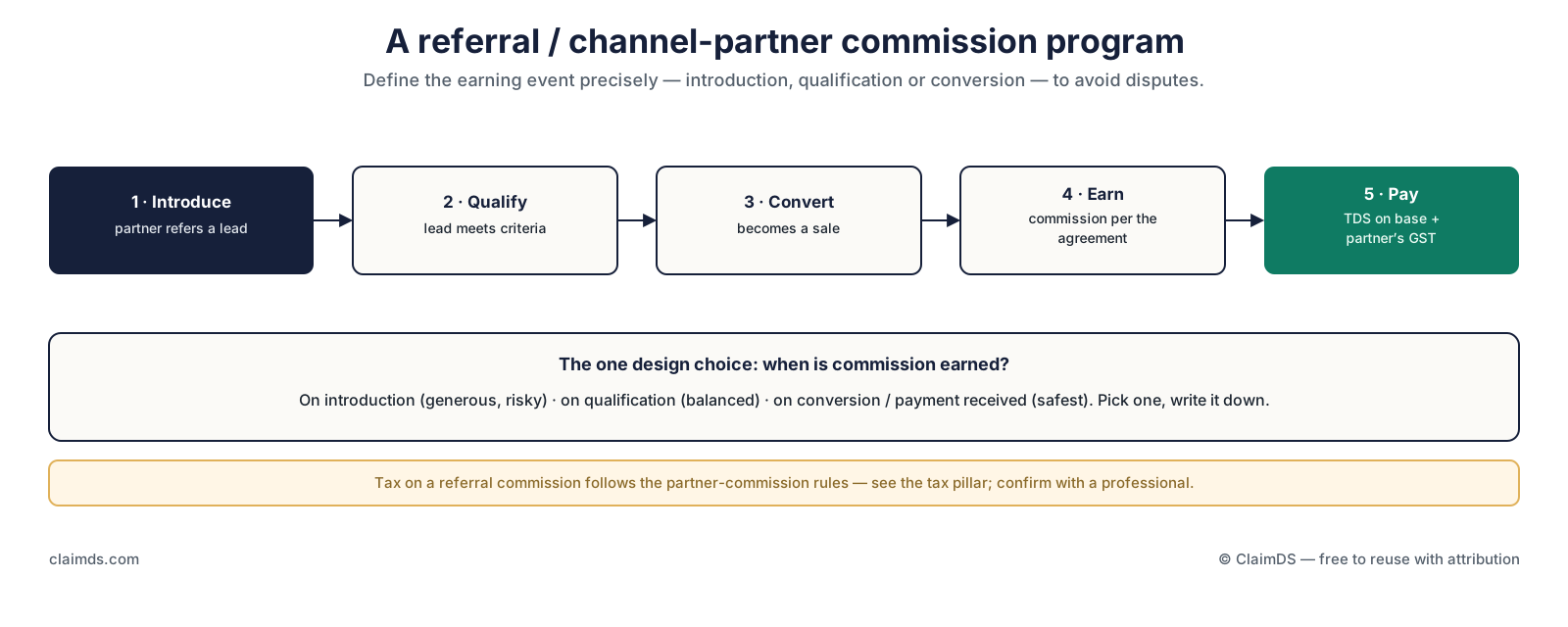
Source: ClaimDS — free to reuse with a link back to this article.
The one choice that makes or breaks it: the earning event
Every referral dispute traces back to a vague earning event. There are three common points to pay on, trading generosity against risk:
- On introduction — pay when a lead is passed. Generous and simple, but you pay for leads that may never convert.
- On qualification — pay when the lead meets defined criteria. A balanced middle ground.
- On conversion or payment received — pay when the sale is done and paid. Safest for the business; partners wait longer.
None is "correct"; the right one depends on how much you trust the pipeline and how much risk you want to carry. What is not optional is writing it down — the earning event belongs in the commission agreement, stated precisely.
Referral partner vs channel partner
The two shade into each other but differ in involvement. A referral partner introduces and steps back. A channel partner sells alongside you — more involved, usually on richer and more ongoing terms. The deeper the involvement, the more the agreement looks like a full commission arrangement rather than a one-off finder's fee. Neither resells your goods on their own account, which is what separates both from a distributor earning a channel discount.
Rate, caps and clawback
The rate can be a flat fee, a percentage, or a slab that rewards higher-value or higher-volume referrals. Caps keep the program affordable; a clawback keeps it honest — if a converted sale is later cancelled or unpaid, the commission comes back, so you pay for genuine, completed business. Without a clawback, a referral program quietly pays for business that never really landed.
A note on tax
A referral or channel-partner commission is generally a fee for a service, carrying TDS and, where the partner is registered, GST — the same treatment as any external partner commission. The exact figures are in the dedicated tax articles, reviewed by a chartered accountant; confirm your position with a professional.
<!-- TODO: link the tax pillar (#151) and "TDS on the GST component of commission" (#153) once they are out of draft. -->Read next
- Channel partner and sales-agent commission — the pillar.
- How to structure a commission agent agreement and commission invoice format.
- C&F and DSA partner commissions — specific partner types.
- Channel loyalty programs and incentive management software.
ClaimDS runs a referral or channel-partner program as a real calculation — earning event, rate, caps, clawback, payout, TDS and GST — in one auditable place.
<!-- TODO: confirm capability wording with founder -->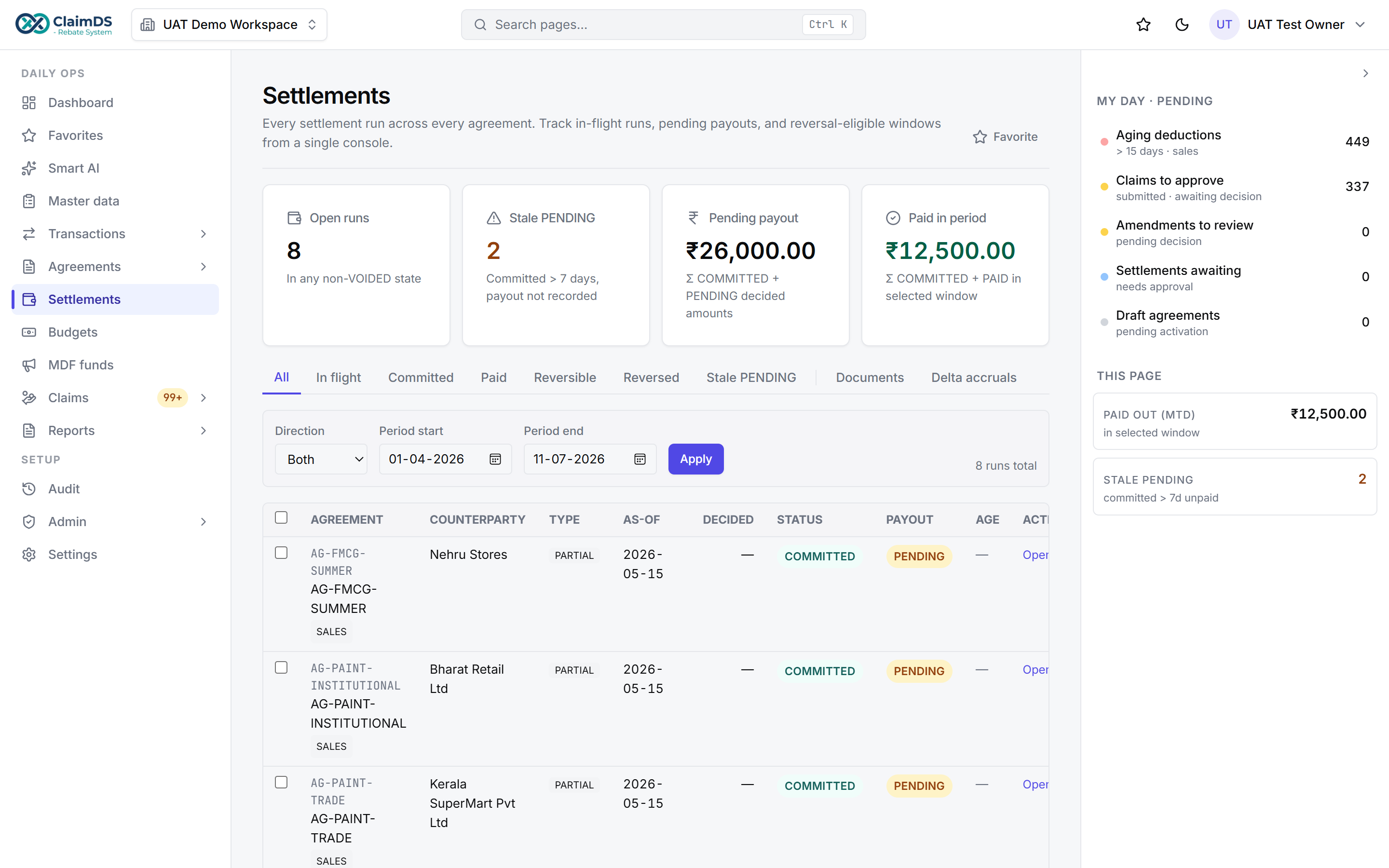
The ClaimDS settlement view — payouts calculated, approved and settled in one place.
Book a demo to see a referral program run as an auditable, clawback-safe calculation.
Frequently asked questions
What is a referral commission program?
A referral commission program pays an external partner for introducing business — a lead, a customer or a deal — that converts. The partner is not your employee and does not resell your goods; they are paid a fee for the introduction, under an agreement that defines when the commission is earned and how it is settled.
When is a referral commission earned?
It depends on the earning event you define: on introduction (generous but risky), on the lead qualifying (balanced), or on conversion or payment received (safest for the business). The safest models pay on a completed, paid sale. Whichever you choose, write it into the agreement precisely, because ambiguity about the earning event is the main source of referral disputes.
What is the difference between a referral and a channel partner?
A referral partner introduces a lead and steps back; a channel partner is more involved in selling alongside you into a segment or account. Both are external and paid for a service rather than for reselling, but the depth of involvement usually shapes the rate and the agreement, with channel partners typically on richer, ongoing terms.
How is a referral commission taxed in India?
A referral or channel-partner commission is generally treated as a fee for a service — carrying TDS and, where the partner is registered, GST. The exact rate, threshold and treatment are set out in the dedicated tax articles and should be confirmed with a professional, because the position depends on the arrangement and the partner.
Should a referral program have a clawback?
Yes, if commission can be paid before a sale is final. A clawback lets you recover the referral commission if the sale is later cancelled, returned or goes unpaid, so partners are rewarded for genuine, completed business. Paying on introductions that never convert or later reverse turns a referral program into a cost with no return.
See ClaimDS on your own claims data
A 30-minute walkthrough tailored to how your channel actually settles claims.
Related posts

ASM and Field-Force Incentive Structures for Indian Distribution
How to structure incentives across a field sales hierarchy — sales officer, ASM and RSM — in Indian distribution, so each tier is paid on the right base.
How to Calculate Sales Incentives in Excel (and Where It Breaks)
A step-by-step way to calculate sales incentives in Excel — mapping, slabs, gates and payout — and the point at which a spreadsheet stops being safe to run on.
Paying C&F and DSA Partners: Commission for Carrying-and-Forwarding and Direct-Selling Agents
How carrying-and-forwarding (C&F) agents and direct-selling agents (DSA) are paid commission in India — two external partner types, clearly explained.