
ASM and Field-Force Incentive Structures for Indian Distribution
How to structure incentives across a field sales hierarchy — sales officer, ASM and RSM — in Indian distribution, so each tier is paid on the right base.
In Indian distribution, field-force incentives are structured by tier: a sales officer is paid on their own beat and secondary sales, an ASM on the roll-up of their team plus coverage and collection gates, and an RSM on the region's overall performance. The rule that makes it work is simple — pay each tier on a base it can actually influence — and the thing that makes it hard is getting attribution to roll up cleanly through the hierarchy.
The tiers and what they're paid on
| Tier | Paid on |
|---|---|
| Sales Officer (SO) | Own beat, secondary sales, product range |
| Area Sales Manager (ASM) | Roll-up of the team's achievement + coverage & collection gates |
| Regional Sales Manager (RSM) | Region's primary + secondary performance, margin/mix |
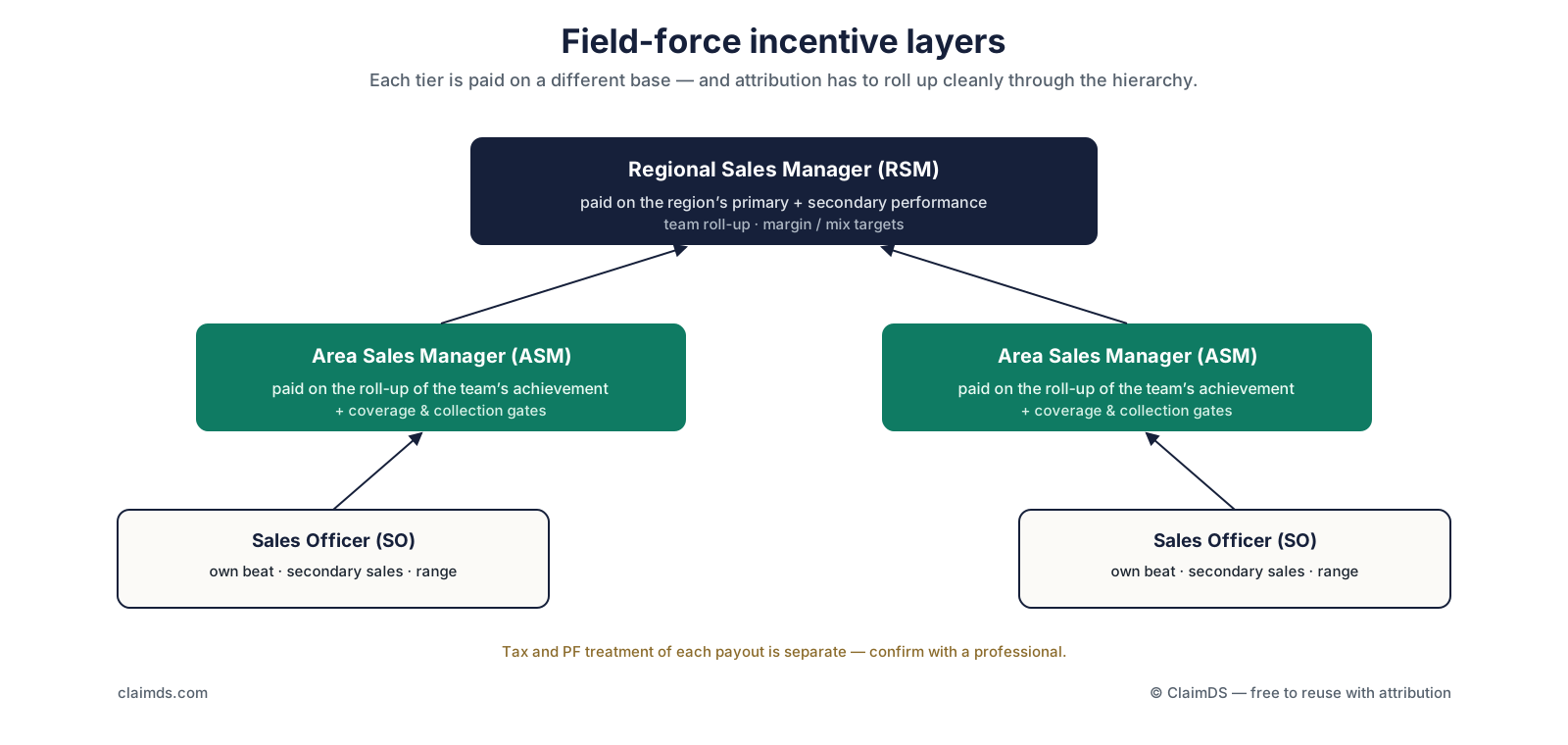
Source: ClaimDS — free to reuse with a link back to this article.
Pay each tier on what it controls
The single design principle is that each tier should be paid on the outcome it can move. A sales officer controls their beat — the outlets they visit, the range they push, the secondary sales they generate — so their incentive is anchored there. An ASM does not personally sell every outlet; they build and run an area, so they are paid on the roll-up of the team's achievement, usually with gates for outlet coverage and collections that reward a healthy area rather than raw volume. An RSM is paid wider still, on the region's primary and secondary numbers and often on margin or mix.
Paying a tier on something it cannot influence is the classic field-incentive mistake: it demotivates the tier and wastes budget. The pay mix and OTE then set how much of each tier's earnings ride on that base.
Primary vs secondary sales as the base
A recurring choice is whether to anchor an incentive to primary sales (company to distributor) or secondary sales (distributor to retailer). Field incentives are often built on secondary sales, because secondary reflects genuine off-take rather than stocking the distributor. But secondary is also harder to capture, and rewarding it depends on data that tracks sales beyond the primary invoice — the same data challenge that makes attribution the hard part of any incentive.
The attribution problem, multiplied
For a flat sales team, attribution means crediting a sale to a rep. For a hierarchy, it means that credit must also roll up — an SO's sale flows to the right ASM and the right RSM. If the org mapping or the customer-to-rep mapping is wrong at any level, payouts are wrong at every level above it, and the errors are hard to see. This is exactly where a spreadsheet stops coping, as set out in how to calculate sales incentives in Excel, and where an auditable engine that holds the hierarchy earns its place.
A note on tax and PF
The tax and provident-fund treatment of each tier's payout is a separate, fact-specific question and is not covered here. Confirm it with a professional as part of your payroll design.
<!-- TODO: link the tax pillar (#151) and "Is a sales incentive part of PF wages?" (#154) once they are out of draft. -->Read next
- How to design a sales incentive plan — the pillar.
- Fixed vs variable pay and OTE and how to calculate sales incentives in Excel.
- Primary, secondary and tertiary sales — the sales bases explained.
- Incentive management software — running it at scale.
ClaimDS holds the sales hierarchy and rolls attribution up through it — SO to ASM to RSM — so each tier's incentive is calculated on the right base and settles in one auditable place.
<!-- TODO: confirm capability wording with founder -->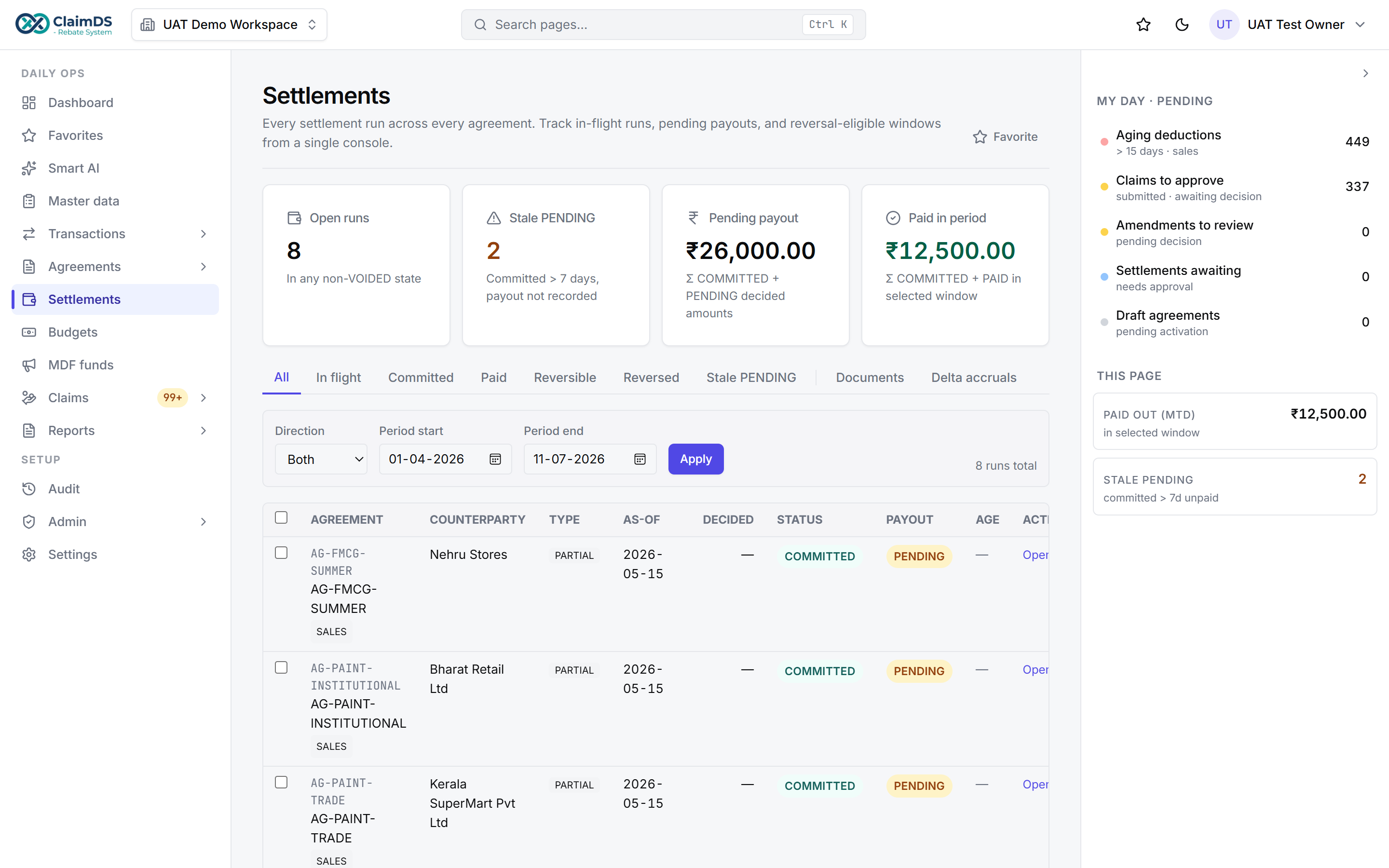
The ClaimDS settlement view — payouts calculated, approved and settled in one place.
Book a demo to see field-force incentives roll up correctly across your hierarchy.
Frequently asked questions
How do you structure incentives for a field sales team?
Structure them by tier. A sales officer is usually paid on their own beat and secondary sales; an area sales manager on the roll-up of their team's achievement plus coverage and collection gates; a regional manager on the region's overall primary and secondary performance. Each tier is paid on a base it can actually influence, and attribution rolls up through the hierarchy.
What is an ASM incentive?
An ASM (area sales manager) incentive rewards the manager for the performance of their whole area, not a single beat. It is typically the roll-up of the team's achievement against area targets, usually with qualifier gates such as outlet coverage and collections, so the ASM is paid for building a healthy area rather than just top-line volume.
What is the difference between primary and secondary sales for incentives?
Primary sales are sales from the company to the distributor; secondary sales are from the distributor onward to retailers. Field incentives are often anchored to secondary sales, because that reflects genuine off-take rather than stocking. Which base a tier is paid on depends on the behaviour you want, and it needs data that captures secondary sales reliably.
How is a field-force incentive attributed correctly?
Each sale must be credited to the right sales officer and roll up to the right ASM and RSM, using customer-to-rep and territory or beat mappings. If the hierarchy or the mapping is wrong, payouts at every tier are wrong. Reliable roll-up attribution is the hardest and most important part of running field-force incentives at scale.
Should ASM incentives include collection and coverage gates?
Commonly yes. Qualifier gates such as collections within terms and minimum outlet coverage stop an area from being rewarded for volume that comes at the cost of receivables or reach. Gates keep a manager focused on a healthy, well-covered, well-collected area rather than on top-line sales alone — but the exact gates depend on the business.
See ClaimDS on your own claims data
A 30-minute walkthrough tailored to how your channel actually settles claims.
Related posts

How to Calculate Sales Incentives in Excel (and Where It Breaks)
A step-by-step way to calculate sales incentives in Excel — mapping, slabs, gates and payout — and the point at which a spreadsheet stops being safe to run on.
Paying C&F and DSA Partners: Commission for Carrying-and-Forwarding and Direct-Selling Agents
How carrying-and-forwarding (C&F) agents and direct-selling agents (DSA) are paid commission in India — two external partner types, clearly explained.
Channel Partner and Sales-Agent Commission in India: A Practical Guide
How to pay commission to external channel partners and sales agents in India — the agreement, the invoice, the payout and the tax split from an employee incentive.