Distributor vs. Dealer vs. Super-Stockist: Who's Who in the Indian Channel
A plain-English glossary of the Indian route-to-market — manufacturer, C&F, super-stockist, distributor, wholesaler, dealer, retailer and stockist — and how goods and claims flow.
The Indian channel runs through several tiers — manufacturer, C&F agent, super-stockist, distributor, wholesaler, dealer, retailer, and (in pharma) stockist. A distributor buys in bulk and supplies a territory; a dealer sits lower, closer to the customer; a super-stockist is an extra tier above distributors. Knowing who's who is the first step to understanding how claims flow.
The tiers, plain-English
| Tier | What they do | How they earn |
|---|---|---|
| Manufacturer / brand | Makes the product, funds schemes | Margin on sale to channel |
| C&F agent | Holds stock, bills on the brand's behalf | Handling fee/commission |
| Super-stockist | Supplies distributors across a region | Margin + schemes |
| Distributor | Buys in bulk, supplies a territory | Margin, slab/growth schemes |
| Wholesaler | Bulk reseller to smaller trade | Trading margin |
| Dealer | Sells/services to end customers | Margin, incentives, warranty |
| Retailer | Sells to the shopper | Retail margin, display schemes |
| Stockist (pharma) | Distributor equivalent in pharma | Margin, schemes, chargebacks |
Terms vary by sector: FMCG says "distributor", pharma says "stockist/C&F", electricals and building materials often say "dealer" or "channel partner".
How goods and claims flow
Goods flow down the tiers — manufacturer → super-stockist → distributor → dealer/retailer. Claims flow up — the rebates, chargebacks, price-protection and buyback amounts each tier is owed travel back toward the manufacturer. The gap between primary sales (brand → distributor) and secondary sales (distributor → retailer) is where secondary scheme settlement lives, and where most complexity concentrates.
Which claims each tier raises
Each tier raises the claim types that fit its position: distributors raise scheme, damage, expiry and price-difference claims (distributor claims management); dealers raise warranty, incentive and price-protection claims (dealer claims management); all of it settles under the claims management software umbrella. New to the terminology of the money itself? Start with what is a rebate.
Where ClaimDS fits
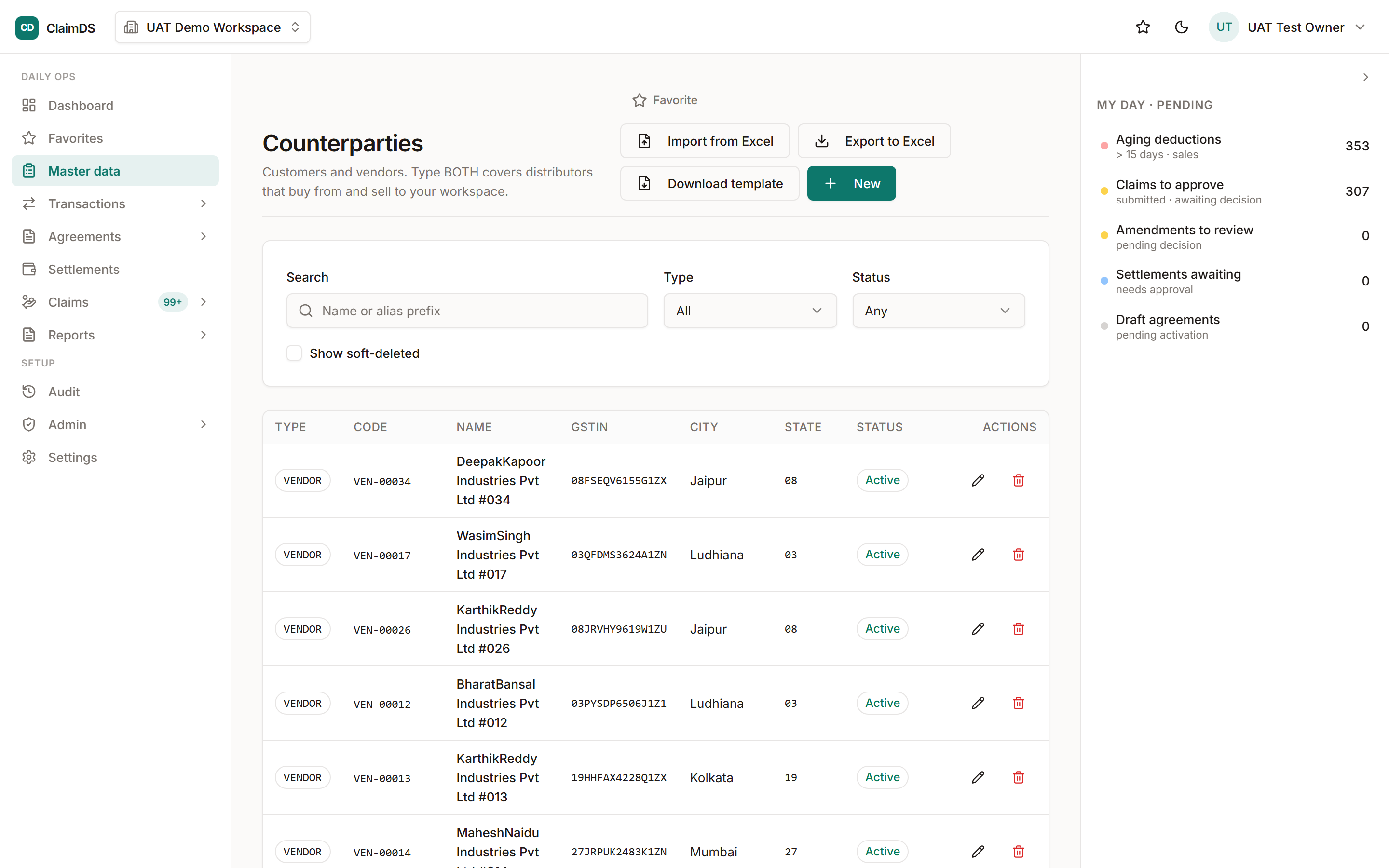
ClaimDS models these tiers natively — because flattening the Indian channel to two parties is exactly where claims get lost. It settles the claims each tier raises, GST-correctly, in one India-first product. See why ClaimDS and the pillar rebate management software.
Frequently asked questions
What is the difference between a distributor and a dealer?
A distributor buys in bulk from a manufacturer and supplies a territory, usually higher up the channel on primary purchase volume. A dealer sits lower, closer to the end customer, often selling and servicing a product. The mechanics rhyme, but their position, margins and claim types differ.
What is a super-stockist?
A super-stockist sits between the manufacturer (or its C&F agent) and distributors, holding stock and supplying distributors across a larger region — an extra tier common in Indian FMCG that widens the gap between primary and secondary sales.
What is a stockist in pharma?
In pharma, "stockist" is the equivalent of a distributor — the tier that buys from the C&F agent and supplies retailers and institutions. The claim mechanics (schemes, chargebacks, expiry returns) rhyme with FMCG distribution but use pharma terminology.
See ClaimDS on your own claims data
A 30-minute walkthrough tailored to how your channel actually settles claims.
Related posts

What Is Claims Management Software? A Practical Guide
Claims management software, explained: what it is, the claim lifecycle, the Indian claim types it settles, GST credit notes, and how to choose one.
How to Submit Rebate Claims Fast and Accurately with ClaimDS
A step-by-step guide to submitting rebate and scheme claims fast and accurately: the documents, the 5 steps, GST credit notes, and how to cut rejections.
Distributor Claim Settlement Software: A Buyer's Guide for Indian Mid-Market
What distributor claim settlement is, why spreadsheets fail at scale, what to look for in software, and how ClaimDS helps Indian mid-market finance teams.