
Rebate Analytics: Reporting, Dashboards & Opportunity Analysis
What rebate analytics should deliver — real-time accrual dashboards, liability forecasting, scheme profitability, partner performance and slab-proximity opportunity analysis.
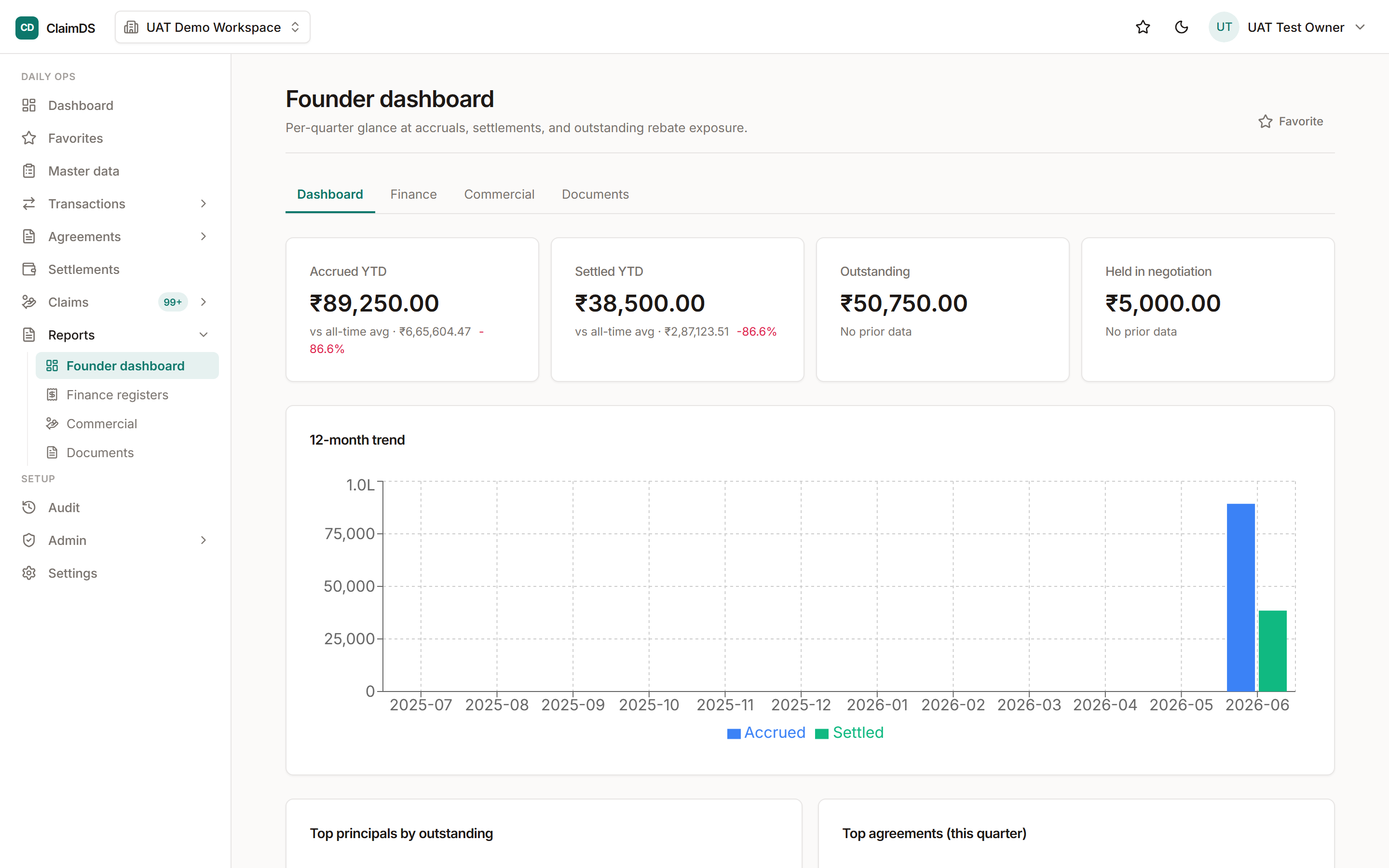
Rebate analytics is the reporting layer over a rebate program: real-time accrual dashboards, liability forecasting, scheme profitability, partner performance versus targets, slab-proximity, and what-if opportunity analysis. It turns scheme data into decisions — which is impossible while that data lives in disconnected spreadsheets.
What rebate analytics should deliver
| Insight | The question it answers |
|---|---|
| Real-time accrual dashboard | "What do we owe across every scheme right now?" |
| Liability forecast | "Where will scheme cost land at period-end?" |
| Scheme profitability | "Which schemes pay back, which don't?" |
| Partner performance | "Who's beating target, who's lagging?" |
| Slab-proximity | "Who's one nudge from the next tier?" |
| What-if / opportunity | "What does this scheme cost at 3 volumes?" |
This is the analytics view of the rebate management software pillar, built on the live accrual in rebate tracking software.
Why spreadsheets can't do it
Analytics needs one connected, live dataset. When schemes sit in one file, sales in another and settlements in a third, the numbers have already drifted before anyone charts them. A live accrual — schemes, sales and settlements reconciled together — is the prerequisite for any trustworthy analysis. This is the same disconnect behind revenue leakage in rebate programs and the reporting-quality argument in the CFO revenue-leakage playbook.
From dashboards to decisions
The point of analytics is action, not charts. Slab-proximity turns a report into revenue: flag partners close to the next tier and let sales chase the volume that unlocks it. Scheme profitability lets finance retire schemes that don't pay back — the method is in the claims management ROI benchmark. What-if simulation tests a scheme's cost before you fund it. The scheme mechanics behind the numbers are in volume rebates.
Where ClaimDS fits
ClaimDS surfaces these insights from the same live accrual it settles on — accrual dashboards, scheme profitability, partner performance and slab-proximity — India-first, at a mid-market price (a ClaimDS-supplied ~₹3–5 lakh/yr figure, positioning not a benchmark). It sits alongside the core features checklist and the positioning in why ClaimDS.
Frequently asked questions
What is rebate analytics?
Rebate analytics is the reporting layer over a rebate program — real-time accrual dashboards, liability forecasting, scheme profitability, partner performance versus targets, slab-proximity ("who's close to the next tier"), and what-if opportunity analysis. It turns raw scheme data into decisions finance and sales can act on.
Why can't you do rebate analytics on spreadsheets?
Analytics needs one connected dataset — schemes, sales and settlements reconciled together and updated live. Disconnected spreadsheets can't keep a single accurate accrual across many schemes and partners, so any "analysis" on top is built on numbers that already drifted out of date.
What is slab-proximity analysis?
Slab-proximity analysis flags partners who are close to crossing into the next rebate tier, so sales can nudge the extra volume that unlocks it — a profitable, targeted action that is invisible without a live accrual per partner per scheme.
See ClaimDS on your own claims data
A 30-minute walkthrough tailored to how your channel actually settles claims.
Related posts

How Rebate Software Improves Financial Reporting Accuracy
How manual rebates corrupt financial reporting — under/over-accrued liabilities, period-close surprises, misstated margins — and how rebate software fixes each.
Revenue Leakage in Rebate Programs: Where the Money Goes & How to Stop It
Where rebate and trade-spend programs leak revenue in Indian multi-tier channels — overpayments, duplicates, unclaimed accruals, mis-slabbed math — and how to stop it.
Claims & Deductions Management for CFOs: A Revenue-Leakage Playbook
A CFO's playbook for channel claims and deductions — quantifying revenue leakage, accrual visibility, GST exposure, the control framework and the KPIs to track.