
Sell-In Rebate Strategy: How to Incentivize Channel Partners Without Channel Stuffing
How sell-in rebates motivate channel partners — and how to design one without channel stuffing, using sell-through conditions, caps, healthy-inventory clauses and growth structures.
A good sell-in rebate strategy rewards channel partners for stocking and committing working capital — without tipping into channel stuffing. The way to do that is design: pair sell-in with sell-through conditions, use growth-over-baseline structures, cap the reward, add healthy-inventory clauses, and monitor secondary data so over-ordering that never sells through doesn't earn full rebate.
How sell-in rebates motivate partners
Sell-in rebates reward the partner for buying: they relieve working capital, reward carrying depth, and pull new SKUs into the channel. That makes them powerful at launch or ahead of a season. But the incentive rewards buying, not selling — which is the whole design challenge. The distinction is set out in sell-in vs. sell-through rebates, under the rebate management software pillar.
The failure modes
Channel stuffing, quarter-end loading, and the returns boomerang. Push a pure sell-in scheme and partners over-order to hit a tier; the loaded stock then returns next period as returns, expiry or price-protection claims — so the "growth" was borrowed from the future and paid for twice. This is a classic source of revenue leakage in rebate programs.
How to design a balanced sell-in scheme
- Anchor on growth, not raw volume. Reward beating a baseline, so the scheme funds incremental movement rather than one-time loading.
- Add a sell-through condition. Release the full rebate only when a share of the sell-in actually sells through — the mechanics are in volume rebates.
- Cap the reward and the eligible stock. Caps bound the exposure; eligible-stock limits stop warehouse loading.
- Include a healthy-inventory clause. Tie eligibility to inventory staying within agreed norms, not ballooning.
- Monitor secondary data. Watch sell-through against sell-in so over-ordering is visible before it's rebated — the discipline behind distributor claims management.
- Settle cleanly, with an audit trail. Validate each claim against the agreement and settle by GST credit note.
Watch the returns interplay
Loaded stock that comes back is a buyback or price-protection cost — so a sell-in scheme designed in isolation from returns understates its true cost. Keeping schemes and returns in one ledger is how you see the real number.
Where ClaimDS fits
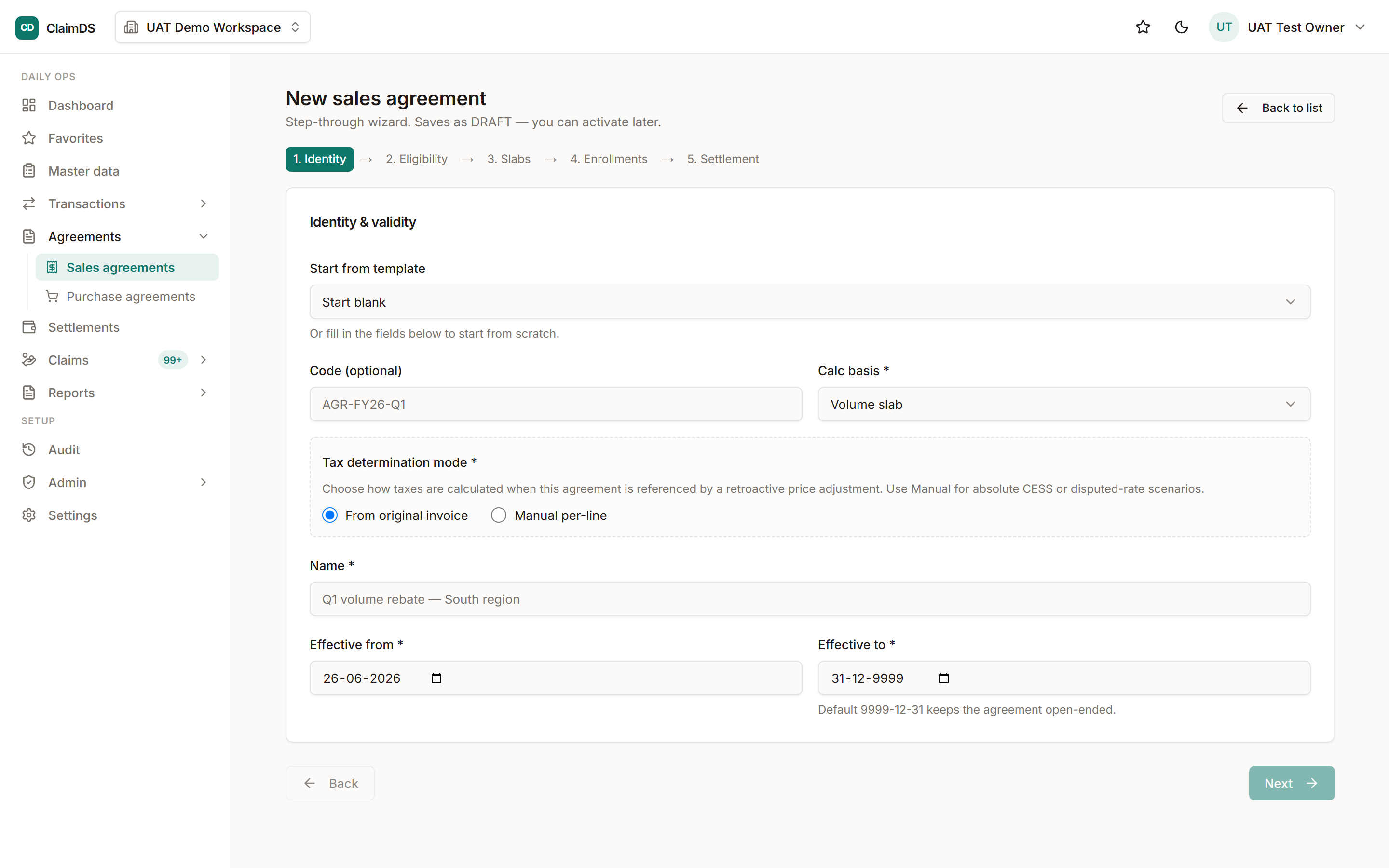
ClaimDS lets you design sell-in schemes with sell-through conditions, caps and baselines, and keeps schemes and returns in one claim ledger so the true cost is visible — India-first, at a mid-market price (a ClaimDS-supplied ~₹3–5 lakh/yr figure, positioning not a benchmark).
GST note: Sell-in rebates settle via credit notes with ITC consequences — see financial vs. tax credit notes. General information, not tax advice.
Frequently asked questions
How do sell-in rebates incentivize channel partners?
Sell-in rebates reward partners for buying from the brand — relieving working capital, rewarding stocking depth, and encouraging new-SKU adoption. They are effective for launches and pre-season loading, but because they reward buying rather than selling, they must be designed carefully to avoid channel stuffing.
How do you design a sell-in rebate without channel stuffing?
Pair the sell-in reward with sell-through conditions or healthy-inventory clauses, use growth-over-baseline structures rather than raw volume, cap the reward, and monitor secondary sales so over-ordering that never sells through is visible and doesn't earn full rebate.
What are the failure modes of a sell-in rebate program?
Channel stuffing (over-ordering to hit a tier), quarter-end loading, and the returns boomerang — where loaded stock comes back as returns, expiry or price-protection claims next period. Each is a design failure, avoidable by tying the incentive to real movement, not just purchases.
See ClaimDS on your own claims data
A 30-minute walkthrough tailored to how your channel actually settles claims.
Related posts

How Rebate Schemes Work for Online Sellers & E-Commerce Channels in India
How rebate and incentive schemes work for India's e-commerce channel — brands running schemes for marketplace/D2C sellers, and sellers reconciling rebates against platform deductions.
Rebate Software Pricing in India: Cost Models, TCO & How to Compare Plans
How to compare rebate software pricing in India — the common cost models, what drives price, hidden costs, a TCO worksheet, and where to find independent reviews.
Sell-In vs. Sell-Through Rebates: What's the Difference & When to Use Each
Sell-in rebates (paid on a partner's purchases) vs sell-through rebates (paid on their onward sales) — what each incentivises, the channel-stuffing risk, and how each is measured.