Rebates, chargebacks & deductions
Billback management software for distributors and manufacturers
Billback management software automates the cycle where a distributor sells at a contracted lower price and bills the difference back to the manufacturer — tracking the agreements, validating every billback line against contract terms, and generating GST-compliant credit notes. ClaimDS runs that cycle end to end for the Indian channel.
14-day free trial · no credit card
What is a billback?
A billback is a post-sale recovery: the distributor sells to an institution, retailer or scheme customer at a price lower than their buying price, under a standing agreement, and bills the difference back to the manufacturer. The concept is covered in depth in what is a billback and disambiguated from chargebacks and deductions in the billbacks, chargebacks and deductions glossary. This page is about running billbacks as an operation — at volume, with proof.
The problem
Billbacks break in the gap between the agreement and the claim. The contracted rate lives in an email or a rate circular; the qualifying sales live in the distributor's DMS or Excel export; the claim arrives as a spreadsheet with hundreds of lines. Someone has to check every line — right rate, right SKU, right window, not already claimed — against an agreement nobody can find, and then raise the credit note correctly for GST. Disputed rates sit unresolved for months, claim windows lapse silently, and duplicate lines slip through because last quarter's claim is a different file.
How ClaimDS manages billbacks
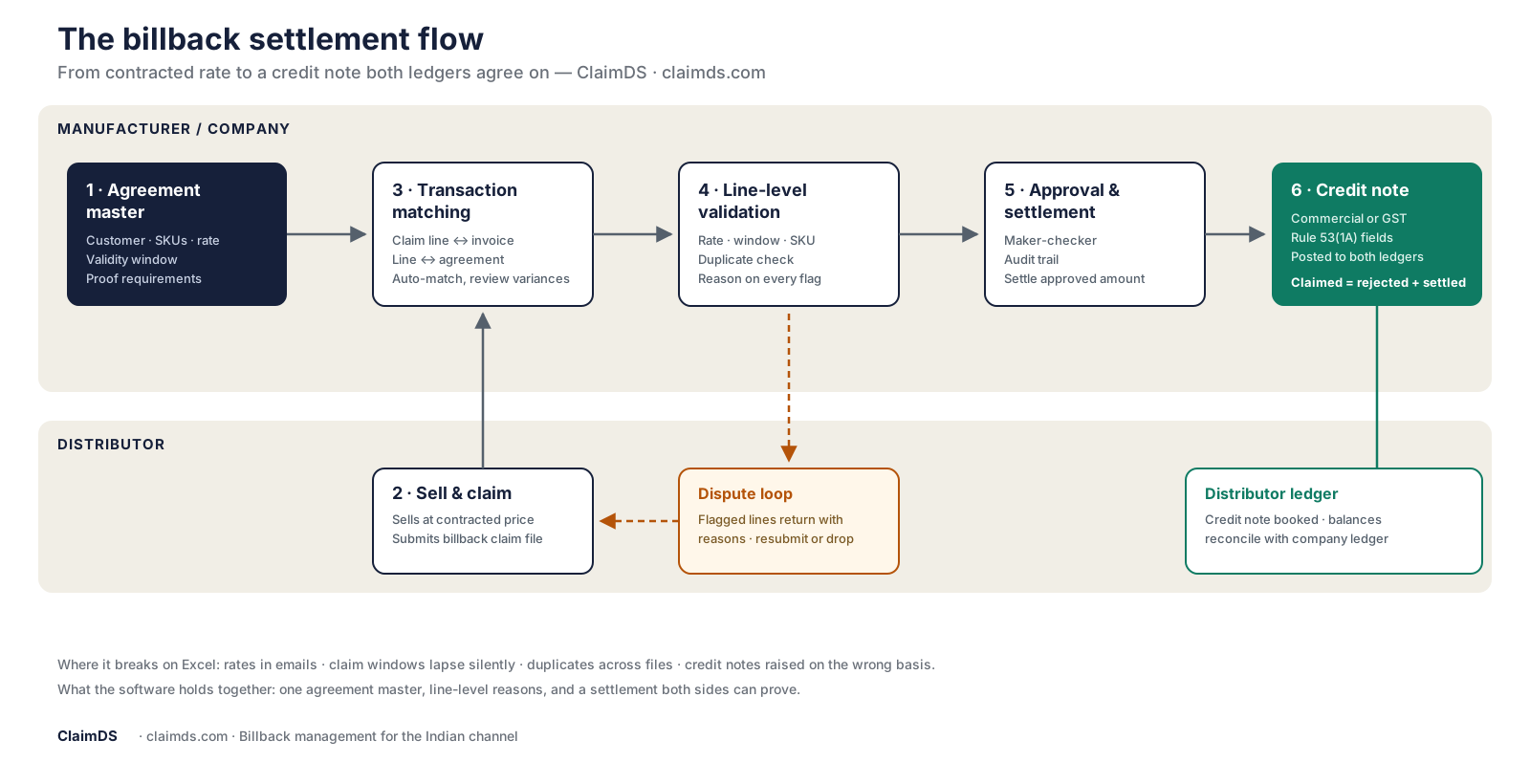
- 1. Agreement master. Every billback arrangement — customer, SKUs, contracted rates, validity window, proof requirements — lives as a structured agreement, not a PDF in someone's inbox.
- 2. Transaction matching. Upload the distributor's billback claim file and ClaimDS auto-matches each line to qualifying sales and the governing agreement, so your team reviews variances instead of re-keying every line.
- 3. Line-level validation. Rate mismatches, out-of-window lines, unknown SKUs and duplicates are flagged per line with a reason — the distributor sees the same reasons, which is how disputes shrink.
- 4. Approval and settlement. Approved amounts flow through maker-checker approval into settlement, with the full trail — who approved what, against which agreement — kept on an audit log.
- 5. The right credit note. Settlement generates the credit-note document the tax decision calls for — commercial or GST — with the Rule 53(1A) fields when tax adjustment is intended. See GST credit-note reconciliation for the downstream reconciliation.
A worked example
Illustration with invented names and simple numbers: Sharma Distributors buys a water purifier SKU at ₹9,000 and, under a standing institutional-supply agreement, sells 40 units to a hospital chain at ₹8,200. The contracted billback is the ₹800 difference per unit — ₹32,000 for the month. Their claim file lists the 40 invoices; ClaimDS matches each line to the agreement, flags two invoices dated after the agreement lapsed (₹1,600), and approves ₹30,400. Settlement issues a commercial credit note for ₹30,400 against the claim, and both ledgers show the same three numbers: claimed ₹32,000, rejected ₹1,600 with reasons, settled ₹30,400.
Frequently asked questions
What is billback management software?
It is software that automates the billback cycle: a distributor sells at a contracted lower price, then bills the difference back to the manufacturer. The software holds the agreement terms, matches each billback line to the qualifying transactions, validates rate and window, and settles the approved amount through the correct credit note — instead of a spreadsheet and an argument.
How is a billback different from a rebate?
A rebate is earned against a target or volume and usually settled after a period closes. A billback recovers a specific, per-transaction price difference the distributor already funded at the point of sale. Rebates reward performance; billbacks reimburse a contracted gap.
How is a billback different from a chargeback?
In Indian distribution, a billback is the distributor billing the manufacturer for a contracted difference after selling; a chargeback is a deduction the buyer takes from a payment for amounts they believe are owed. Neither has anything to do with credit-card chargebacks. The full comparison is in our billbacks, chargebacks and deductions glossary.
How are billbacks settled under GST?
Usually by credit note — and the commercial-versus-GST credit note decision matters. CBIC Circular 251/08/2025-GST clarified that commercial (financial) credit notes need no input-tax-credit reversal by the recipient. Whether a billback settlement should adjust tax is an agreement-and-CA question; ClaimDS generates whichever document the decision calls for. This is general information, not tax advice.
Who is this for?
Indian manufacturers and distributors in FMCG, pharma, automotive, electricals, paints, tyres, lubricants and agrochemicals who fund contracted price differences through their channel and settle them today on Excel — typically companies from ₹50 crore to ₹1,000+ crore turnover.
What does it cost?
ClaimDS publishes its price: ₹25,000/month billed annually (₹3,00,000/year excluding GST) for up to 50,000 invoices a year, with guided onboarding included. Billback management is part of the platform, not a separate module — see the pricing page.
Run billbacks with proof, not arguments
See your own billback agreements and claim files in ClaimDS — book a demo and bring one month's real claim file.