The Chargeback Process: How Trade Chargebacks Work
The trade chargeback process step by step — trigger, documentation, validation, approval and settlement. Trade/channel chargebacks, not card chargebacks.
The chargeback process is the lifecycle a trade/channel deduction follows: it is raised with a reason, documented with evidence, validated against the agreement and data, approved, and settled — usually netted in a GST credit note. Making each step explicit turns an opaque deduction into a defensible, auditable claim.
Trade chargebacks, not card chargebacks. This describes deductions and claims between a manufacturer and a channel partner — not a customer's bank reversing a card payment.
The five steps
Raised → documented → validated → approved → settled.
- Raise the chargeback. A deduction or claim is logged with a clear reason code — scheme, price difference, damage, return — against the partner.
- Document the claim. Supporting evidence is attached: scheme circular, invoice reference, damage note, stock record. Weak documentation is the single biggest cause of later disputes.
- Validate. The chargeback is checked against the agreement and the underlying data — is it eligible, in-window and correctly calculated?
- Approve. The validated amount is approved with the right authority and segregation of duties.
- Settle. The amount is settled, typically netted into a GST credit note, and the record is closed with a full trail.
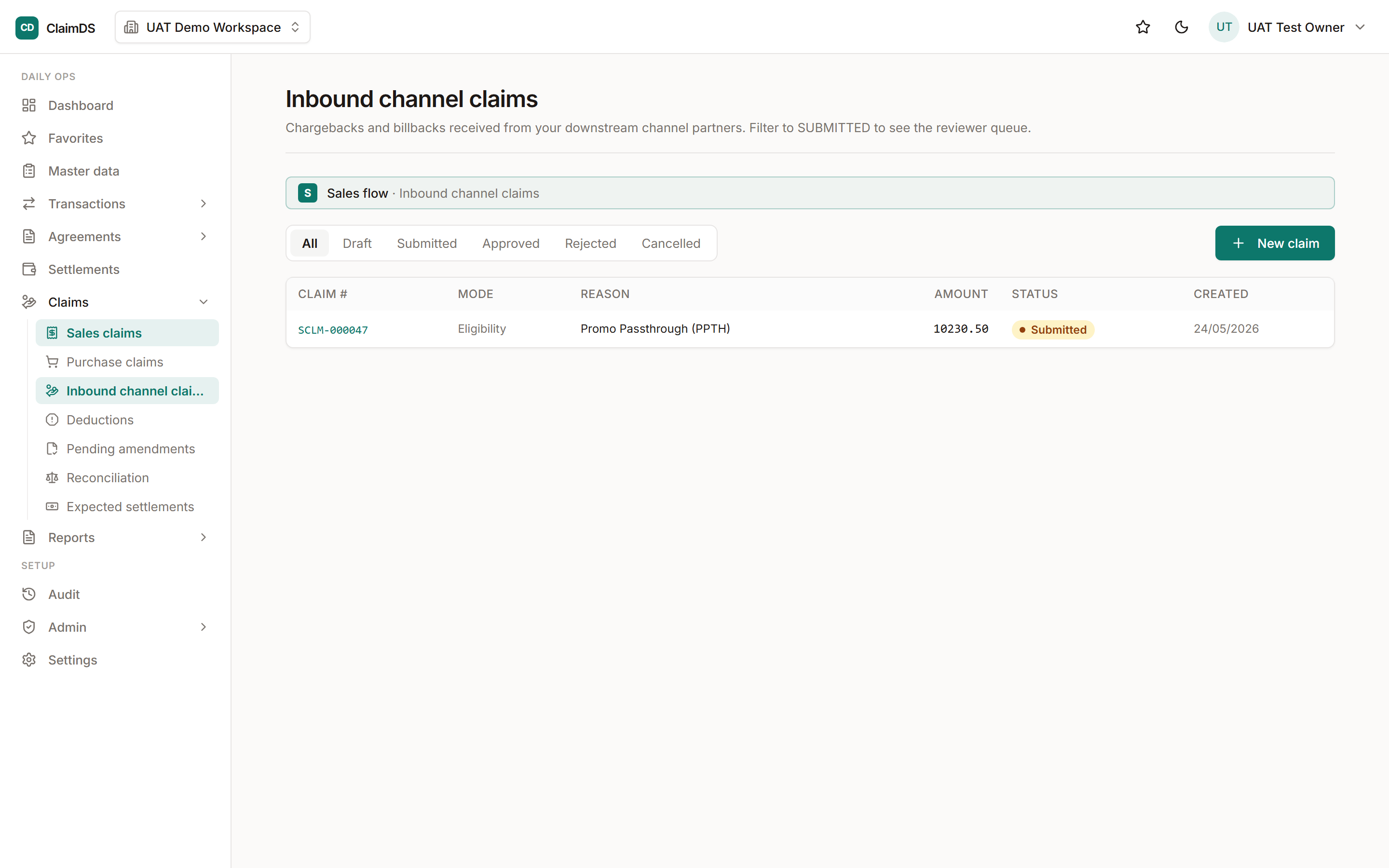
For the full hub view see chargeback management software; for disputed deductions see the chargeback dispute process.
Where chargebacks get stuck
Two choke points dominate. Validation stalls when evidence is missing or does not match the agreement. Settlement stalls when a disputed amount is neither resolved nor written off — it just sits, ageing. Reason codes, evidence capture and an audit trail keep the queue moving, which is the core argument for chargeback claim software.
Who owns each stage
Typically commercial or sales-ops raises and documents; finance validates and settles; an approver applies authority. Clarity on ownership — not heroics — is what makes the process repeatable. The receivables-side view is deduction management. The generic backbone across all claim types is in the claim process explained.
GST note: This article is general information, not tax or legal advice. Where settlement involves GST credit notes, positions — including CBIC Circular No. 251/08/2025-GST and the Finance Act 2026 amendments to Section 34 of the CGST Act, assented 30 March 2026 but not yet notified into force as of publication — must be re-verified at publish time with a qualified professional.
Frequently asked questions
What is the trade chargeback process?
The trade chargeback process is the lifecycle a channel deduction or claim follows: it is raised with a reason, documented with evidence, validated against the agreement and data, approved, and settled — usually netted in a GST credit note.
Where do chargebacks get stuck?
Chargebacks stall at validation, when evidence is missing or does not match the agreement, and at settlement, when disputed amounts are neither resolved nor written off. Clear reason codes and an audit trail keep the process moving.
Is this the same as a card chargeback process?
No. This is the trade/channel chargeback process between a manufacturer and a distributor or dealer, not a card or payment chargeback handled through a bank or card network.
See ClaimDS on your own claims data
A 30-minute walkthrough tailored to how your channel actually settles claims.
Related posts

Why ClaimDS Is the Best Rebate Management Software in India
Why Indian distributors and dealers need finance-grade rebate and claims settlement: multi-tier fidelity, GST credit-note compliance, faster payouts.
Customer Rebates: Programs & Software
Customer rebate programs explained — structures, claim validation, accrual and the GST treatment of customer rebates. Distinct from supplier and distributor rebates.
SMB Rebate Software for India
Indian SMB rebate software — affordable, fast-deploy rebate management for mid-market manufacturers and distributors. Why enterprise suites are overkill for SMBs.